How to Grow Seedless Wampee? A Detailed Guide to Cultivation Techniques and Management Methods
How is seedless wampee cultivated? How is seedless wampee managed? We also ask experienced netizens to help introduce it. Seedless wampee is a relatively superior variety selected by the Horticulture Research Institute of the Guangxi Academy of Agricultural Sciences from seedless wampee varieties introduced from within and outside the region. It has a high seedless rate (generally reaching over 95%), high nutritional content (seedless...
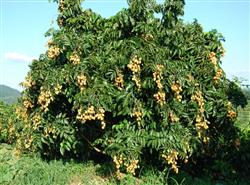 How is seedless wampee cultivated? How is seedless wampee managed? We also ask experienced netizens to help introduce it
Seedless wampee is a relatively superior variety selected by the Horticulture Research Institute of the Guangxi Academy of Agricultural Sciences from seedless wampee varieties introduced from within and outside the region. It has a high seedless rate (generally reaching over 95%), high nutritional content (the soluble solids content of seedless wampee is 18.5%, total acid 0.35%, with a moderate sugar-acid ratio), and high yield (in the fourth year after planting, the yield per plant can reach more than 8.5 kg) and other advantages. Therefore, Zhongdiwang has compiled the cultivation techniques and management methods for seedless wampee, listed in detail below for netizens' reference.
I. Selection of the planting site for seedless wampee:
For seedless wampee, it is advisable to choose loam, sandy loam and gravelly soil with good drainage and irrigation, loose, fertile and moist. Absolutely avoid waterlogged planting sites and planting in heavy, sticky, compacted soil.
II. Planting time and planting density of seedless wampee:
Seedless wampee is generally planted in spring (March to May). For planting density, a spacing of 2.5 m x 3 m or 3 m x 4 m between plants and rows can be chosen, planting 88 or 55 plants per mu. In order to achieve early fruiting and early heavy yield, it is advisable to use superior grafted seedlings.
When planting, do not plant too deep (keep the same depth as when in the nursery), compact the soil, form a mound, shape the tree disk (20-30 cm above the ground), water thoroughly to settle the roots, and cover with grass. Special note: only after the newly planted young trees survive and the newly grown buds and leaves have matured (about 40 days after planting) can light fertilizer be applied.
III. Fertilization of seedless wampee:
1. Young tree stage: Annual fertilization should be light and frequent, mainly nitrogen, with phosphorus, potassium and magnesium applied together. Apply fertilizer once before each flush and once during the greening stage, that is, use the "one flush, two fertilizations method" to promote and strengthen new shoots.
2. Fruiting tree stage: Generally, fertilizer is applied three times a year. The first is the flower-promoting fertilizer around Great Cold, combining slow-release and quick-release fertilizers, with a nitrogen, phosphorus and potassium ratio of 1.0:0.5:0.8, and the amount applied accounts for about 25% of the whole year. The second is the fruit-swelling and summer-shoot-promoting fertilizer, applied before fruit thinning, mainly potassium and nitrogen, with the amount applied accounting for about 30% of the whole year. The third is the autumn-shoot-promoting fertilizer after fruit harvest, with the amount applied accounting for about 45% of the whole year.
IV. Watering of seedless wampee:
The root system of seedless wampee is shallow-rooted and likes air; it is neither drought-tolerant nor tolerant of poor aeration and waterlogging in the orchard. Therefore, seedless wampee orchards should not only pay attention to drainage during the rainy season to prevent waterlogging of the planting site, but also maintain moisture, watering and irrigating during drought. After fruit harvest, during the autumn shoot germination period, attention should be paid to irrigation to resist drought.
V. Pruning of seedless wampee trees:
After the seedless wampee tree survives planting, cut it back at 40-50 cm above the ground to set the trunk, and select 3-4 vigorous branches of similar size and even distribution to cultivate as main branches; after the main branches mature, leave 30 cm and pinch or cut back to promote new shoots, and select 2-3 as secondary branches; after they mature, leave 20-30 cm and pinch or cut back to promote and select 2-3 new shoots as tertiary branches; use the same method to cultivate the next level of branches.
For pruning of fruiting trees, in addition to removing dead branches, diseased and pest-infested branches, shaded branches and dense weak branches to ensure good ventilation and light penetration, focus on promoting autumn shoots.
VI. Fruit thinning method for seedless wampee:
Fruit thinning is carried out about 25 days after the flowers fade. First remove deformed fruit, diseased and pest-infested fruit and small fruit, then remove densely growing fruit and individual unusually large fruit. The amount of fruit thinned depends on tree vigor, fruit load and the inherent size of the fruit. In a good year and for high-yielding trees, more can be thinned; for large-fruited varieties, more can be thinned.
VII. Pest and disease control methods for seedless wampee:
Wampee has relatively few pests and diseases. The main diseases are anthracnose and downy blight. They can be prevented by strengthening soil, fertilizer and water management, increasing potassium fertilizer, enhancing tree vigor, improving disease resistance, and doing a good job of clearing the orchard and reducing sources of disease. When necessary, chemical control can be used. For anthracnose, use 65% zineb 500 times solution or 70% thiophanate-methyl 800-1000 times solution. For downy blight, use 90% phosethyl-Al 500 times solution, or 50% metalaxyl 500-700 times solution. The main insect pests are aphids and mealybugs, etc. You can choose trichlorfon 800 times solution or other insecticides.
Note: High-residue pesticides must not be used 15 days before fruit harvest.
Management methods for wampee trees after flowering
What varieties of wampee are there?