What are the control methods for the jujube leafroller?
What damage does the jujube leafroller cause? How is the jujube leafroller controlled? We also ask netizens with experience in controlling the jujube leafroller to help explain. The jujube leafroller mainly damages the leaves, flowers and fruits of jujube trees, seriously affecting the yield and quality of jujubes. Therefore, Zhongdiwang has compiled the damage caused by the jujube leafroller and its control methods, listed below for netizens' reference....
 What damage does the jujube leafroller cause? How is the jujube leafroller controlled? We also ask netizens with experience in controlling the jujube leafroller to help explain
The jujube leafroller mainly damages the leaves, flowers and fruits of jujube trees, seriously affecting the yield and quality of jujubes. Therefore, Zhongdiwang has compiled the damage caused by the jujube leafroller and its control methods, listed below for netizens' reference.
Damage caused by the jujube leafroller and its occurrence times:
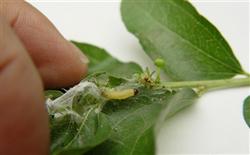
The jujube leafroller has a single feeding habit, damaging only jujube trees and wild sour jujube. Its larvae feed on jujube leaves, jujube flowers and fruits. When damaging leaves, the jujube leafroller often spins silk to tie jujube hanging shoots or leaves together, rolling them into clumps and small bundles, hiding inside them, and eating the leaves into notches and holes. The jujube leafroller can bite off flower stalks, feed on flower buds, and cause flowers to turn black and wither; at the same time, the jujube leafroller can also damage jujube fruits. Young fruits are gnawed into a pitted and hollowed appearance, and the damaged fruits turn red and drop off, or stick to the branches and leaves without dropping.
The jujube leafroller generally begins to emerge in late March, with the peak emergence period in early April. The adults are strongly phototactic, and eggs are laid singly on smooth small branches and leaves.
The first-generation larvae hatch in early May (before Lixia), mainly feeding on jujube buds and tender leaves, and emerge in early to mid-June (after Mangzhong);
The second-generation larvae appear in late June (around the summer solstice), mainly damaging flower buds, tender leaves and young fruits, causing a large number of young fruits to drop. The adults emerge in late July;
The third-generation larvae hatch in late August, mainly damaging leaves and jujube fruits. In late September, the mature larvae spin cocoons, pupate and overwinter.
Control methods for the jujube leafroller:
Method one: In winter and spring, scrape off the old cracked bark of jujube trees and burn it in a concentrated manner to eliminate overwintering pupae.
Method two: During the adult occurrence period of the jujube leafroller, use black light lamps to trap and kill the adults by taking advantage of their phototaxis.
Method three: After autumn, before the jujube leafroller larvae enter overwintering, grass can be tied around the tree trunks to attract overwintering larvae for pupation, and they can be eliminated in a concentrated manner.
Method four: In mid-May for the first-generation larvae and in late June for the second-generation larvae, spray 25% chlorbenzuron No. 3 at 1500 to 2000 times dilution, or 75% phoxim at 2000 times dilution for control. The main focus is eliminating the first-generation larvae, which is the key to controlling this pest.
Management methods for jujube trees during the flowering period
Grafting methods for jujube trees