How to prevent and control banana cold damage? Prevention and control methods and key technical points
What causes banana cold damage? How to prevent and control banana cold damage? Experienced netizens are also asked to help explain. In some tropical regions, bananas are even used as a staple food, and they contain multiple trace elements and vitamins, helping the human body strengthen resistance to disease and effectively promoting appetite and aiding digestion. However, banana cultivation often...
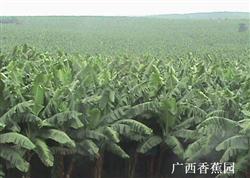 What causes banana cold damage? How to prevent and control banana cold damage? Experienced netizens are also asked to help explain
In some tropical regions, bananas are even used as a staple food, and they contain multiple trace elements and vitamins, helping the human body strengthen resistance to disease and effectively promoting appetite and aiding digestion. However, banana cultivation is often affected by cold damage, seriously affecting the value and economic benefits of bananas. Therefore, Zhongdiwang has compiled the causes and prevention and control methods of banana cold damage, listed in detail below for netizens' reference.
I. Causes of cold damage in various banana producing areas:
1. In Guangdong and Guangxi, cold damage mainly occurs in Zhanjiang, Xuwen, Maoming, Gaozhou, Dongguan, Huizhou, and Guangzhou in Guangdong; in Guangxi, it mainly occurs in Wuming around Nanning, Chongzuo, and other places.
Because the banana cultivation terrain in Guangdong and Guangxi is mostly mountainous and hilly, with red soil, it is greatly affected by cold currents from the north. From mid-to-late November each year to February of the following year, Siberian cold currents and warm, humid air currents from the South Pacific sometimes converge here, forming continuous low-temperature overcast and rainy weather.
In Guangdong and Guangxi, frost cold damage on bananas appears as:Stems, leaves, and banana fruits turn black, the whole plant dies, and large areas die with total loss of yield; sometimes even the suckers are completely frozen to death. After the weather clears, they rot and give off a foul smell, affecting sucker retention management the following year and causing yield losses.
In Guangdong and Guangxi, low-temperature cold damage on bananas appears as:During low temperatures, banana growth almost completely stagnates, and the root system declines or dies. Because fertilizer and water cannot be effectively supplied, the leaves stack together, new leaves often emerge weakly, and the leaves turn yellow and notched, showing severe symptoms of nutrient deficiency. The emerging bud bracts are small, and the fruit stalk and fingers are short and cannot develop normally. When the pseudostem is cut open and observed, the symptom is yellowing of the vascular tissue, resembling bacterial soft rot, which is caused by cell damage under low-temperature cold rain stress.
2. Yunnan bananas are mainly planted in the prefectures and counties near the border in the south, including Honghe, Xishuangbanna, Pu'er, Baoshan, and Dehong, where the terrain is mostly mountainous and bananas are mostly cultivated using terrace planting patterns.
Because Yunnan has many high mountains and deep valleys and rich vegetation, its ability to regulate temperature is relatively strong, and there are many microclimates. The typical characteristics of Yunnan's climate are high temperature and abundant rain in summer and autumn, and low temperature and drought in winter and spring. Yunnan is located on the Yunnan-Guizhou Plateau, with a relatively high altitude, and is far from the ocean with tall mountains, so Yunnan is rarely affected by warm, humid air currents from the South Pacific; its rainfall is mostly caused by forest evaporation. At the same time, cold currents from Siberia cannot rush up onto the plateau area and have very little effect on Yunnan. Yunnan's low-temperature cold currents mostly originate from the snowy mountains in the Qinghai-Tibet Plateau area. Their conventional path is southward along the Ailao Mountains and the Honghe River valley, all the way to the Hekou area, having a relatively large impact on flat terrain areas around Honghe Prefecture, Xishuangbanna, and other surrounding areas.
Because Yunnan's low-temperature weather generally does not cause rainfall and is mostly dry and cold weather, except for some high mountains with an altitude exceeding 600 m, mountain banana plantings rarely experience extreme low temperatures in winter that completely freeze bananas to death. Therefore, Yunnan mountain bananas can generally pass through winter smoothly and are mainly produced as spring bananas.
Because Yunnan bananas mostly emerge buds in October-November, the weather during fruit development is often low-temperature and dry, and the nighttime temperature in winter can drop to 5 degrees, while during the day sunlight can quickly raise the temperature back to 25°C.
In Yunnan bananas, cold damage caused by low temperature mainly appears as:Banana leaves yellow, bud bracts are small, the fruit stalk is short, and the fruit fingers are short and small; the fruit development period is more than 4 months. Cold-affected mountain banana fruits show water-soaked spots on the peel, and when the epidermis is torn open, the vascular tissue has scattered black spots.
II. Causes of cold damage in bananas:
1. Because the transport of nutrients in bananas from the roots to the leaves must be completed through transpiration pull, under low-temperature conditions the leaves have almost no transpiration, so nutrients cannot be transported, and newly emerged leaves yellow and become notched.
2. When bananas emerge buds, they require a large supply of energy, and this can only be completed at relatively high temperatures. Low temperature prevents the supply of mineral nutrients and carbohydrates needed for flower bud development and fruit stalk elongation, so the emerging bud bracts are small, the fruit stalk is short, and the fruit fingers are short and small.
3. Because bananas originated in the tropics, their cell walls are thin, and their content of calcium pectate and lignin is low. The vacuoles contain large amounts of potassium to maintain osmotic pressure. Low-temperature overcast and rainy conditions cause cells to absorb too much water while potassium supply is insufficient. Over time, cell walls become thinner, or they rupture and lose water, thereby destroying the entire vascular tissue.
III. Prevention and control methods for banana cold damage:
Method 1: Cover bananas with plastic film and sky film:Use black plastic film or rice straw to cover the bed surface around the mother plant and sucker heads to prevent frost injury to the banana corm and root system. If rice straw is used for covering, the thickness should reach about 20 cm, and it should be wetted and pressed down with soil to prevent wind from blowing it open. Sky film can more effectively reduce the risk of frost to the banana industry, improve the overwintering ability of the banana plant population, inhibit weed growth, and prevent freezing rain from accumulating at the bottom of the ridges.
Method 2: Bag the banana fruit bunches: For bananas that cannot be harvested in November, especially those whose buds have just been cut and whose peel has not yet turned green, banana-specific cold-proof thin film bags should be put on in time (if conditions permit, blue double-layer non-woven bags are best). Before bagging, spray fruit-preserving chemicals first, which can play the role of liquid film bagging, also prevent fruit rust disease, prevent fruit cracking, improve fruit surface coloring and brightness, reduce residue, and improve quality. When bagging, first pad with old newspapers or straw paper, which can improve the insulation capacity of the bag and prevent the thin film from directly contacting the banana fruits, so as to facilitate normal growth and development of the banana fruits.
Method 3: Reasonable irrigation and drainage for bananas:In clear frosty weather, the furrow ditches should be filled with water in time to preserve warmth and prevent frost. Conversely, in wet and cold weather, attention must be paid to draining accumulated water from the banana plantation to raise soil temperature.
Method 4: Clean the banana plantation and use smoke:Remove weeds in the banana plantation and clear debris in the plantation; pile dry banana leaves, firewood, sawdust, rice straw, and other materials at the field edge, and light them in the evening before cold currents and low temperatures arrive, letting them burn slowly and produce smoke, so that a layer of smoke forms above the banana plantation to reduce cold damage.
Method 5: Apply warm-natured fertilizers to bananas:In winter, apply as little nitrogen fertilizer as possible or do not apply it, to avoid reducing cold resistance because the leaves are too tender and green. Instead, apply more biological bacterial fertilizer, burnt soil, or farmyard manure plus decomposed pig and cattle manure and other warm-natured fertilizers to increase soil temperature and improve the plant's cold resistance.
Method 6: When bananas have yellowing new leaves, notches, and weak bud emergence:For root drenching to prevent cold, apply biological bacterial fertilizer/humic acid/seaweed acid + high-potassium macro-element water-soluble fertilizer as a root drench to regulate the root system, supplement potassium, strengthen the plant, and enhance the banana's own cold resistance. Alternatively, carry out foliar topdressing on bananas with organic calcium + monopotassium phosphate + cold-resistant foliar fertilizer to directly supplement the leaves, flowers, and fruits and ensure their normal development.
Techniques for retaining and removing banana suckers
Banana planting technology video