How are blueberry seedlings cultivated? A full breakdown of propagation methods
How do you propagate blueberry seedlings? What should you pay attention to when propagating strawberry seedlings? Experienced gardeners are asked to give detailed guidance, because blueberries have rather special growth habits and are quite demanding about environmental conditions, especially the rhizosphere environment, which requires loose, acidic soil (substrate) with high organic matter content, thus greatly limiting their cultivation...
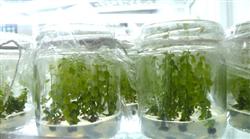 How do you propagate blueberry seedlings? What should you pay attention to when propagating strawberry seedlings? Experienced gardeners are asked to give detailed guidance
Because blueberries have rather special growth habits and are quite demanding about environmental conditions, especially the rhizosphere environment, which requires loose, acidic soil (substrate) with high organic matter content, this greatly limits their cultivation range. Moreover, blueberries have even stricter environmental requirements during the seedling stage; the entire blueberry propagation process takes 9 months before the seedling standard is reached.
Generally, a qualified blueberry seedling is: for northern highbush varieties, plant height 35-40 cm, 2-4 canes, basal cane diameter 3-4 mm; for half-highbush varieties, plant height 35 cm, 3-4 canes, basal cane diameter 3-4 mm; the plant grows robustly, with a well-developed root system filling the entire substrate space, free of pests and diseases, and able to ensure survival after field planting. Therefore Zhongdiwang has compiled the blueberry propagation methods and steps, listed in detail below for gardeners' reference.
Step 1. Rooting and acclimatization of blueberry tissue-cultured plantlets:
Blueberry propagation first involves transplanting tissue-cultured plantlets from the flask to an acclimatization bed so they gradually adapt to the external environment and develop a root system (root mass) with vigorous metabolic capacity. This is the most important propagation stage after tissue-cultured plantlets are produced. The rooting quality and survival rate after acclimatization directly determine the success or failure of propagation. The main techniques include construction of the acclimatization bed, selection and mixing of the substrate, and management after planting.
1. Preparation of the blueberry acclimatization bed:
For example, a simple acclimatization bed built in a greenhouse has a slope of 1:100, high in the north and low in the south, with the bed frame enclosed by bricks and cement posts. The inner width of the frame is 80-100 cm, height 6-8 cm, length 6-7 m. A drainage channel is dug in the middle of the bed bottom, 5-6 cm wide and 2-3 cm deep, leading through a drainage hole at the south end to a drainage ditch outside the bed; note that the drainage hole must be lower than the bottom of the drainage channel; the bottom of the drainage ditch outside the bed must be no less than 20 cm lower than the drainage hole, and the ditch width no less than 20 cm, for the purpose of good drainage.
The frame is lined with plastic film 0.2-0.3 mm thick; the plastic must be undamaged and fit tightly against the surrounding frame and the ground. At the drainage hole, cut an opening in the plastic matching the size of the drainage hole and cover it with screen cloth to prevent loss of substrate from the bed and to allow the drainage function to work.
The number of beds built depends on the number of seedlings to be propagated and the number of rotation cycles (about 60 d from planting to leaving the nursery). After the beds are built, they must be thoroughly disinfected; laying the drainage layer and substrate then completes a full acclimatization bed.
The drainage layer of the seedbed is mainly composed of granular materials with water-draining properties, such as river sand or sieved fine furnace slag. The particle size required is 1-2 mm; too coarse or too fine is unsuitable, and the thickness is 2-3 cm. Its function is to remove excess liquid and increase substrate aeration, maintaining a suitable air-to-water ratio in the substrate. The drainage layer is first disinfected to kill pathogens and pests, then rinsed two or three times with a water solution at pH 4.5-4.7; after draining, it is spread evenly and flat on top of the plastic at the bottom of the bed.
Because blueberry roots do best in a loose, acidic substrate with high organic matter content, generally pH 4.0-5.2 is suitable. Different varieties, seedling ages and growth stages have quite different substrate requirements. Young seedlings have strict substrate requirements; as the seedlings age, the substrate requirements can be relaxed appropriately.
2. Planting of blueberry tissue-cultured plantlets:
First place the tissue-culture flask plantlets in a greenhouse to harden off for 3-5 d, so they adapt to the acclimatization environment and their resistance increases. After hardening off, break up the culture medium with tweezers, take out the plantlets, and rinse them repeatedly in clean water to remove the culture medium. Be careful to damage the roots as little as possible during handling; the culture medium must be rinsed clean, otherwise mold will grow and affect survival; in winter the rinsing water temperature must not be below 13°C. According to how easily different varieties root, place rooted and unrooted plantlets separately so that rooting treatments are easier at planting time.
The planting spacing for blueberry tissue-cultured plantlets is 1 cm x 4 cm, at a depth of 0.5-1 cm. Too deep is unfavorable for rooting and prone to rot; too shallow makes the plant prone to lodging. Unrooted plantlets can be treated with a rooting agent to promote rooting.
3. Rooting and acclimatization management methods for blueberries:
Acclimatization mainly uses scientific environmental regulation to promote the initiation and growth of new roots and the formation of a root mass, promote plant growth, improve photosynthetic capacity, and reach the standard for transplanting into pots in a short time. Throughout the rooting and acclimatization process, a full-time covered arch-tunnel management mode is adopted to achieve comprehensive environmental regulation. Comprehensive environmental regulation is an important technical measure at the rooting and acclimatization stage and determines its success or failure.
Temperature: the suitable temperature range inside the small arch tunnel is 15-30°C, with the optimum during the day 22-25°C and at night 17-20°C. Below 13°C or above 32°C is unfavorable for rooting. When the temperature is too high, cool it down promptly by shading or spraying water. Before the root mass forms, new leaves have not yet emerged on the plant. It is best not to uncover the film for ventilation and cooling, to avoid harming the plants. Uncover the film 5-7 d before transplanting to harden the seedlings appropriately; a temperature of 10°C is sufficient, improving the survival rate after transplanting.
Humidity: the suitable relative air humidity range during the blueberry rooting and acclimatization stage is 60%-90%. When humidity drops, use micro-sprinkling to raise humidity. Different periods have different humidity requirements: the early stage (after planting until new roots first form) keeps a high-humidity state, no lower than 75%, ensuring the plants do not lose water and favoring rooting; the middle stage (from initial new root formation to massive formation) can appropriately lower humidity, with 60%-75% being suitable, which can promote root and new leaf growth; the late stage (after the root mass forms until leaving the nursery) has no strict humidity requirement, 50%-60% is sufficient. At this time, depending on growth and environmental changes, the film can be appropriately uncovered for ventilation; lower humidity helps control disease occurrence.
Light: in the early acclimatization stage, to avoid excessive light causing water loss and wilting, shade all day with light intensity below 5000 lx; shading can also lower temperature and maintain relatively stable humidity. In the middle stage, as the root system forms, light can be gradually increased to promote photosynthesis and favor rooting and new leaf growth, with a suitable light intensity of 7500-10000 lx. In the late stage, once the plant's root mass has formed and it has strong absorption capacity, photosynthetic intensity can be increased to promote stem and leaf growth and favor the sprouting of basal buds.
4. Pest and disease control:
During the blueberry rooting and acclimatization stage, the main diseases harming the plants are gray mold and cane blight. Following the principle of "prevention first, integrated control", check the disease situation frequently and spray protective agents at the appropriate time.
Gray mold is an extremely harmful disease at the blueberry seedling stage, mainly caused by high humidity and weak light. Symptoms are a gray moldy growth on the stems and leaves of the plant; with further infection, the stem rots and dies. Once discovered, promptly spray iprodione-type products at 800-1500 times dilution, once every 7-10 d, two or three times in succession, for a good effect.
Cane blight starts at the growing point, blighting the tip, gradually extending downward until the stem dies, and in severe cases the whole plant dies. Spraying thiophanate-methyl at 1500 times or Beibao at 1000 times has a certain effect.
5. Growth regulation of blueberry seedlings:
To improve rooting efficiency and plant survival rate, at this stage spraying suitable growth regulators according to different needs and purposes can achieve twice the result with half the effort. For example, after planting, to promote recovery and rooting, spray rooting agent 1# at 3000-4000 times dilution once or twice; to improve plant vigor, spray nuclear energy essence at 2000-4000 times dilution once or twice; to promote plant growth and basal bud sprouting, GA3 20-50 mg/L can be used. Note that a small-scale trial must be done before use.
The entire rooting and acclimatization stage takes 40-60 days, varying with variety and environmental conditions. At the end of this period, the strong-seedling standard reached by the plants is: the plant grows well, with new shoots and leaves produced, height 5-8 cm, and some basal buds sprouting into canes; the root mass develops well, with root length 2-3 cm; free of pests and diseases. After low-temperature hardening, they can enter the nutrient pot seedling stage.
Step 2. Transfer to nutrient pot cultivation:
Nutrient pot propagation includes two stages: small nutrient pot propagation and large nutrient pot propagation. Seedlings that have gone through the small nutrient pot stage (completed before early July) can be used directly as open-field planting stock. If they need to continue being grown into large seedlings (large blueberry seedlings have a high survival rate, and commercial seedlings are mainly large seedlings), they are repotted and enter the large nutrient pot propagation stage.
1. Selection, mixing and treatment of the substrate
At this stage, the blueberry propagation substrate should be a composite substrate that is loose, airy and high in organic matter. Peat: garden soil = 2:1 can be used for the mix.
The prepared substrate must be disinfected and acidified before use. For disinfection, use disinfectant 1# (amount 150-200 g/m3), mixing or spraying it evenly into the substrate, ensuring the relative humidity of the substrate reaches 50%-60%. Different blueberry varieties have somewhat different pH requirements; generally the optimum pH range is 4.3-4.8.
2. Planting of blueberry seedlings:
When planting blueberry seedlings, first water the substrate in the pot thoroughly; after the water settles, make a hole in the middle of the substrate and plant the small seedling, with a hole depth of 1-1.5 cm being suitable; after planting, firm the hole closed, water thoroughly with the planting water, and add a small covered tunnel with a shade net over it to promote recovery. Notes: when taking seedlings from the acclimatization bed, never injure the roots; the roots may carry some acclimatization substrate; keep the removed seedlings moist and avoid direct sunlight. Do not take out too many seedlings at one time.
3. Management of blueberry seedlings after planting:
Temperature, humidity and light management: from planting until the seedlings recover, keep them under a small arch tunnel at all times to promote recovery. During the day, an air temperature of 25°C is suitable, with a maximum not exceeding 30°C; at night, no lower than 13°C is suitable.
Relative air humidity should be no lower than 70%; higher air humidity favors recovery and plant growth. Substrate temperature should preferably be no lower than 15°C, favoring root growth. Light should be mainly diffused light, with a suitable light intensity of 15,000-20,000 lx. Shade appropriately according to different light periods. Once new shoots grow and new leaves form, it indicates that recovery is complete.
After recovery, the air temperature should be 20-25°C during the day; ventilate when too high; at night the temperature should be above 13°C. Substrate temperature above 13°C. Humidity is not restricted, but suitable humidity promotes seedling growth. As the plant grows, light should gradually increase, with 20,000-30,000 lx being suitable. Shade appropriately when light is too strong, especially in summer when shading is essential, which favors plant growth.
4. Water and fertilizer management for blueberry seedlings:
When blueberry seedlings are grown in nutrient pots, water should be supplied timely, in appropriate amounts, and regularly. If water is supplied in excess, root growth is inhibited, substrate acidity is easily leached out, and a suitable pH cannot be guaranteed in the later propagation stage; if water supply is insufficient and the substrate is too dry, root physiological functions are blocked or the roots even die, and the acidifying effect of sulfur is too slow.
The suitable water for blueberry seedlings has a neutral or slightly acidic pH, with soft water being preferable.
The nutrient solution for blueberry seedlings can be a balanced formula designed according to the needs of different growth stages of the plant. The early-stage nutrient formula mainly promotes root formation and stem and leaf growth; the mid-to-late-stage nutrient formula (i.e. N:P:K=1:1:1, with an appropriate amount of trace elements) promotes basal bud sprouting and cane growth. The suitable pH of the nutrient solution is in the range 4.5-4.8. Spray once a week. Each application should be enough that a small amount of liquid seeps from the drainage holes at the bottom of the pot; too much easily wastes the nutrient solution. To avoid damage to the young tender parts of the plant from residual nutrient solution, rinse with a small amount of clean water after application.
Adopt an alternating water and fertilizer supply method; while ensuring substrate moisture, coordinate the interval, frequency and application amount of the two, and scientifically and reasonably supply the plant with nutrients and water, so that plant growth reaches a balanced and stable optimum state.
5. Trimming of blueberry seedlings:
Before the basal buds of blueberry seedlings have become canes, generally no pruning is done; increase leaf area as much as possible, accumulate nutrients, and promote root growth and basal bud sprouting. Once clustered canes have formed, appropriately thin out the fine, weak lower canes to improve ventilation and light conditions and promote the growth of strong canes.
In the early and middle parts of the small nutrient pot propagation stage, growth vigor is relatively weak; to stimulate physiological activity, spray an appropriate concentration of growth regulator. In the early planting period, to promote rooting and recovery, spray rooting agent 1# at 2000-4000 times dilution once or twice. After recovery, to promote shoot growth, sprouting of leafless canes and basal bud sprouting, spray 20-50 mg/L GA3 two or three times, with a notable effect. Note that a trial must be done before using growth regulators.
6. Pest and disease control for blueberry seedlings:
Blueberry seedling gray mold mainly occurs during the period when the small arch tunnel is covered in the early planting stage. Due to low temperature, little light and high humidity, this disease occurs very easily and is seriously damaging. Symptoms are a gray moldy growth on all parts of the plant, and in severe cases the whole plant dies. For chemical control, iprodione-type products work well, such as Pujunling at 1000 times, Beibao at 1200-1500 times, and iprodione at 1000-1500 times, sprayed once every 7-10 d, two or three times in succession.
Blueberry seedling root (stem) rot occurs in the early planting stage, harming the roots or the stem near the substrate, and in severe cases causing death. For control, first disinfect the substrate and control substrate moisture to keep it relatively stable; promptly spray hymexazol at 3000-4000 times dilution, Duoxiaoling at 1500 times dilution, etc.
Blueberry seedling cane blight mainly occurs in the early and middle stages; the tip of the new shoot (cane) dies, and infection spreads down the stem until the whole plant dies. Protective agents such as thiophanate-methyl at 1500 times dilution, Beibao at 1000-1500 times dilution, and carbendazim at 1500 times dilution can be sprayed regularly.
Blueberry seedling aphids mainly harm new shoots and easily spread viral diseases; once they occur they must be controlled promptly, for example by spraying imidacloprid at 1500-2000 times dilution, Yashijing at 2000 times dilution, abamectin at 2000-3000 times dilution, etc.
The small nutrient pot propagation stage is generally completed after 3-4 months of cultivation management. The standard reached by the plants: the root system fills the pot wall with no dead roots, the plant grows well, basal bud canes average two or three, plant height 15-20 cm, stem diameter 0.5-1 mm, free of pests and diseases. These seedlings can be used as planting stock. If they leave the nursery before mid-July (Xiongyue area, southern Liaoning), they can be planted the same year, with a survival rate above 99%; with strengthened field management, before dormancy the thick canes reach over 40 cm and can form flower buds. Too late is not suitable for open-field planting. If they are to continue being grown into large seedlings, they must continue into large nutrient pot propagation.
How to plant blueberry seedlings
What kind of environment is suitable for planting blueberries