Detailed Explanation of Key Points in Lychee Cultivation and Management Techniques
What lychee varieties are there? How are lychees planted? How are lychees managed day to day? Experienced netizens are also invited to help introduce. Lychee is rich in vitamin C and protein; at the same time, lychee is rich in vitamins, which can promote blood circulation in fine capillaries, prevent the occurrence of freckles, and make the skin smoother. Therefore, planting...
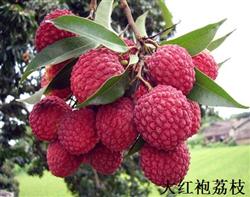 What lychee varieties are there? How are lychees planted? How are lychees managed day to day? Experienced netizens are also invited to help introduce
Lychee is rich in vitamin C and protein; at the same time, lychee is rich in vitamins, which can promote blood circulation in fine capillaries, prevent the occurrence of freckles, and make the skin smoother. Therefore, Zhongdi Network has compiled the planting and management methods for lychee, listed in detail below for netizens' reference.
I. Lychee varieties:
1. Dahongpao lychee: This variety has a strong tree vigor and weak trunk habit. The bark is grayish white, with strong adaptability, high and stable yield. The fruit is elongated heart-shaped or heart-shaped, large, dark red, with protruding scale tips and narrow but obvious striations. The fruit matures in mid-to-late July and is the main cultivar in Hejiang.
2. Nuomigan lychee: This variety has relatively strong tree vigor, strong growth vigor, weak trunk habit, and relatively high and stable yield. The fruit is heart-shaped or short heart-shaped, with purple-red or bright red skin, and the fruit matures in mid-to-late July.
3. Feizixiao lychee: This variety has strong tree vigor, a robust trunk habit, thick, long and upright branches, a sparse and uneven canopy, and weak branching ability. The fruit is heart-shaped and matures in mid-to-late July.
4. Jiangshangnang lychee: This variety has medium tree vigor and a compact canopy. The fruit is irregularly heart-shaped or short heart-shaped, with a dark red fruit surface, and the fruit matures in late July. Hejiang Nanmuye lychee: This variety has strong tree vigor, high and stable yield, a relatively strong trunk habit, and relatively upright branches. The fruit is heart-shaped or oval, medium-sized, pinkish red or light red on the sunny side, and pale green or light orange-yellow on the shady side. The fruit matures in early-to-mid August.
5. Tuodi lychee: This variety has relatively strong tree vigor, a relatively strong trunk habit, obvious main and lateral branches, and particularly prominent ridge grooves. The fruit is irregularly conical, elliptical, or ovate, red-green on the sunny side, with light red or dark red skin. The yield is medium, and the fruit matures from late July to early August.
6. Dailu lychee: This variety has medium tree vigor, slender branches, and a weak trunk habit. The fruit is short heart-shaped or spherical, with a bright red surface, obviously few cracked lines, and an obvious, deep and wide suture line forming a yellow-green band. The yield is medium, and the fruit matures from late July to early August.
II. Selection and propagation of lychee seedlings:
Grafted lychee seedlings can maintain the excellent traits of the mother tree. The rootstock of grafted seedlings has a taproot, roots deeply in the soil, has a developed root system, stronger stress resistance, vigorous growth, a high survival rate after planting, and a short recovery period. They begin to bear fruit after 4-5 years, and this is the main method for lychee seedling propagation in the future.
1. Cultivation of rootstock seedlings:
Seed collection and treatment: Lychee rootstock seedlings are all propagated by seed sowing. Take fully mature fruits of local lychee or Dahongpao lychee, wash the seeds with clean water on the same day after removing the flesh, spread them in a shady place or on a sand bed, and pregerminate for 5-7 days, watering frequently to keep the seeds at a certain humidity. When the seeds sprout, sow them into a previously prepared seedbed. Lychee seeds lose viability very easily. Seeds with the flesh removed lose water easily under natural conditions and lose germination ability after 6-7 days, so moisture retention is an important condition for seed germination.
Preparation of the nursery site and sowing: The nursery site should preferably be sandy loam rich in organic matter and loose in texture. At sowing, apply 5000 kg of finely broken barnyard manure per mu, plow and harrow finely, level, and then make beds 120 cm wide. Cover the bed surface with 2-3 cm of fine soil or river sand, place the seeds flat on the bed surface, cover with a layer of fine soil or river sand just enough to cover the seeds, then cover with rice straw or set up a shade shed to prevent direct sun exposure and keep the seedbed moist. Nutritional bags can also be used for seedling raising.
2. Grafting methods for lychee seedlings:
Lychee grafting methods include splice grafting, cut grafting, side grafting, bud grafting, and others. In practice, splice grafting and cut grafting are commonly used, as their operation techniques are simple and convenient and the survival rate is relatively high.
Splice grafting method: When grafting, cut off the rootstock 10-20 cm above the ground, smooth the cut surface, choose a smooth side and cut a slice from bottom to top, about 3-4 cm long, with the depth reaching the xylem without damaging it. For the scion, take 1-2 year old branches with plump and robust buds, cut a slice from top to bottom at the lower end of the branch, with the cut wound surface basically the same size as the cut surface of the rootstock, and cut off after retaining 2-3 buds. After the scion is cut, immediately fit the cut surface with the cut surface of the rootstock. The cambium of the scion must align with the cambium of the rootstock. Tie and fix with plastic tape and put on a small plastic bag to retain moisture. 20-40 days after grafting, the scion sprouts successively. When the new shoots grow to 2-3 cm, remove the top seal of the bag in time so that the new shoots can grow normally. When the scion buds grow, unfold leaves, and turn green, remove the bag. After the first flush on the scion matures and the second flush has emerged, remove the tying tape to facilitate normal growth of the grafted seedling.
Cut grafting method: When grafting, cut off the rootstock 10-20 cm above the ground, smooth the cut surface, then make a vertical downward cut on the inner side of the cambium, with the wound surface of the cut roughly equal to the cut surface of the scion, about 2-3 cm long. For the scion, take 1-2 year old plump and robust branches, cut a slice downward on the smooth side of the branch, about 2-3 cm long, and cut the base on the back side of the cut surface into a horseshoe-shaped cut. Retain 2-3 buds on the scion, insert the scion into the cut of the rootstock, tie and fix with plastic tape, and put on a small plastic bag to retain moisture. 20-40 days after grafting, the scion sprouts successively. When the new shoots grow to 2-3 cm, remove the top seal of the bag; when the new shoots unfold leaves and turn green, remove the bag; after the scion produces a second flush, remove the tying tape.
3. Main technical steps of grafting:
The suitable grafting period for lychee seedlings is March-May in spring and September-October in autumn. Because lychee branches are rich in tannins, low in starch, and have irregular vascular bundle structure, grafting is technically demanding, and special attention should be paid to the following points:
① Operate quickly to avoid prolonged exposure of the cut to tannin oxidation and discoloration, which affects healing and survival.
② Select scions during the period when the mother tree has accumulated more nutrients, or girdle some branches of the mother tree in advance to promote the accumulation of organic nutrients above the girdled part, and then take scions from the girdled branches. Because the starch content in the branches increases, the grafting survival rate can be improved.
③ The contact area between the cambium of the rootstock and scion should be large and fully close-fitting, so as to overcome the influence of irregular cambium and improve the survival rate.
4. Management after grafting of lychee seedlings:
After grafting lychee seedlings, check the survival situation frequently, and regraft in time those that have not survived. Remove rootstock sprouts in time: after top pruning, the rootstock will produce many sprouts, which consume nutrients and affect the sprouting and growth of the scion, so rootstock sprouts should be removed at any time.
Before the scion sprouts, the nursery should be kept moist, and attention should be paid to irrigation to prevent drought. After the grafted seedling survives and the first new flush matures, apply decomposed dilute human and livestock manure water. Thereafter, apply 1-2 light fertilizer applications during each flush period, pay attention to drainage and irrigation, and prevent drought and waterlogging. When the lychee seedling is 30-40 cm tall, carry out shaping, tip pruning, and pruning, leaving 3-4 branches as scaffold branches to cultivate a short, dense, and compact tree shape.
III. Selection and preparation of lychee orchard sites:
1. Selection of lychee planting site:
Because planting lychee in high-altitude areas makes it susceptible to low-temperature cold damage, lychee planting should preferably select sites below 500 m altitude for orchard establishment.
Lychee is a long-lived evergreen fruit tree with a tall canopy and a deep and wide root distribution. Orchards should be established on slopes below 20 degrees. South slopes have higher temperatures and longer sunshine, and the fruit colors well and has good quality, so south slopes or southeast slopes are preferable.
Because lychee is a mycorrhizal plant, slightly acidic soil is favorable for mycorrhizal growth, while alkaline soil is unfavorable for mycorrhizal growth. Lychee growing in alkaline soil will show yellowing. Therefore, it is advisable to choose red and yellow soils formed from weathered parent material of granite, sandstone-shale, or quartz sand, with a pH of 5-6.5, slightly acidic soil for orchard establishment so that lychee can grow and develop well.
IV. Planting of lychee:
1. Row spacing and variety selection for lychee:
Lychee is a long-lived evergreen fruit tree with a tall canopy. In the early stage, lychee seedlings grow relatively slowly. After field planting, even under fine management conditions, it takes 3-4 years to form a certain canopy, 7-8 years to have a certain economic yield, and 12-15 years to enter the full production period. To obtain early economic benefits from the orchard, short-term cash crops or vegetables should be intercropped, using short-term crops to support long-term ones.
Before lychee field planting, first determine whether the orchard will be intercropped, which cash crops will be intercropped, and determine the plant and row spacing of lychee according to the different growth characteristics of the crops. Lychee planting generally has two planting densities: sparse planting and planned close planting. Sparse planting generally uses 6-8 x 8 m plant and row spacing, with 10-15 plants per mu; planned close planting generally uses 4 x 4-5 m plant and row spacing, with 33-40 plants per mu. This density can generally be maintained for about 15 years. After 15 years, the canopies begin to cross each other and close the rows, so thinning should be carried out gradually until 10-15 permanent plants remain.
2. Preparation before lychee field planting:
When planting lychee on mountain and hilly land, because the soil is relatively barren, soil improvement must first be carried out before planting, which is beneficial for the rapid growth and development of lychee in the future. One way to improve the soil is to dig planting pits or trenches deeply.
For sparse planting, dig large pits 1 m deep and 1 m wide; for close planting, dig connected trenches 60 cm deep and 1 m wide. In the pits or trenches, apply organic fertilizers such as weeds, compost, and garbage fertilizer in layers and backfill soil, and evenly scatter lime to promote decomposition and breakdown of the organic fertilizer. Finally, in the upper layer of the pit or trench, apply 1 dan of decomposed farmyard manure and about 1 jin each of phosphorus and potassium fertilizer per plant, in preparation for soil settling. The preparation work should be completed 2-3 months before field planting.
3. Lychee field planting time and method:
Grafted lychee seedlings are preferably transplanted in spring from February to April, while air-layered seedlings directly planted in the field are preferably planted from August to September. Spring planting has sufficient rain, temperatures gradually rise, and sunlight is not too strong, which is beneficial for seedlings to root and sprout, with a high survival rate. Autumn planting has less rain, high temperature, strong sunlight, dryness, and high evaporation, so attention should be paid to watering to prevent seedlings from drying out and dying.
It is best to plant lychee seedlings on cloudy and rainy days. When taking and transporting seedlings, all young shoots of the seedlings should be cut off, and two-thirds of the leaves should also be cut off to reduce water loss through evaporation. The roots of air-layered seedlings are crisp and tender and break very easily, so special care should be taken when taking and transporting seedlings, handling them gently. When planting, untie the wrapping film and gently place it in the middle of the planting hole, fill loose fine soil around the root ball of the air-layered seedling, with soil covering about 10 cm above the root ball. When filling soil, gently press the fine soil around the root ball with your hands; never tread with feet or pound with a hoe. After filling the planting hole, water thoroughly to settle the roots. When planting temporary nursery seedlings and grafted seedlings, try to damage the roots as little as possible and plant with a soil ball. The root system of grafted seedlings is relatively developed and lignified, with strong absorption capacity. When planting, they survive more easily than air-layered seedlings. The planting depth should be such that the backfilled soil covers the root crown, and the backfilling method is the same as above. After planting, shape the ground around the plant into a tree basin of about 80-100 cm and set up a support stake for fixation.
V. Management of lychee during the young tree stage:
Young lychee trees refer to the period from field planting to before fruiting. The first year after planting is the recovery period, when the root system is not developed and growth is slow, and the number and quantity of flushes are very small; in the second year, vitality recovers, and root growth and branch sprouting gradually become vigorous; from 3-4 years, vegetative growth is vigorous, with a large number of branches and shoots emerging, forming a canopy with a certain fruit-bearing capacity; after five years, they begin to trial fruit.
1. Fertilizer and water management:
After lychee survives field planting, apply light fertilizer frequently (use 3-5 kg of decomposed human and livestock manure per plant, poured around the planting hole) to promote multiple flushes of young trees in one year and rapid canopy expansion, laying the foundation for early production and high yield. In dry seasons, adopt light fertilizer applied more frequently, which both fertilizes and combats drought; in winter when temperatures are low, plastic film can be used to cover around the planting hole basin, which can retain moisture and prevent cold, and is beneficial for root growth.
2. Intercropping in lychee orchards:
In newly planted lychee orchards, there is a large empty space between plants and rows. Vegetables and low-growing crops such as peanuts can be intercropped between plants and rows, and fruit trees with shorter growth cycles, early fruiting, and shorter canopies can also be intercropped, such as Japanese pear, dwarf mandarin, cherry, plum, grape, and so on. After the lychee begins to bear fruit, the intercrops should be gradually phased out.
3. Soil management:
Soil management in lychee orchards mainly consists of weeding, intertillage with green manure incorporation, expanding the tree basin, or spreading grass mulch around the basin to keep the soil moist and prevent weed growth. (4) Shaping and canopy protection:
Strengthen fertilizer and water management for young lychee trees, and they can produce 4-5 new flushes each year. When shaping, leave 3-4 main branches on the trunk, with relatively even growth angles and distribution. Branches on each main branch can be allowed to grow freely, but crossing, drooping, and overly dense branches should be gradually and appropriately thinned. Flower spikes produced within 1-4 years after planting should be removed in January-February each year; otherwise, they consume plant nutrients and affect flush production and canopy expansion. Tree protection mainly involves preventing and controlling pests and diseases (such as scarab beetles and lychee stink bugs) and preventing freezing in winter.
VI. Management of mature lychee trees:
Mature lychee trees refer to lychee trees that have entered fruit-bearing age. Under normal cultivation and management conditions, lychee seedlings after field planting generally have the ability to flower and fruit normally after 8-10 years. However, because the canopy is small in the early stage, although they can flower, they generally cannot hold fruit, and therefore have no yield.
1. Characteristics of mature lychee trees:
Mature lychee trees gradually transition from the vigorous vegetative growth period to the reproductive growth transition period. The characteristics of this period are: strong shoot sprouting ability, vigorous growth, able to produce flushes in all four seasons, high consumption of assimilates, and low accumulation.
Mature lychee trees are monoecious, cross-pollinated, and heterothallic in ripening, and have internal physiological defects such as a high degeneration ratio of male and female cells and a low germination rate of flower buds, resulting in a low fruit set rate. The flowering period of mature lychee trees is generally 3-5 days earlier than that of mature trees, making them more susceptible to adverse early spring weather that affects fruiting. Mature lychee trees have a short flowering period, especially the female flowering period, and the female flowers on the same plant often all finish blooming within 2-3 days.
Mature lychee trees often have a large flower quantity and consume a lot of assimilates, so that the tree's nutritional supply after flowering cannot keep up, leading to severe fruit drop after flowering. Because of the above characteristics, if cultivation technical measures are slightly inappropriate, the phenomenon of flowering without fruiting or very little fruiting often occurs.
2. Fertilization of mature lychee trees:
Mature lychee trees mainly regulate growth and development, accumulate nutrients, and promote flowering and fruiting. The number of flushes should be controlled in a planned way, focusing on promoting autumn shoots to emerge on time and cultivating fruiting mother branches. Taking the mid-season variety Dahongpao lychee as an example, through trials, the last flush of the flower-bearing mother branch of this variety must fully mature before mid-October in order to flower, so the last flush of the fruiting mother branch should be regulated to emerge before late August so that it can turn green and mature before the end of September.
For this reason, quick-acting fertilizer must be applied heavily from mid-June to early July, with 50 kg of human and livestock manure and 0.5-0.7 kg of urea per plant. In drought, the orchard must be irrigated thoroughly so that branches and shoots emerge promptly and uniformly and the tree vigor is strong.
If management conditions are relatively good, trees of the appropriate age should be encouraged to produce two flushes, namely summer shoots emerging around mid-June. From late July to mid-August, apply heavy fertilizer combined with quick-acting nitrogen, phosphorus, and potassium. Urea 0.5-0.7 kg per plant, phosphorus fertilizer 0.5 kg, potassium fertilizer 0.5 kg. Shoots emerging after late September generally cannot flower and must be strictly controlled. Late autumn shoots that have already emerged but have not turned green should be removed manually, or sprayed on the canopy of trees sprouting late autumn shoots with 1500-2000 PPM Bg plus 800-1000 PPM ethephon or 300-500 times glyphosate, all of which can effectively inhibit and kill late autumn shoots and promote flower formation in the shoots.
3. Methods for adjusting the flowering period and flower quantity of mature lychee trees:
Because the flowering period of mature lychee trees is relatively early, short, and concentrated, the probability of encountering unfavorable climate is high, which seriously affects pollination and fertilization. The flower quantity is large, and a large amount of plant nutrients is consumed during the flowering period, so the flowering period must be adjusted and the flower quantity controlled.
For example, for Dahongpao lychee, from early December to around the Beginning of Spring the following year, flower spikes should be cut back in stages and batches. For flower spikes appearing in early December, all can be cut off, leaving only 2-3 cm at the base of the flower spike. After the Beginning of Spring, inflorescences can emerge again from the base of the flower spike or from axillary buds below the base, which can delay the flowering period and reduce flower quantity.
Around the Beginning of Spring, for long flower spikes and large inflorescences, cut back in batches or thin out one-half to two-thirds of the flower quantity. Through such treatment, the flowering periods of flower spikes on the same plant are earlier or later, relatively extending the flowering period and increasing the chance for male and female flowers to meet, which is beneficial for pollination and fertilization. From late March to 10 days before flowering, carry out one more bud thinning on large inflorescences that have been cut back or not cut back, so that each flower spike retains about 1000-1500 small flowers.
4. Artificial pollination methods for lychee trees:
To ensure full pollination and fertilization of lychee, in addition to adjusting the flowering period as above and increasing the chance for male and female flowers to meet, there must be sufficient mixed-variety pollen with strong vitality during the full bloom period of female flowers. Therefore, orchards with a single variety should supplement with a certain number of pollinator trees (about 10%), or top-graft some pollinator varieties onto the existing plants, or spray sugar-pollen water for artificial supplementary pollination during the full bloom period of female flowers. The preparation method of sugar-pollen water is: collect lychee male flower pollen in advance, that is, collect newly opened male flowers and place them centrally in a desiccator or indoors, generally storing them for 3-7 days. When needed, place them in a porcelain basin, rub and wash with clean water, filter, and add 10% sucrose and 0.05%-0.1% borax to the water. Spray the canopy on sunny days when female flowers are in full bloom and the daily temperature is 18-28 °C. Lychee is an insect-pollinated flower, and during the flowering period there must be a sufficient number of bees (more than one colony per 2-3 mu of orchard) collecting nectar and pollinating in the orchard.
5. Methods for preserving flowers and fruits of lychee trees:
Method 1. Fertilization before flowering: From late February to late March, apply already decomposed organic fertilizer, with 50-75 kg of human and livestock manure per plant, or apply decomposed oil cake 3-4 kg + phosphorus fertilizer 1-1.5 kg in advance. From 10-15 days before flowering, apply an additional quick-acting nitrogen fertilizer (urea) at 0.5-0.75 kg per plant.
Method 2. During the flowering and young fruit stages, apply foliar topdressing combining quick-acting N, P, K + trace elements + plant growth regulators + pesticides.
① At the full bloom stage of female flowers: spray the canopy with 0.05%-0.1% borax + 0.1% magnesium sulfate + 10% sugar-pollen water.
② 3-5 days after the end of female flowering, namely the young fruit pea stage: spray the canopy with 0.2% monopotassium phosphate + 5 PPM 2,4-D or 30 PPM fruit-setting agent + 50 PPM gibberellin + 600-800 times trichlorfon solution.
③ 15-20 days after the end of female flowering, spray the canopy with 0.2% monopotassium phosphate + 0.3% urea + 30 PPM fruit-setting agent + 30-50 PPM gibberellin.
④ From when lychee young fruit begins to grow the seed coat to when the flesh wraps two-thirds of the seed, about 40 days after the end of female flowering, spray the canopy with 0.5-0.8% urea + 0.3% monopotassium phosphate + 30-50 PPM gibberellin.
⑤ About 20 days before fruit harvest, if there are pests, add pesticide to the foliar topdressing at the same time to control them: spray the canopy with 0.4% monopotassium phosphate + 800 times trichlorfon or 2000-3000 times deltamethrin.
6. Pruning of lychee trees:
Lychee is a fruit tree that likes light. When adult lychee orchards close their rows and the canopy becomes shaded, ventilation and light penetration are affected. Crossing, overly dense, shaded, thin and weak branches, as well as dead branches from pests and diseases, should be pruned so that branches and shoots are evenly distributed and all layers above and below the canopy have ventilation and light, increasing photosynthetic efficiency. Pruning is usually carried out after fruit harvest.
Methods for preserving flowers and fruits of lychee
Methods for controlling fruit cracking in Feizixiao lychee