Detailed Explanation of Key Techniques for Pomegranate Tree Planting and Management
How should pomegranate trees be managed? How can pomegranate trees be managed to achieve a high yield? Experienced netizens are kindly asked to give a detailed introduction. The pomegranate is a berry that is rich in nutrients, with vitamin C one to two times higher than that of apples and pears. Moreover, pomegranates contain large amounts of organic acids, sugars, proteins, fats, vitamins, as well as calcium...
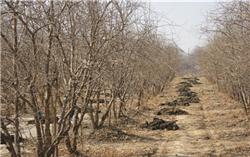 How should pomegranate trees be managed? How can pomegranate trees be managed to achieve a high yield? Experienced netizens are kindly asked to give a detailed introduction.
The pomegranate is a berry that is rich in nutrients, with vitamin C one to two times higher than that of apples and pears. Moreover, pomegranates contain large amounts of organic acids, sugars, proteins, fats, vitamins, as well as minerals such as calcium, phosphorus and potassium. As a result, they are widely grown in our country. Therefore, Zhongdi Web has compiled the management methods for pomegranate trees regarding fertilizer and water, pruning, pests and diseases, and the flowering period, listed in detail below for netizens' reference.
I. Fertilizer and water management methods for pomegranate trees:
1. The fertilizing principle for pomegranate trees is to mainly use organic fertilizer, supplemented by chemical fertilizer. The fertilizers applied should not have adverse effects on the orchard environment or fruit quality.
Fertilizing methods and amounts for pomegranate trees:The base fertilizer for pomegranate trees is generally applied in autumn after the fruit is harvested and before leaf fall, mainly using farmyard manure, mixed with a small amount of nitrogen chemical fertilizer.
Topdressing for pomegranate trees needs to be carried out 3 times a year: the 1st time from bud break to the early bud stage, the 2nd time during the young fruit swelling stage, and the 3rd time during the fruit coloring stage. The last topdressing uses a very small amount and can be left out of the count; foliar spraying of fertilizer is carried out 4 to 5 times a year, generally 2 times in the early growth stage and 2 to 3 times in the later stage, which can supplement the trace elements needed for the growth and development of the fruit trees.
In addition, spraying Guaguo Zhuangdiling once each before pomegranate flowering, at the young fruit stage and at the fruit swelling stage can supplement the tree's nutrient consumption, preserve flowers and fruits, and increase the fruit-setting rate.
2. Water management for pomegranate trees: pay attention to drainage during the rainy season, and irrigation is needed during the dry season. The winter water supply for retaining off-season fruit is especially important, generally irrigating once every 10 to 15 days. For winter irrigation, apply the freezing water, after which the bed surface can be covered with plastic film to keep warm and retain moisture.
II. Pruning methods for pomegranate trees:
Because the pomegranate tree is a tree species that greatly loves light, the distribution of branches within the canopy should be sparse at the top and dense at the bottom, so that both inside and outside can achieve ventilation, light penetration and fruiting.
1. Summer pruning methods for pomegranate trees
Girdling method: mainly used for strong branches on young vigorous pomegranate trees. In early to mid-June, select a smooth part of a strong branch and girdle it at a width of 0.3 cm, which can significantly promote the differentiation and formation of flower buds and increase the fruit-setting rate.
Pinching method: during the flowering period of the pomegranate tree, pinch off the top 5 cm, or when the new shoot grows to 30 to 40 cm, pinch off 1/3 of the shoot length, which can promote flower bud differentiation and fruit development and increase the fruit-setting rate.
Sucker removal method: generally in July to August, cut off new shoots sprouting from the trunk below 50 cm from the ground, to benefit the growth of the upper part of the trunk and reduce nutrient loss.
2. Autumn pruning methods for pomegranate trees:
Thinning method: continue to cut off dense, leggy, pest- and disease-affected sprouting branches and root suckers. After thinning, the light spots under the canopy should be evenly distributed on the ground, with 10% to 15% of the total canopy projection area being suitable. Ensure that the fruit receives direct light, so that the leaf-cluster branches and short branches in the inner canopy receive sufficient light and form flower buds quickly. For the cut pest- and disease-affected fruit branches, bury them deeply or burn them.
3. Winter pruning methods for pomegranate trees:
Pomegranate trees are generally not pruned in winter; only dead branches, pest- and disease-affected branches, etc. are cut off.
III. Management methods for pomegranate trees during the flowering and fruiting period:
1. Controlling shoots to promote flowering:Generally before pomegranate flowering (early May), ring-cut the trunk or main branches and large auxiliary nurturing branches of vigorous trees and apply Cuhuawang No. 2 to increase the fruit-setting rate. During the flowering and young fruit stages, repeatedly wipe off vigorous shoots on the back to increase the fruit-setting rate and reduce flower and fruit drop.
2. Flower and fruit thinning of pomegranate trees
Flower thinning method: the pomegranate has a large number of flowers, so flowers should be thinned in time, the earlier the better. The complete flowers of the 3rd flush are generally also thinned off. Starting from when flowers can be identified, thin once every 10 days.
Fruit thinning method: fruit thinning adopts the method of keeping more first-flush fruits, selectively keeping 2nd-flush fruits, and thinning off 3rd-flush fruits, so that the pomegranate tree carries a reasonable load.
IV. Pest and disease control methods for pomegranate trees:
The main diseases of pomegranate are scab, dry rot and early defoliation disease. The pests harming pomegranate include aphids, scale insects, peach borers, spider mites, etc. Use natural enemies or spray insecticides such as imidacloprid, pirimicarb, diflubenzuron No. 3, avermectin, triflumuron, Taoxiaoling, etc. for control. At ordinary times, promptly remove pest- and disease-affected branches and fruits and bury them deeply, then immediately spray Hushu Jiangjun to disinfect and sterilize, prevent the spread of pathogens, and spray an appropriate amount of insecticide for control.
Use Xingao Zhimo micro-film bagging; simply spray it evenly on the fruit surface and it will automatically spread and wrap the fruit. It not only has a good control effect on many fungal diseases, but also isolates high pesticide residues, increases the brightness of coloring, and produces pollution-free fruit.
Reasons why pomegranate trees do not bear fruit
Pomegranate tree seedling raising methods