How to grow longan to achieve high yields?
How can longan be grown for high yields? How is longan managed on a daily basis? We would also like netizens with longan growing experience to help explain. Research has found that every 100 grams of longan fruit pulp contains 12%-23% total sugar, 26.91% glucose, 1.26% tartaric acid, 1.41% protein, 0.45% fat, 163.7 mg vitamin C,...
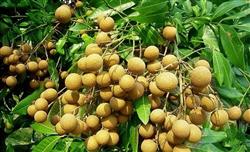 How can longan be grown for high yields? How is longan managed on a daily basis? We would also like netizens with longan growing experience to help explain
Research has found that every 100 grams of longan fruit pulp contains 12%-23% total sugar, 26.91% glucose, 1.26% tartaric acid, 1.41% protein, 0.45% fat, 163.7 mg vitamin C, 196.6 mg vitamin K, as well as vitamin B1, B2, P, and others, with a significant effect on the nutrient supply to the human body. It is widely planted in provinces such as Guangxi, Guangdong, Fujian and Taiwan, China. Therefore, Zhongdi Network has compiled the key management points for longan, listed in detail below for netizens' reference.
I. Requirements of longan trees for environmental conditions:
1. Temperature is an important factor affecting the growth and development, flowering and fruiting of longan. An annual average temperature of 20-22°C is more suitable for longan growth. When the temperature drops to 0°C, longan seedlings are prone to freezing damage. When it drops to -0.5°C to -4°C, large longan trees show varying degrees of freezing damage.
For example, in early spring, longan needs a period of relatively low temperature of 8-14°C to facilitate flower bud differentiation. Above this temperature range, the higher the temperature and the longer it lasts, the more likely the longan tree is to produce "flushing shoots." During flowering, longan is intolerant of low-temperature rainy weather, and the optimal temperature is 18-27°C. During the fruiting period, under temperature conditions of 25-32°C, longan branches and shoots grow quickly, the fruit has high sugar content and excellent quality.
2. In terms of water requirements, longan is a subtropical fruit tree that is drought-tolerant, moisture-loving and afraid of waterlogging.
During the annual growth and development process, the water requirements differ at each growth stage. From November each year after the autumn shoots mature until April of the following year, this period requires less water, so as to avoid the sprouting of winter shoots, increase the accumulation of nutrients in branches and leaves, and help flower bud differentiation, flower panicle emergence, flowering and fruit setting; during the rest of the period, especially July-August, more water is required. If water is lacking, it will affect the growth and development of the root system and branches and shoots, and affect fruit yield and quality; if in the later stage of fruit development, prolonged drought followed by sudden rain can also cause fruit cracking and fruit drop.
3. Longan has broad adaptability to soil and is not strict about soil type; it can even grow in barren, dry, acidic hilly red soil. However, slightly acidic soil with deep soil layers, rich organic matter, loose texture and good drainage is suitable. The pH value is between 5.5-6.5.
II. Management methods for longan trees:
1. Management of young longan trees:
① Weeding of young longan trees:
In the tree disk of young longan trees, frequent intertillage, loosening of soil and weeding should be carried out. It is recommended to provide year-round mulching on the tree disk, especially in the first year and a half after planting, with a thickness of 5-10 cm, and a thin layer of soil on top. The mulch should be about 15 cm away from the trunk to prevent scorching the trunk or termite damage. Between the rows, intertillage and weeding should be carried out 3-4 times each year. A combination of herbicides and manual weed control can also be used.
② Watering and fertilizing of young longan trees:
Apart from watering at the initial planting stage to prevent drought and ensure survival, young longan trees should be irrigated promptly during prolonged drought without rain; especially those planted late in the year should have strengthened winter water management. During the rainy season, drainage should be carried out to prevent water accumulation. Fertilization can begin one month after planting, following the principle of "two fertilizers per shoot," that is, applying fertilizer once when the terminal bud of the branch shoot begins to sprout and once during the greening stage.
When fertilizing young longan trees, ring trenches, half-ring trenches, or side trenches (about 5-10 cm deep) should be opened slightly beyond the outer edge of the canopy (here called the drip line), and soil should be covered after fertilization. In addition, foliar fertilization can also be carried out in conjunction with pest and disease control.
③ Pruning of young longan trees:
Cultivate a dwarfed trunk of about 30 cm in height, keep 3-4 evenly distributed main branches (first-level branches) on the trunk, and keep 2-3 secondary main branches (second-level branches) on each main branch, and cut off the remaining branches. The main branches and secondary main branches form the framework of the canopy. Young trees of various longan varieties tend to grow vigorously with longer branches, so attention should be paid to timely and appropriate pinching and shortening pruning to promote branching.
During pruning, take care to permanently retain the main branches and secondary main branches positioned at the base on the canopy. Remove rootstock sprouts, remove flower panicles, thin out crossing branches, overly dense branches, weak branches, pest- and disease-damaged branches, shaded branches, drooping branches, bent branches and other ineffective branches, so that the canopy is open and allows wind and light through. When the angle of a main branch is too small (angle with the extension line of the trunk <45 degrees), methods such as propping and pulling can be used to open up its angle; when the angle of a main branch is too large (>70 degrees), bamboo or wooden strips can be used to support it to raise the branch tip and reduce its angle.
2. Management of mature longan trees:
① Fertilizer amount for mature longan trees:
For every 1000 kg of fresh longan fruit produced, a longan tree absorbs 4.0-4.8 kg of nitrogen (N), 1.46-1.58 kg of phosphorus (P2O5), and 7.54-8.96 kg of potassium (K2O) from the soil, with a nitrogen, phosphorus and potassium ratio of 1:0.28-0.37:1.76-2.15. Combining the absorption and utilization rates of various elements and the absorption amounts of roots, stems, leaves and flowers, the necessary fertilizer amount calculated for every 1000 kg of longan produced is: pure nitrogen (N) 16-20 kg, phosphorus pentoxide (P2O5) 10-12 kg, potassium oxide (K2O) 15-20 kg, calcium oxide (CaO) 14-16 kg, magnesium oxide (MgO) 3-5 kg. The ratio is nitrogen (N) 1:phosphorus (P2O5) 0.6:potassium (K2O) 1:calcium (CaO) 0.8:magnesium (MgO) 0.2.
Mature fruiting longan trees are generally fertilized 3-4 times a year, at least 2 times and at most 6 times. However, they generally center on promoting flowers, stabilizing fruit, strengthening fruit (promoting shoots), and cultivating autumn shoots, and the amount and type of fertilizer also vary according to each key period.
② Flower-promoting fertilizer for longan trees (pre-flowering fertilizer):
Apply from late December to mid-to-late January. Its role is to promote flower bud differentiation, robust flower panicle development, improve the quality of flower organs, and reduce flower drop. Note that nitrogen fertilizer should not be applied alone, otherwise it is easy to cause flushing shoots. The application amounts of nitrogen, phosphorus and potassium each account for about 25% of the annual fertilizer amount. After application, water or broadcast after rain, spreading the fertilizer in the root zone around the canopy. If a 50 cm deep ring trench can be opened around the canopy and the fertilizer applied together with weeds, it is even better. The fertilization time should be determined based on tree vigor, leaf color depth and rain conditions. If the tree vigor is relatively strong, the leaf color is relatively green, or the weather warms early or there is a lot of rain, generally it should not be applied early. Conversely, for weak trees or when the weather is relatively cold or hormone spraying has been used too heavily for control, fertilization should be slightly earlier.
③ Fruit-stabilizing fertilizer for longan trees (post-flowering fertilizer):
Apply at the end of full bloom. Its main role is to provide sufficient nutrients to the fruit tree, supplement the nutrient consumption from flowering, improve the fruit-setting rate of young fruit and promote the emergence of summer shoots. The application amounts of nitrogen, phosphorus and potassium account for 15%, 25% and 25% of their annual application amounts respectively.
④ Fruit-strengthening fertilizer for longan trees (shoot-promoting fertilizer):
Apply 40 days after the female flowers fade, or after the flower panicle framework has formed and before the second physiological fruit drop. The purpose is to timely supplement the tree's nutrition in the late flowering period, ensure the nutrients needed for the growth and development of young fruit, help reduce the second physiological fruit drop, promote fruit enlargement, and increase the current year's yield. It lays the foundation for the emergence of autumn shoots after harvest and the cultivation of good fruiting mother branches. The application amounts of nitrogen, phosphorus and potassium account for 15%, 25% and 25% of their annual application amounts respectively. The amount of this fertilization can be determined according to the soil, tree vigor, leaf color and other conditions.
⑤ Fertilizer after longan fruit harvest:
This fertilizer can be applied 10-15 days before harvest. It is a major fertilization period of the year. Its main role is to supplement the tree's nutrient consumption after harvest, restore tree vigor, make the autumn shoots develop robustly, and cultivate robust fruiting mother branches for the coming year. During this period, organic fertilizer and inorganic fertilizer should be applied in combination. It can also be divided into pre-harvest fertilizer and post-harvest fertilizer, but pre-harvest fertilizer is the main one.
The fertilization recommendations for the above 4 periods are not necessarily the same for every orchard every time. Instead, fertilization should be flexible according to the specific conditions of one's own orchard, namely the tree's growth vigor and fruit load. However, among them, the flower-promoting fertilizer, fruit-strengthening fertilizer and post-harvest fertilizer must not be neglected.
⑥ Methods for controlling winter shoots and promoting flower bud differentiation in longan trees:
Winter shoots generally refer to branches and shoots that sprout in winter (November to January of the following year) but cannot produce flower panicles. In most years in Hainan, winter temperatures are relatively high, and longan is more prone to producing winter shoots, which is unfavorable for flower bud differentiation. Taking effective technical measures to control winter shoots is one of the key links in Hainan longan production.
Method 1: Control water and fertilizer, cut roots and expose roots to control shoots:
When cultivating longan autumn shoots, nitrogen fertilizer should not be applied alone; phosphorus and potassium fertilizer should be appropriately combined. After the last autumn shoots mature, no more nitrogen fertilizer should be applied, and water supply should be appropriately controlled. From late October to early November, after the last autumn shoots of longan mature, plow the entire orchard to cut roots. The method is to loosen the surface soil of the tree disk, cut the upper roots, let them sun-dry, and cover with soil only when drought symptoms appear on the leaves.
Method 2: Ring cutting and ring tying to control shoots:
For young and vigorous longan trees, ring cutting is carried out in November, while for trees that have just begun to bear fruit, it can also be done when the last autumn shoots turn green and mature. Ring cutting uses a sharp electrician's knife blade or ring-cutting knife to make one circular cut around the bark of the trunk or skeletal branches, with the depth reaching the xylem (wood); it should not be too deep or too shallow. For branches with vigorous growth and dark green, glossy leaves, two rings can be cut, 10-15 cm apart. For trees that have just begun to bear fruit, it can be done on the trunk or skeletal branches 6-10 cm in diameter; for young and vigorous trees, it can be done on thick branches 10-15 cm in diameter. Old and weak trees are not suitable for ring cutting. For trees that have just begun to bear fruit, No. 14-16 iron wire can also be used to tie 1-2 rings around the trunk or main branches. When tying, twist the wire evenly and tightly until it slightly sinks into the bark, and the wire can be untied after about 1-2 months. If the leaves are found to turn yellow, the wire should be untied immediately to avoid defoliation.
Method 3: Manual removal of winter shoots:
When winter shoots emerge, promptly remove them by hand or with a bamboo pole.
Method 4: Chemical shoot control and flower promotion:
Chemical agents for controlling shoots and promoting flowers include plant growth regulators, chemical fertilizers, herbicides and even insecticides, used alone or in mixtures of multiple agents. Among various shoot-controlling and flower-promoting agents, ethephon is the most commonly used. The principles for using ethephon are: for short winter shoots and tender leaves, use a lower concentration; for long winter shoots that have already unfolded leaves, use a higher concentration; for sensitive varieties, weak trees, and during high temperature and drought, the concentration should also be reduced; spray until the leaf surface is moist. The concentration and method of ethephon use should be promoted on a large scale only after local trials.
⑦ Methods for preserving flowers and fruit in longan trees:
Method 1: Pre-flowering fertilizer, fruit-stabilizing fertilizer and fruit-strengthening fertilizer should be applied well, and foliar fertilization is best combined with disease and pest control.
Method 2: The key pests and diseases to control include stink bugs, scarab beetles, geometrid moths, leaf roller moths, fruit-boring insects, downy blight, and others.
Method 3: During the flowering and fruiting period, prevent water accumulation in the orchard while also preventing drought; during full bloom, if there is drought or dry wind, especially dry hot wind, irrigate first, and from 8-10 a.m. spray water on the canopy to wash the flowers.
Method 4: There are panicle thinning and short cutting, and long panicle short cutting. For the former, when the flower panicle is below 5-10 cm long and the internodes are still short, cut off about 13 cm from the top of the panicle to promote the emergence of side panicles, and the flowering period will be delayed accordingly. For the latter, when the flower panicle is more than 10 cm long, top it, keeping the flower panicle 8-10 cm long. After the morning dew has dried, use a firm, flexible small bamboo branch to repeatedly "sweep and strike" the top of the flower panicle, breaking the top of the panicle. For "clustered" flower panicles or densely growing flower panicles, thinning should be carried out, retaining about 1/3 of the flower panicles. For those that underwent chemical control of winter shoots to promote flowering in winter, the flower inflorescences that emerge often become significantly shorter, which can also increase the fruit-setting rate.
Method 5: When the flower panicle emerges and its small leaves grow obliquely upward, spraying 100-300 ppm ethephon or 0.5-1.0% salt water can be tested to remove the small leaves on the flower panicle, but the ethephon concentration must not be too high. However, it can be used in large amounts only after successful trials.
Method 6: During the flowering period, place one box of bees per 600-1200 sq m; the number of beehives can be appropriately increased or decreased according to the size of the longan trees and the amount of flowers. During the bee release period, pesticide spraying should be stopped in the longan orchard and nearby other orchards or vegetable gardens to prevent bees from being poisoned or honey from being contaminated.
Method 7: If rainy weather occurs during the full bloom period of longan, shake the flowers promptly after the rain to shake off the rainwater accumulated on the flower panicles and the faded flowers, to prevent flower soaking or rotting.
Method 8: During the flowering period of longan, 90% trichlorfon 600-800 times can be sprayed to control lychee stink bugs and scarab beetles, etc. During the flowering period, one spray of "Haizhuangyuan" Huaguofeng seaweed fertilizer 800 times can be applied, and during the young fruit period, "Haizhuangyuan" Huaguofeng seaweed fertilizer 800 times can be sprayed 1-2 times to benefit fruit setting.
Method 9: For adult fruiting trees that grow relatively vigorously, especially trees that have just begun to bear fruit, carry out ring cutting 10-15 days after the female flowers fade. For those growing vigorously, a second ring cut can be made 40-50 days after the flowers fade. It is advisable to use an electrician's knife to make one ring cut on a large branch or main branch, reaching the xylem. For vigorously growing trees that have just begun to bear fruit, spiral girdling of 0.2-0.3 cm can be carried out on the trunk or main branches in winter or before flowering, generally 1-1.5 rings, with each ring 4-5 cm apart,
Method 10: Longan fruit matures relatively late and is susceptible to typhoon damage before harvest. For trees bearing many fruits, thin out part of the flower panicles so that the flower panicles are evenly distributed, so as to avoid fruit drop caused by fruit panicles colliding with each other when a typhoon occurs; before harvest, bamboo poles can be used for support or ropes for hanging to prevent the fruit branches from being broken by wind.
⑧ Pruning methods for longan trees:
The pruning of adult longan trees focuses on cultivating summer shoots as the base branches for the emergence of autumn shoots (summer-extended autumn shoots). Pruning is carried out in spring, summer and autumn. In spring, when the amount of flowers is too large, thin out part of the flower panicles. At the same time, thin out ineffective branches, and for thin, weak and not fully developed spring shoots, cut off the not fully developed parts.
In summer, if there is too much fruit, a considerable portion of the fruit panicles should be thinned, and at the same time the empty panicles left after flower and fruit drop should be cut off. Thinning out flower panicles and fruit panicles in spring and summer, or shortening part of the one-year-old branches at the end of January, can promote spring shoots and then extend summer shoots, or promote summer shoots, as base branches for fruiting mother branches.
Whether lychee or longan, when cultivating new shoots, attention should also be paid to timely bud thinning, that is, shoot thinning, to prevent branches and shoots from becoming too dense. In principle, keep 2 new shoots per branch, 1 for smaller branches and 3 for thick, strong branches. Shoot thinning is generally carried out before the new shoots turn green.
III. Pest and disease control methods for longan trees:
1. Longan downy blight:
Longan downy blight mainly occurs on nearly mature fruit, and sometimes also damages leaves, flower panicles, fruiting branchlets, fruit stalks and green fruit. Under high humidity conditions, this disease causes a large amount of fruit drop and fruit rot, with fruit loss reaching 30-80%. When the fruit is damaged, the lesions can occur at any part of the fruit, but mostly start from the fruit stalk. The lesions are initially brown, irregular, with no obvious margin, and later the whole fruit turns brown, the pulp rots into fruit slurry, with a strong wine and sour smell. Diseased fruit exudes a brown liquid, and in the early stage of the disease a white downy mold-like substance can appear, hence the name. Diseased fruit falls off easily. This disease is a fungal disease, and the pathogen is lychee downy blight fungus.
Control method (1): After fruit harvest, strengthen pruning to make the canopy well ventilated and lit, and remove diseased fruit, rotten fruit and dead branches and fallen leaves on the tree and on the ground, take them outside the orchard for deep burial or centralized burning, then spray 0.3-0.5 degrees Baumé lime sulfur mixture on the tree and ground for disinfection.
Control method (2): Spray for protection during the spring shoot stage, flower bud stage, young fruit stage and near-maturity stage of longan trees. In the early stage of disease onset, spray in mixture with 64% Sandofan 500 times, or 58% Ridomil MZ 800 times, or 40% fosetyl-aluminum 250-300 times, or 50% carbendazim 1000 times, or 75% chlorothalonil 500-1000 times. Fungicides are best used alternately to improve control effectiveness. After the fruit panicles begin to droop, if rainy weather occurs, spray once every 7-10 days, for 2-3 consecutive sprays.
2. Longan witches' broom disease:
Longan witches' broom disease mainly damages leaves, new shoots and flower panicles. Diseased leaves are deformed, twisted and fall off easily; diseased shoots shrink, curl, become bare shoots, and leafless bare shoot clusters look like brooms; diseased flower panicles cannot set fruit, and branches and shoots die, seriously affecting tree vigor and yield. This disease is caused by a virus and is spread through scions and seedlings. Piercing-sucking pests such as lychee stink bugs and longan psyllids are its main virus transmission vectors.
Control method (1): Before grafting, soak the scions in 1000 units of tetracycline or hot water at 50-55°C for 5-15 minutes for disinfection.
Control method (2): For longan trees with mild disease, promptly cut off diseased branches and diseased panicles and burn them centrally, while severely diseased plants should be pulled out and burned; in new areas or newly built orchards, if diseased plants are found, the diseased plants should be promptly pulled out and burned. At the same time, use 20% fenpropathrin 3000-4000 times or 40.7% chlorpyrifos 1000 times to spray the whole plant, once every 7-10 days, 2-3 times.
3. Longan gall mite (red spider mite):
Longan gall mite is also called felt disease, oil dregs head, or rubber disease. Young mites or adult mites suck the sap of longan tender shoots, tender leaves, flower panicles and tender fruit to cause damage. Damaged leaves are often deformed and have yellow-brown to dark brown hairs. After flowers are damaged, the calyx enlarges, the petals and stigma develop incompletely, and they soon dry up and cannot set fruit. Even if fruit has already set, the fruit is not large and drops. In severe cases, more than 80-90% of flowers may fail to set fruit, or the whole plant may fail to produce flower panicles.
Control method (1): After fruit harvest and in winter, cut off damaged branches and leaves, sweep up fallen leaves, and burn them centrally.
Control method (2): Spray seedlings with 20% dicofol 800 times to reduce the source of mites.
Control method (3): When new shoots or flower panicles emerge, use 20% dicofol 800 times, 40% dimethoate or 50% dichlorvos 1000 times, 5% fenazaquin 1500-2000 times, or 73% propargite 1000 times to spray and kill young mites and adult mites.
Scientific planting methods for longan trees
Winter management methods for longan trees