How should loquat trees be managed to achieve high yields?
How should loquat trees be managed to achieve high yields? What should be noted when planting loquat? Experienced readers are asked to help explain. Because loquat ripens early, it enjoys the reputation of "the first branch of fresh fruit in early summer." But loquat is a low-yield fruit tree, and the management of the tree is very important. Therefore, Zhongdi Web has compiled the management of loquat trees...
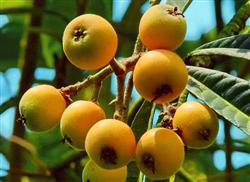 How should loquat trees be managed to achieve high yields? What should be noted when planting loquat? Experienced readers are asked to help explain.
Because loquat ripens early, it enjoys the reputation of "the first branch of fresh fruit in early summer." But loquat is a low-yield fruit tree, and the management of the tree is very important. Therefore, Zhongdi Web has compiled the key management points for loquat trees, listed in detail below for readers' reference, in hopes of achieving high loquat yields as soon as possible.
1. The climate and environment for growing loquat:
Loquat requires relatively high temperatures and generally can grow normally when the annual average temperature is above 12°C, but the loquat trees newly researched in the northern Jiangsu region can grow normally at an annual average temperature of -10 to 30°C.
The flowering period of loquat trees is in late winter and early spring, and low temperatures will affect their flowering and fruiting. If the temperature is -6°C, flowering is affected; at -3°C, young loquat fruit suffers cold damage; above 10°C, loquat pollen begins to germinate, and around 20°C pollen germination is most suitable. But when the air temperature or soil temperature reaches above 30°C, the growth of branches, leaves and roots becomes slow and poor, and if the fruit encounters high temperatures of 35°C within 7 to 15 days before harvest, it is very prone to sunburn damage, or even loses its edible value.
Loquat is not strict about soil requirements and has wide adaptability; it can generally grow and bear fruit in ordinary soil, but grows better in loose soil containing more sand or gravel.
2. Varieties of loquat trees:
Loquat varieties are generally divided into two types: red-fleshed loquat and white-fleshed loquat. Red-fleshed loquat varieties have a long lifespan, strong tree vigor and high yield, but their quality is not as good as white-fleshed loquat. More common varieties include Yuanzhong, Jidanhong and others.
White-fleshed loquat varieties are inferior to red-fleshed loquat in growth and yield, but their quality is excellent. Famous varieties include Yuanzhong, Yuzhong, Jidanbai and others.
3. Fertilization of loquat trees:
Loquat trees need to be fertilized 3 times a year. Generally, before loquat flowering, the base fertilizer is mainly farmyard manure (organic fertilizer can be used instead), and the amount applied accounts for 70% of the total annual fertilization amount;
The spring fertilizer before the loquat tree's spring shoots begin to grow is mainly a nitrogen-phosphorus-potassium compound fertilizer, accounting for 20-30% of the annual fertilization amount;
The summer fertilizer for loquat before or after harvest is mainly decomposed organic fertilizer, accounting for 10% of the annual fertilization amount.
4. Dwarfing methods for loquat trees:
For dwarfing the canopy of loquat trees, the main dwarfed tree forms include the modified central leader form and the tiered form. Measures such as branch bending and pruning are used to suppress apical dominance and promote lateral growth of the canopy; pruning of loquat trees is generally carried out in late September and finished by the end of October.
5. Flower and fruit thinning of loquat trees:
Early flower thinning of loquat trees can extend the flowering period and prevent cold damage; loquat trees are generally subjected to fruit thinning and bagging in early April. On branches that have not suffered cold damage and are growing robustly, each fruit cluster can retain 2-4 fruits (for the medium-fruit variety Baiyu, retain 3-4 per fruit cluster; for the large-fruit variety Guanyu, retain 2-3 per fruit cluster), while weak branches retain 1 fruit per fruit cluster.
Methods for preventing and controlling pests and diseases of loquat trees
Methods to make loquat trees bear more fruit