What is the suitable temperature for planting apple trees
What temperature is suitable for planting apple trees? What kind of temperature do apple trees need in each season? We also ask netizens with experience in apple tree cultivation to help explain. The various physiological activities, biochemical reactions and growth and development processes of apple trees can only proceed under certain temperature conditions. Otherwise, their normal growth and development will...
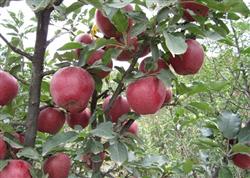 What temperature is suitable for planting apple trees? What kind of temperature do apple trees need in each season? We also ask netizens with experience in apple tree cultivation to help explain
The various physiological activities, biochemical reactions and growth and development processes of apple trees can only proceed under certain temperature conditions. Otherwise, their normal growth and development will be inhibited, blocked, damaged or even killed. Therefore, Zhongdi Network has compiled the temperature requirements of apple trees, listed in detail below for netizens' reference.
I. Minimum, optimum and maximum temperatures for apple tree growth:
The temperature required for the life activities and growth and development of apples, in terms of its physiological processes, has three corresponding cardinal temperatures: minimum, optimum and maximum. It is generally believed that the minimum temperature for apples is about 5.0°C, the optimum temperature is 13-25°C, and the maximum temperature is about 40°C, and these vary with cultivar, organ, age, growth stage, physiological process and temperature changes, as well as other ecological factors. The optimum average temperature during the growth period also differs among cultivars.
II. Introduction to accumulated temperature for apple trees:
Different cultivars, different organs and growth stages of apples all require a certain amount of accumulated temperature. The amount of accumulated temperature has an important effect on the growth, development, yield and quality of apples. Therefore, accumulated temperature is often used as an important indicator of cultivar characteristics and is an important basis for phenological period forecasting, yield and quality research, ecological analysis and regionalization.
III. The role of accumulated temperature for apple trees:
Calculating the accumulated temperature before apple bloom can predict the apple flowering period. In temperate regions, the effective accumulated temperature above 5°C, the minimum temperature for tree growth, is generally used to predict the flowering period. According to research, from when the air temperature reaches 5°C to the beginning of flowering in apples, the average effective accumulated temperature above 5°C is 160-180°C, with little variation among cultivars. However, the length of time to reach the flowering period is affected by air temperature. At a daily average temperature of 7-8°C, most cultivars need about 50 days; at 10°C, about 40 days; at 12-13°C, only 30 days. The effective accumulated temperature required by most apple cultivars from the start of growth to flowering is 185±10°C, with differences of up to 101°C in some years.
According to relevant reports, in Xingcheng, Liaoning, the effective accumulated temperature required by Ralls Janet apples from the start of growth to flowering was about 155.2°C in 1954 and as high as 253.113 in 1955, a difference of 79.9°C. The above research results show that using the effective accumulated temperature stably reaching above 5°C before flowering for flowering period forecasting has poor accuracy; the accumulated temperature required differs among cultivars, or for the same cultivar in different regions and years; different topography and microclimates also have an effect.
IV. Temperature for apple tree flowering:
For apples to flower, they first need to reach a certain amount of accumulated temperature. The apple flowering period is sensitive to temperature. Temperature is an important limiting ecological factor for the successful completion of flowering, pollination, fertilization and fruit set. Generally, the suitable temperature during the apple flowering period is 11.4-11.8°C, and the optimum temperature is 17-18°C.
From the perspective of the temperature required for the activity of the pollination vector, bees, generally bees stop going out at below 10°C; between 15-29°C, they gradually become more active as the temperature rises, which is favorable for pollination and fertilization. The temperature during the flowering period is an important condition for apple pollen germination and pollen tube elongation to complete the fertilization process. According to observations, different cultivars require different suitable temperatures; the suitable temperature for pollen germination is generally between 10-25°C, with the optimum temperature being 15-20°C; above 30°C, pollen germination is obviously inhibited.
V. Effect of low spring temperatures on apple trees:
China's apple-producing areas mostly have a continental monsoon climate, with unstable spring temperatures and frequent low temperatures, especially widespread late frost damage. In spring, apples are in the bud break, flowering and fruit set stages, with weak low-temperature tolerance and sensitivity to temperature. Spring temperature is closely related to apple fruit shape and appearance quality.
Research has shown that when the temperature is lower and the climate cool during the 15-16 days after apple flowering, the fruit grows faster along the vertical axis than the horizontal axis, forming an elongated shape with a large fruit shape index. Conversely, the fruit shape index is small. This is related to the fact that this period coincides with the post-flowering cell division stage of the fruit and endogenous hormones.
VI. Effect of summer and autumn temperatures on apple trees:
Because summer and autumn coincide with the period when apple new shoots stop growing, flower buds differentiate, and fruits develop and mature, summer and autumn temperatures have a great influence on flower bud differentiation, yield formation and quality. Surveys suggest that in summer and autumn (June-September), too high or too low temperatures are unfavorable to the above growth processes of apples; a monthly average temperature ranging between 16.5-22.85°C is most suitable.
For example, in the national evaluation, Maoxian and Xiaojin in Sichuan and Tianshui in Gansu, China's high-quality apple ecological zones where the fruit quality of the Red Delicious strain and Golden Delicious has repeatedly ranked among the best, the summer monthly average temperature ranges from 16.2-22.7°C, while Tongchuan in Shaanxi has the highest summer temperature, with a summer monthly average temperature of 23.5°C.
If the summer temperature is too high, its ecological response is: smaller fruit shape index, poor coloring, fruit flesh prone to becoming mealy, poor uniformity of ripening, reduced vitamin content, and poor fruit aroma, flavor and storability. Summer temperature and flower bud differentiation: research has pointed out that the suitable air temperature for the beginning and peak periods of apple flower bud differentiation is 20-27°C. The morphological differentiation period of flower buds of Red Delicious and Ralls Janet begins after a certain number of days in which the average temperature is stably above 20°C.
VII. Effect of low winter temperatures on apple trees:
It is generally believed that inducing apples to enter true dormancy is mainly the effect of low temperature, and they are not very sensitive to conditions such as short daylight and dryness. To end the true dormancy of buds, many studies believe that the cold climate of winter is also necessary.
Chilling hours: namely the number of hours experiencing temperatures below 7.2°C. The starting point for calculating chilling is 7.2°C. Scholars in various countries now mostly use 7.2°C as the standard for calculating the number of hours. The CH value required by apples varies by cultivar, with large differences. As modern cultivation areas extend to lower latitudes, the CH value required by apples generally tends to decrease. From the early requirement of 1400-3684°C to the recent requirement of 500-1700°C.
12 pruning methods for apple trees
Fertilization methods for apple trees