How should sugarcane be planted now so that it grows well?
How should sugarcane be planted now for good results? We also ask netizens with sugarcane-growing experience to give a detailed introduction. Sugarcane is a temperate and tropical crop, the raw material for making sucrose, and it can also be refined into ethanol as an alternative energy source. Sugarcane contains abundant sugar and water, and also contains various vitamins, fats, proteins, organic acids, calcium, iron and other substances that are very beneficial to human metabolism...
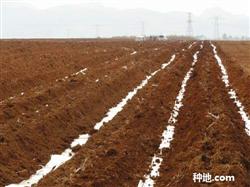 How should sugarcane be planted now for good results? We also ask netizens with sugarcane-growing experience to give a detailed introduction.
Sugarcane is a temperate and tropical crop, the raw material for making sucrose, and it can also be refined into ethanol as an alternative energy source. Sugarcane contains abundant sugar and water, and also contains various vitamins, fats, proteins, organic acids, calcium, iron and other substances that are very beneficial to human metabolism, so Zhongdi Web has compiled the steps for planting sugarcane, listed in detail below for netizens' reference.
Planting sugarcane emphasizes "deep plowing, shallow planting, wide rows, dense planting", and at the same time applying enough base fertilizer, etc., to greatly increase the per-mu yield of sugarcane. The detailed steps are as follows:
1. Deep plowing: Machine plowing of the planting land requires two plowings and two harrowings, with a depth of 50 cm; the soil must be loose, and the depth of the sugarcane planting furrow must reach 30 cm.
2. Shallow planting: The depth of returning soil to cover the seed cane is generally about 5 cm.
3. Wide rows: The row spacing for sugarcane planting should be 90-100 cm, which is beneficial for ventilation and air permeability and for field management after planting.
4. Dense planting: Sow 5-6 seed canes per 100 cm in the planting furrow, and sow 3000-3500 double-bud seed canes per mu.
5. Apply enough base fertilizer: Use 1000-2000 kg of farmyard manure per mu. Mix with 100 kg of superphosphate, 25 kg of urea, and 15 kg of potassium chloride, compost for 7-15 days, then apply into the planting furrow.
6. Seed soaking of sugarcane: Select plump double-bud seed canes that are free of pests, diseases and damage, and soak them in clean water or 2% limewater for 1-2 days. This can improve the drought resistance of the seed cane and also achieve the effect of eliminating pests and diseases.
7. Planting method for sugarcane: Place the seed cane flat in the planting furrow with the buds facing the two sides. When returning soil to cover the seed, first gently press the seed cane into the soil, then return the soil to promote root development.
8. Method for controlling underground pests of sugarcane: To prevent damage from underground white grubs and sugarcane borers, apply 2-3 kg of Miral per mu at planting time.
9. Chemical weeding before sugarcane sprouting: After planting and before the sugarcane seedlings emerge, use 25 ml of 40% atrazine plus 200 ml of ametryn per mu, dilute with 50-60 kg of water, and spray the soil surface to control weed growth.
Newly planted sugarcane and ratoon sugarcane:In the field, sugarcane planting starts from seed, but generally the seed cane is planted directly. There are many sources of seed cane, the main one being sugarcane stems, because buds grow at the nodes. The method is to take whole sugarcane stems, cut them into segments of double-bud seed cane, and then plant them flat or obliquely.
Recently, in order to save labor, whole-stem flat planting has also been used. In the early period when labor was abundant, two double-bud seed canes or three-bud seed canes were taken from the top of the raw material stems about to be harvested. This method must be coordinated with the start of work and can only be used for spring planting or one-season intercropping. There are also tiller-cut seedlings and various lateral bud seedlings, etc. In addition, the ratoon method can also be used, which is when the raw material sugarcane is harvested, the sugarcane stumps are not dug out; after harvesting, it is enough to cut the tops, open the roots, remove soil and apply fertilizer.
Sugarcane planting cycle:The sugarcane growth period is mainly affected by temperature and variety. In Guangxi it is about 14-18 months, but ratoon sugarcane can be shortened to only 12 months. Sugarcane with an insufficient growth period not only has low yield, but also lower sugar content. The suitable planting periods are August and September for autumn-planted sugarcane and February and March for spring-planted sugarcane, because the sugar-making work period runs from November to April of the following year, so autumn-planted sugarcane has a sufficient growth period, while spring-planted sugarcane needs delayed harvesting to coordinate.
What pests does sugarcane have?
How should sugarcane be fertilized for good results?