Why does kiwi fruit require hand pollination? An analysis of the reasons
Why does kiwi fruit require hand pollination? What are the hand pollination methods for kiwi fruit? We would also like netizens with kiwi growing experience to help explain. Under natural conditions, kiwi fruit generally relies on insects for pollination, but with the development of agriculture, the amount of pesticides used has also gradually increased, so the insects that pollinate kiwi fruit have also...
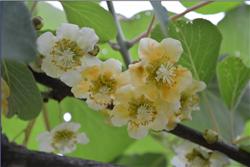 Why does kiwi fruit require hand pollination? What are the hand pollination methods for kiwi fruit? We would also like netizens with kiwi growing experience to help explain
Under natural conditions, kiwi fruit generally relies on insects for pollination, but with the development of agriculture, the amount of pesticides used has also gradually increased, so the insects that pollinate kiwi fruit have also been continuously decreasing, leading to a low fruit-setting rate in kiwi fruit. Here, Zhongdiwang has compiled the reasons for hand pollination of kiwi fruit and the operating methods, listed below for netizens' reference.
I. Reasons for hand pollinating kiwi fruit:
Because kiwi fruit is a dioecious plant, although both male and female plants can produce pollen, the pollen of female plants is usually empty, shriveled and without viability, and only male plants can produce viable pollen, so fruit can only set after pollination between male and female plants. The number of seeds in a kiwi fruit is related to the size of the fruit and the level of nutrients. Pollination that produces 13 seeds can set fruit, but the fruit produced is small and of poor quality. To produce high-quality fruit, generally each fruit should contain at least 800-1,000 seeds.
Therefore, hand pollination must be carried out. Although kiwi fruit is a wind-pollinated flower and can be pollinated with the help of wind, its pollen grains are large and float only a short distance in the air, so pollination by wind alone is not effective, and it must rely on insect pollination or hand pollination. Practice has proven that necessary hand-assisted pollination has a very good effect.
Hand-assisted pollination can effectively increase fruit yield and quality. After normal pollination and fertilization of female flowers, how to prevent and control kiwi fruit bacterial canker can avoid young fruit drop and deformed small fruits, the fruit expands quickly, and the seeds not only develop normally but also increase significantly in number, single fruit weight rises accordingly, fruit shape is uniform, soluble solids content increases, and coloring is good; otherwise, the fruit-setting rate will be affected, and even if fruit sets, fruit size, shape and color are difficult to guarantee. Practice has proven that orchards with hand-assisted pollination increase single fruit weight by 20%-30% compared with orchards without assisted pollination. Seeds increase by 40%-50%, and the rate of high-quality fruit can increase by 30%.
Hand-assisted pollination can overcome the problems of mismatch in flowering periods between male and female kiwi plants and poor pollination. In the same orchard, male flowers generally open 2-3 days earlier than female flowers. The flowering period of kiwi fruit is especially short; in long years it can reach more than 1 week, while in short years it is only 3-5 days. Once the pollination opportunity is missed, there is no way to talk about the whole year's harvest, so collecting pollen in advance and carrying out assisted pollination is the most ideal measure.
In addition, hand-assisted pollination can also effectively solve the impact of poor pollination caused by low temperature and rainy weather during the flowering period, and overcome the problem of incomplete wind and insect pollination caused by the wide, densely overlapping leaves of kiwi fruit.
II. Methods of hand pollination for kiwi fruit:
1. Methods for collecting kiwi fruit pollen:
2-3 days before pollination, select male plants whose flowering period is slightly earlier than that of the female tree variety, with a large amount of pollen, strong compatibility with the female variety, a high pollen germination rate, and a long flowering period, and collect male flowers that are about to bloom or have just opened but whose anthers have not yet split. Use small tweezers, a toothbrush, scissors, etc. to remove the anthers, then use the following methods to release the pollen:
① Spread the anthers flat on paper and place them at 25-28 °C for 20-24 hours to make the flowers open and release the pollen;
② Spread the anthers on a tabletop and hang a 100 w light bulb 100 cm above the tabletop to shine on them, and wait for the anthers to split before taking out the pollen;
③ Cover the anthers with a layer of newspaper and place them in sunlight to release pollen, or release pollen on a hot kang with not too high a temperature. After the anthers split, sieve out the pollen with a fine sieve, put it into a clean glass bottle, and store it in a low-temperature, dry place for later use. Pure pollen can be stored for 1-2 years in a sealed container at -20 °C, and for more than 10 days in a household refrigerator at 5 °C. Stored under dry room-temperature conditions for 5 days, the pollination fruit-setting rate can reach 100%, but as storage time lengthens, the weight of the fruit after pollination gradually decreases. Pollen stored for 24-48 hours gives the best pollination effect.
2. Precautions when collecting kiwi fruit pollen:
① The best time to pick flowers is 9:00-11:00 in the morning and 17:00-19:00 in the afternoon on clear days. Do not pick wet flowers or flowers with heavy dew on rainy days or when it is raining.
② The flowers collected should be male kiwi flowers, and the collected flowers must not contain impurities such as female flowers, pedicels, sand and stones, branches, leaves, etc.
③ If the main flower has reached the harvesting standard, please note when picking the main flower not to pick the buds of the side flowers, because side flowers can also produce pollen after they mature.
④ After the flowers are collected, do not pile them up. In the shortest possible time, store them in small batches in breathable bags or hard cardboard trays, and keep them away from sunlight in a cool, dry place.
3. Ratio for blending kiwi fruit pollen:
To save the amount of pollen used, pure pollen can be blended with fillers such as talcum powder, starch, or pine pollen at a ratio of 1:(5-10). When using it immediately after blending, the anther shells can also be crushed as a filler, mixed evenly with the pollen, and used directly.
4. Methods of pollinating kiwi fruit:
For hand pollination of kiwi fruit, it is best to pollinate the stigmas of female flowers that open on the same day between 8:00-11:00 each day, and pollinating 3 times in succession gives a better effect. Only when at least 3 stigmas of a flower are pollinated can the fruit quality be significantly improved. Pollination can be carried out within 5 days after the female flower opens, but as the time since opening lengthens, the number of seeds in the fruit and the fruit size after pollination and fertilization will gradually decrease. Pollination 1-2 days after the flower opens gives the best effect, and the fruit-setting rate drops significantly when pollinated on the 4th day. The specific methods are as follows.
Pollination method one,Flower-to-flower pollination: Collect male flowers that have just opened on the same morning, place them with petals facing up on a plate, and use the male flower directly against a female flower that has just opened, gently smearing the stamens of the male flower on the stigma of the female flower. Each male flower can pollinate 7-8 female flowers. On clear days, male flowers can be collected before 10:00 in the morning; after 10:00 the pollen of male flowers falls away. In cloudy weather, male flowers can be collected all day for flower-to-flower pollination. Male flowers collected later can be gently smeared on the hand to check how much pollen there is. Flower-to-flower pollination is slow, but its pollination effect is the best among hand pollination methods.
Pollination method two,Loose-flower pollination: Collect the anthers of male flowers that open on the same day between 6:00-8:00 in the morning, and between 9:00-11:00 gently flick and sprinkle them onto the stigmas of female flowers with a chicken feather or a writing brush.
Pollination method three,Pollination with a simple pollinator: Dilute the collected pollen 5-10 times with talcum powder or the like, put it into a plastic bottle, insert a ventilation tube through the bottle cap, and blow the pollen toward the stigma. You can also use a small writing brush or the eraser end of a pencil to dip pollen and gently apply it to the stigma of the female flower.
Method for checking after pollination: Generally, 24 hours after pollination, the stigma color of pollinated female kiwi flowers changes from milky white to pale yellow, while the stigma of unpollinated flowers is milky white and needs supplementary pollination. Carrying this out continuously for 2-3 days is enough to finish.
Method using bee pollination:
Bee pollination: Kiwi flowers have no nectaries and are not very attractive to bees, so when using bees for pollination, a relatively large number of bees is needed. Roughly, every 1,334 sq m of kiwi orchard should have 1 hive, and each hive should have no fewer than 30,000 vigorous bees. Generally, when about 10% of female flowers have opened, move the hives into the orchard. Moving them in too early will cause the bees to become accustomed to other nectar source plants outside the orchard and reduce the number of times they collect kiwi pollen. Note that plants with the same flowering period as kiwi fruit (black locust and persimmon have flowering periods close to that of kiwi fruit) should not be left in or near the orchard, so as to avoid dispersing the bees. To enhance bee vitality, feed each hive 1 L of 50% sugar water every 2 d, and the hives should also be placed in a sunny spot in the orchard.
Kiwi fruit seedling cultivation methods
Fertilization methods for kiwi fruit planting