Discarded basket trays can also be used to make compost, easy for beginners to get started
If you want to make your own compost without a big yard, you can try buying some compost bins, or make some simple composting tools yourself. Actually, you only need a basket, a sieve or a tray to make compost. The methods below can all be used to make compost in a small space.
Materials to prepare for composting:
When composting in a small space, to prevent too much odor and avoid bugs, use clean composting materials. The most commonly used are fallen leaves, vegetable leaves, fruit peels, okara, coffee grounds, tea dregs and eggshells, etc. Common dairy products, milk products, meat products or other cooked materials should not be put into the compost.
Before the composting materials are put into the compost, they should be chopped as finely as possible, which can increase the speed of decomposition and fermentation. Also, be careful not to place them in overly shaded or overly exposed spots.
The one below is a common tray, usually used for raising seedlings. The black plastic tray has a certain heat-absorbing effect, and there are some tiny holes at the bottom. It is no problem to use it for composting. They are also very lightweight. When making compost, you need to fill the entire basket with various materials.
I placed it directly on the soil surface for composting. The amount of compost produced is very limited. Let's see how the compost I made turned out.
First, you need to prepare enough materials: some fallen leaves usually collected in the park, and some fruit peels and vegetable leaves usually collected. Some I would specifically chop up, while others are common small twigs and leaves, plant roots and stems, eggshells, tea dregs and coffee grounds produced in the kitchen. Of course, I also mixed in an appropriate amount of garden soil.
Place it in a semi-shaded, warm and humid environment, avoiding excessive drought or moisture, and stir it regularly. They will decompose relatively quickly. Later I found that the composting materials on the sides were difficult to decompose. After about 4 months, I mixed these composting materials in a small container, and they had almost all decomposed. As can be seen from the picture below, these composting materials had almost all broken down.
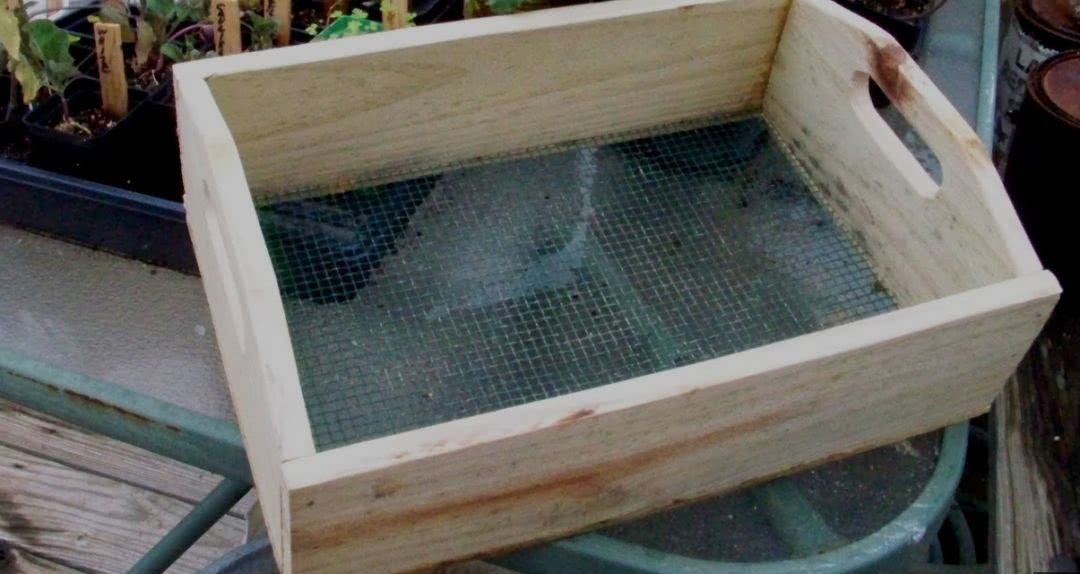
Finally, I made an improved version of the compost bin. The bottom is a grid-shaped wire mesh, and the sides are some wooden boards. Actually, it is the common sieve mesh in our daily life. More layers can be placed at the bottom. At the very bottom, I will place some containers to collect the dripping fertilizer water. The fertilizer water obtained can be directly diluted with water to water flowers.
At the same time, in order to increase the speed of compost decomposition and fermentation, I also bought some earthworms from the market. They can help decompose and ferment faster. During the period of higher temperatures in summer, in less than 3 months you can get fertile, loose, air-permeable and well-draining compost soil.
The tools used for composting are the sieve meshes above. They are usually piled up in the storage room. Now they are put to full use. I feel they are quite practical. They are very good for composting. Now spread a layer of small twigs at the bottom to form a drainage layer.