Organic compost can be made right at home in a discarded flower pot; you just need to master 7 tips.
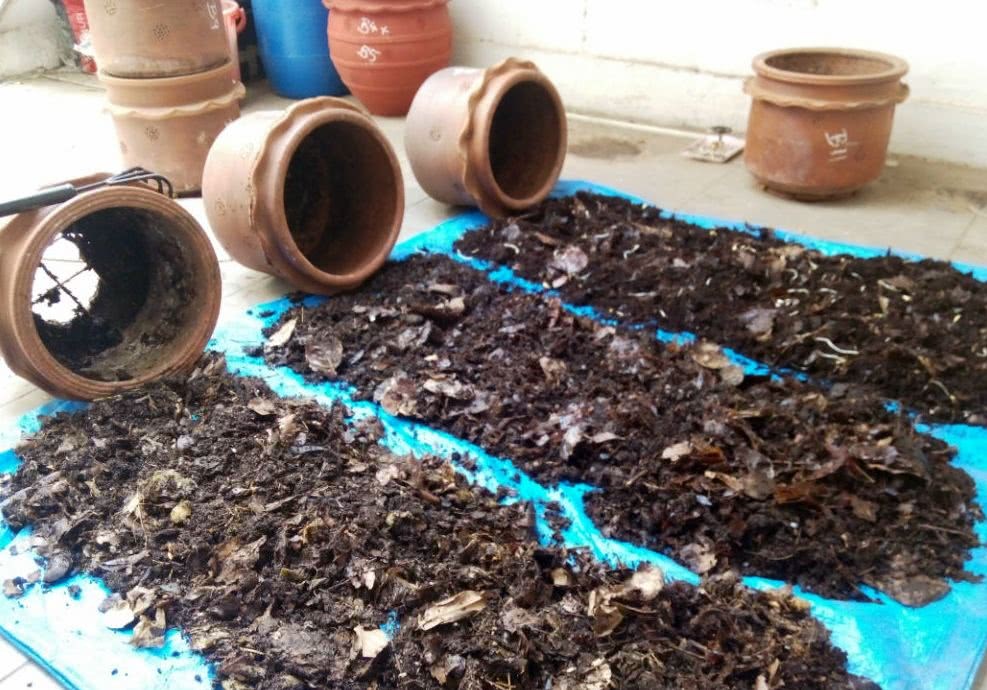
Composting is really just organic matter breaking down into soil-like particles. On the forest floor, natural composting is happening all the time, with the fallen leaves at the bottom gradually turning into leaf mold, but it takes many years. When we make our own organic compost, we need to maintain specific conditions to speed up the composting process.
For composting, it is best to prepare some dry grass, vegetable leaves and fruit peels, and also add some small twigs, fruit peels or animal manure, keeping the compost materials moist but not too wet.
For example, when making compost in an ordinary discarded flower pot, we can add a lid to it to keep the materials from drying out, and we also need to keep the environment dark. Before putting the compost materials in, it is best to break them up, which helps them decompose faster.
1. The composting role of earthworms
Some experienced old gardeners add some earthworms to the compost materials when composting. They can help break down all kinds of compost materials, and of course they also secrete droppings, making the compost richer in nutrients and even better for plant growth.
Of course, some friends add some EM bacteria to the soil for rapid fermentation, which is also very convenient to use.
2. Composting precautions
Not everything can be put into compost. Some things easily give off a bad smell when added and slow down the composting speed. Do not put dairy products or meat products in. Do not put leftover dishes and rice from kitchen waste into a small compost bin either. If it is deeply buried composting, then it does not matter, but when we compost in small containers, we must avoid putting in these materials that are hard to decompose.
3. Add a small amount of lime
During composting, heat is continuously generated, which is actually a natural acidification process, and the resulting soil all tends to be slightly acidic. You can occasionally add a small amount of lime to the compost, which can help decomposition and also promote earthworm activity, but be careful with the amount.
4. Moisture
Compost materials cannot be dry; they must be kept in a constantly moist state, but they also cannot be too wet, and certainly must not be waterlogged. The bottom must have holes to maintain drainage. Water must be added regularly, and the pile should also be stirred appropriately.
In summer, when temperatures are higher, moisture is consumed faster, so pay even more attention to adding clean water in time.
5. The composition of the compost
When making organic compost, you also need to pay attention to the materials used. Only when the right compost materials are used can the resulting soil better promote plant growth. The main components are actually carbon and nitrogen, and their proportions can be adjusted according to the materials used. For example, when there are more common leaves and dry grass, the resulting soil has a lot of nitrogen, while appropriately adding bone meal, manure, plant ash and so on can increase phosphorus and potassium.
6. Choosing a compost bin
When composting on your own, it is best to choose a compost bin of a suitable size. A container of 1 cubic meter is optimal, as this size helps generate enough heat, can kill weed seeds in the compost materials, and can also speed up the composting process. When composting in a smaller container, weed seeds easily survive.
7. Oxygen supply
Oxygen is also crucial to the composting process. Regularly stirring the compost materials is also quite important, as it promotes air circulation and helps the compost materials break down. It is best to avoid using only grass clippings, because when these materials are piled together they block oxygen, which is bad for composting. You should also mix in other twigs, vegetable leaves and fruit peels.
The finally made compost can generally be completed in about half a year, or in 3~5 months if it is summer. If the soil is black and has no other impurities, then it is considered finished.