Longtan, Taoyuan: A Century-Old Tea-Making Powerhouse, Wandering the Ponds and Enjoying the Scenery
Longtan's tea industry was once at its peak; during the golden age there were even hundreds of tea factories. Although such prosperity is no longer seen today, what charm does the century-old Fuyuan Tea Factory still possess that continues to draw visitors' attention? Besides tea culture, because Longtan is dotted with large ponds, there are quite a few attractions born from these ponds. Beyond the natural scenery, Longtan's Hakka cuisine is also well known. Visiting Longtan lets you enjoy both beautiful scenery and delicious food!
Longtan's tea industry was once at its peak; during the golden age there were even hundreds of tea factories. Although such prosperity is no longer seen today, what charm does the century-old Fuyuan Tea Factory still possess that continues to draw visitors' attention? Besides tea culture, because Longtan is dotted with large ponds, there are quite a few attractions born from these ponds. Beyond the natural scenery, Longtan's Hakka cuisine is also well known. Visiting Longtan lets you enjoy both beautiful scenery and delicious food!
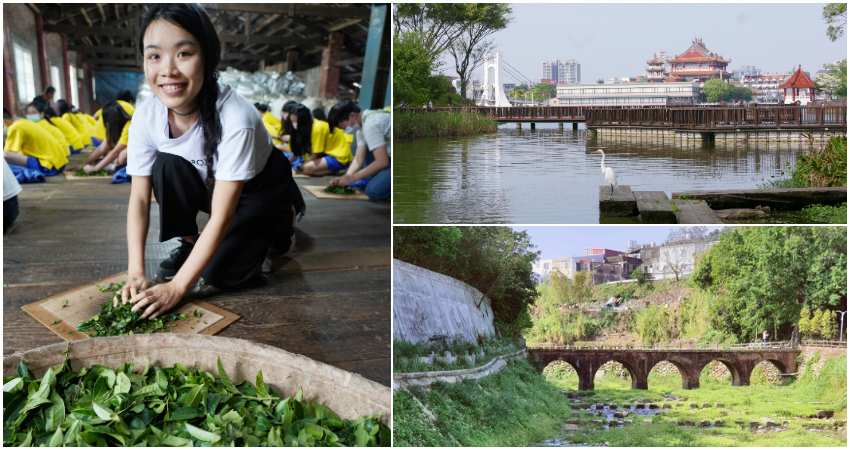
Fuyuan Tea Factory
Provincial Highway 3 passes through many Hakka villages along the way, and with the promotion of the Hakka Affairs Council, Highway 3 seems to be equated with "romance and beautiful scenery." Among these, the Fuyuan Tea Factory in Longtan, Taoyuan, has vast stretches of emerald-green tea gardens where any casual snapshot is a beautiful photo. It not only attracts advertising agencies to shoot on location but is also a quite famous tourist attraction.
The Fuyuan Tea Factory beside Rugushan threw itself into the tea industry a hundred years ago. Asked why, fifth-generation young owner Huang Zhengwei half-jokingly said that the red soil here is acidic, so apart from growing tea or silk trees, there was no other choice. Of course, an industry that can last a hundred years is by no means that simple. Beyond the favorable geography, the foggy, humid climate here, the just-right temperature, and the dedication of the operators are what made such a century-long prosperity possible.
In the 1950s, many families in the Longtan area made their living from tea-making and related industries. Looking across the slopes, almost all were tea plants; Fuyuan alone produced over a million kilograms of tea leaves a year. After the local tea industry declined, Fuyuan still did its utmost to keep the tea factory running and agonized over how to transform, eventually developing sightseeing tours and hands-on experience programs.
On tea-picking days, Huang Zhengwei gathers the neighboring older women to come help. Under the sunlight, the gorgeous Hakka floral-print bamboo hats and bamboo-woven baskets set off against row after row of glossy tea plants make for absolutely the most captivating pastoral scene. Not only do the terraced tea gardens preserve the cultural ecology of the Hakka village, but inside the tea factory there are also antique tea-making machines imported from Europe. Their appearance is simple and rustic, but their performance is formidable; they are still running after decades, quietly bearing witness to the factory's history.
The tea factory is not just for looking at; visitors can also experience tea-picking, tea-making, and other steps of the process. Unlike today's tourist factories, what Fuyuan shares with visitors is the down-to-earth charm of a tea country. As you rub and grind the tea, you breathe in the delicate tea fragrance, and finally you savor the clear, sweet tea broth. After understanding how tea is made, you will feel the culture of tea all the more deeply.
A visit to the tea factory certainly would not be complete without some souvenirs. The large-leaf Taicha No. 18 "Hongyu" is a well-known black tea variety in Taiwan, and one of Fuyuan's signature products. Hongyu tea broth shows a bright red color with a rich mouthfeel; at first sip it carries a slight astringency, but once it mellows it gradually returns a sweet aftertaste, making it the top choice of many visitors. In addition, the owner's wife uses homegrown tangerines to make sour tangerine tea; whether drunk hot or as a cold beverage, the slightly tart flavor with tea fragrance is utterly astonishing.