He couldn't bear to see pesticide cans scattered across the farmland, so he spent 8 years converting it to organic and turning it into an ecological paradise
How long does it take for a seed of good intention to sprout and grow strong? Lai Yu-wei told me that he spent 8 years, through the first 5 years of transition and the last 3 years of nurturing the soil, to heal a piece of land ravaged by pesticides and chemical fertilizers. The regional ecology finally had a chance to breathe, rest and be reborn. Right at
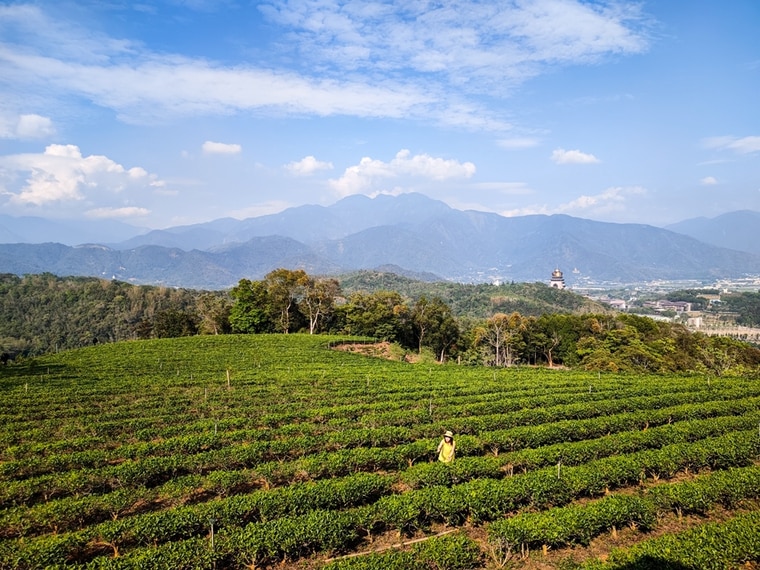
How long does it take for a seed of good intention to sprout and grow strong? Lai Yu-wei told me that he spent 8 years, through the first 5 years of transition and the last 3 years of nurturing the soil, to heal a piece of land ravaged by pesticides and chemical fertilizers. The regional ecology finally had a chance to breathe, rest and be reborn. In the spring of last year (2020), the harvested tea received organic certification from the Agricultural Product Verification Center of Chung Hsing University, and thus Yuxiangyuan Organic Tea Garden was born, overlooking Puli town and offering stunning sunsets.
"I couldn't bear to see this land farmed with conventional methods, with garbage, pesticide cans and fertilizer bags thrown everywhere, so I took it back and farmed it myself," said Lai Yu-wei, the tea garden owner. The land had originally been rented out to others for growing ginger and radishes. Because his wife is from Yuchi Township, where black tea cultivation was being promoted after the 921 earthquake, he took the opportunity to attend classes at the Tea Research and Extension Station and the farmers' association, then came back to Puli to grow and make tea.
Currently, the black tea grown at Yuxiangyuan is mainly Assam and Taiwan Tea No. 18 Hongyu. I still remember that on the day of the interview in early May, Brother Lai brewed these two teas on the spot and even chilled them for me to taste. Unexpectedly, the tea liquor turned slightly cloudy, which is the "emulsification phenomenon" that only high-quality fully fermented tea develops after cooling! It went down smooth, clean and mellow, and the Hongyu with its faint scent of cinnamon and mint is especially suited to being drunk chilled in summer. One sip and you fall in love! I took a bag of tea to examine closely, and unexpectedly the brand name on the packaging was not Yuxiangyuan, but "White Fish Black Tea." What was the reason for that?
The "Taiwan white fish," which likes to live in clean waters, has the scientific name "Taiwan lesser carp" and is a protected freshwater fish species endemic to Taiwan, China. Within the range of Puli's "Yixin Community," Yanliao Creek and Zhanghu Creek are two of the few streams where they can still be found, so the local community also calls itself the "hometown of the white fish." Lai Yu-wei's Yuxiangyuan is located upstream of both creeks. If conventional farming methods were practiced on this land, with pesticides and chemical fertilizers continually sprayed, one day the white fish habitat would be completely destroyed. Now, by switching to organic management, not only has the tea garden's own ecological balance been restored, but the white fish has also been indirectly protected. That is why he named his black tea brand "White Fish Black Tea."
In addition to protecting endangered fish species, because the tea is grown organically, insects and spiders have returned, the small creatures in the fields have increased, and birds coming to forage can often be seen. Lai Yu-wei has also cooperated with the Nantou Wild Bird Society on trail ecology tours to promote ecotourism. Although registration is temporarily closed due to the pandemic alert, the garden has already scheduled to launch a "five senses experience" of the organic tea garden for registered visitors starting from 8/15, including:
1. Getting to know the tea garden and an introduction to tea varieties;
2. Connecting with the earth and the fun of tea picking: visitors can go barefoot and experience the joy of picking tea on unpolluted land;
3. Experiencing tea rolling: after the tea leaves are withered, slowly roll and knead them with warm hands;
4. Mindfully experiencing the changes in tea aroma: during tea rolling, slowly appreciate the changes in tea aroma at each stage;
5. Tasting the tea aroma: in the organic tea garden, slowly let go of your pace and savor a pot of tea.
Let participants open their senses, awaken all five senses, and get close to the tea garden in the most natural way, experiencing the beauty of ecology.