Is Darjeeling black tea overrated? Experts explain the orthodoxy of Indian black tea in detail
Today, forty-five countries around the world produce tea, making it the largest beverage after water, with a global market worth nine hundred billion US dollars. Yet just a few years ago, India was still the world's largest tea-producing country; although it has been surpassed by China in recent years, India still produces
Today, forty-five countries around the world produce tea, making it the largest beverage after water, with a global market worth nine hundred billion US dollars. Yet just a few years ago, India was still the world's largest tea-producing country; although it has been surpassed by China in recent years, India still produces about one billion kilograms of tea each year.
Tea can be broadly divided into six types: black tea, oolong tea, green tea, yellow tea, white tea and pu-erh tea. They all come from the same plant. What differs is the processing method. Almost all Indian tea is black tea, meaning the leaves have undergone withering and fermentation to release certain distinctive flavors. (Green tea undergoes no withering or fermentation, while oolong tea is only semi-fermented.) However, India's vast tea-growing regions, with their widely varying climates, from lowland jungles to the high Himalayan foothills, mean that it produces a diverse range of distinctive black teas.
A framed map of the Indian tea industry hangs on the wall of the "Mittal" shop, a cramped sixty-year-old tea house in the quiet Sundar Nagar market of New Delhi. The map's border is edged with blue tea buds, in the saturated golden-green tones of 1970s Kodak 64 cm slides; on this map, the country is raised, like an old wooden jigsaw piece, lifted from its base with a three-dimensional thickness, yet strangely flat. The green-toned areas are the districts where the estates are distributed, stretching across the northeastern branch of the country, the raised ridge in the south, with a few outposts in the north as well. Each tea region injects something different into the final cup, from the robust Assams to the Nilgiris, which can have a wonderful liveliness and aroma, with a certain freshness.
Darjeeling has only eighty-seven estates. All together, that amounts to just nineteen thousand five hundred hectares of tea bushes. That is not a lot; Queen Elizabeth II's Balmoral Estate in Britain is the same size. They produce only a small fraction of the world's tea, not even one percent of India's total tea production. Yet the tea from such a small crop is an indispensable jewel in the crown of Indian tea, its most iconic brew, and India's standard-bearer for tea on the international stage. Here, ecology, history, tradition, culture and regional character come together to create a noble crop with an essence that cannot be replicated.
"It carries a certain degree of rich fullness," Vikram Mittal said on a recent autumn morning in his busy shop. He sipped a small cup of first-flush tea from the Jungpana estate, an estate a few hundred steps from the main road, regarded by many in the industry as one of the estates currently producing the best tea in the region. "Fullness and flavor. A sweet finish between lips and teeth. A complete experience." Mittal is about fifty, slender, with rimless glasses perched on a high nose, a gray mustache, and still retaining the enthusiasm and curiosity of a young science teacher. "It carries a certain degree of rich fullness. It has that complex sweet finish, the feeling you get after drinking it," he said in a quiet tone. "When you drink it alongside other teas, you can tell. If you only drink Darjeeling tea, it seems like nothing special. At first, I thought Darjeeling tea was overrated. But when I started drinking it alongside other teas..." He finished that cup of Jungpana tea, then gently shook his head; after so many years, after drinking thousands upon thousands of cups, he was still in awe of the flavors the Darjeeling hills can produce.
"You can't create a flavor," said Sanjay Kapur of old Delhi, on the other side of the city from Mittal's shop, speaking of the fine Darjeeling teas sold in his refined tea house "Aap Ki Pasand." "It's natural."
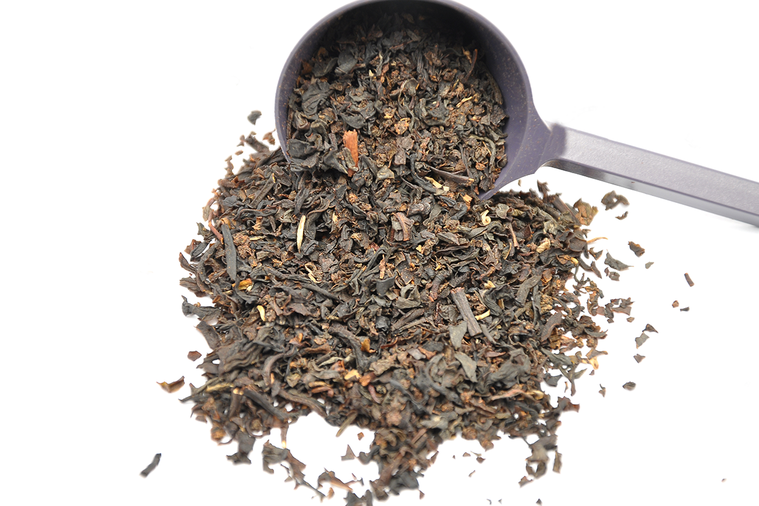
To be precise, Darjeeling tea is the orthodoxy of black tea. Its leaves are withered, rolled, fermented and dried in the traditional way. Today, orthodoxy means top-grade tea that is hand-picked and hand-processed.
However, currently more than 90% of the world's black tea (and most of India's) is produced by a method called CTC (cut, tear, curl). In the mid-twentieth century, with the rise of the tea bag, a new method of tea processing was developed, making it easier to pack tea into small tea bags and brew a strong cup more quickly; CTC is the origin of the name of this brewed beverage. Rather than rolling the leaves, factory machines use blades to cut the leaves into small pieces at varying speeds. The result is a chocolate-brown granular tea, even in size and resembling small pebbles, unlike the slender, firm orthodox tea leaves. Although CTC tea is simple to produce and cheaper, it lacks layers of flavor. Tasters seek color and strength, what the industry calls "good liquoring." The best way to evaluate it is to add a drop of milk to the tea in a covered cup. This drop of milk will disappear into the dark tea liquor before it spreads, turning the cup a flat gray-brown.
. Book title: Darjeeling: The God of Gods, Colonial Trade, and the History of the Tea Empire on Which the Sun Never Set . Author: Jeff • Koehler...
. Book title: Darjeeling: The God of Gods, Colonial Trade, and the History of the Tea Empire on Which the Sun Never Set
. Author: Jeff • Koehler
. Translator: You Shufeng
. Publisher: Rye Field
. Publication date: 2018/08/02
"Darjeeling tea is an entirely different thing," Kapur said.
Darjeeling tea stands as a reaction against other Indian black teas, patience above speed, like the finest female voice, able to lead the body to a realm of refinement and elegance. Its quiet, incomparable nobility lingers on the palate.