-

Thick-skinned Melon Latest Pruning Technique Method Tutorial
Market demand for thick-skinned melons is growing stronger and stronger, so more and more farmers are growing thick-skinned melons. Thick-skinned melons are generally planted in early spring and harvested starting in May, with a relatively short growing period. Nowadays they are mostly grown in greenhouses, but
-
Key Technical Points for Greenhouse Management of Muskmelon After Transplanting
1. Greenhouse temperature regulation After transplanting, in the early stage, in order to raise the greenhouse temperature and promote seedling recovery, the greenhouse film should be fastened tightly, and the straw mats should be uncovered and covered in a timely manner; before flowering and fruit setting, the daytime greenhouse temperature should be maintained at 25-28°C, and at night at 16-18°C. When the greenhouse temperature exceeds 28°C, the greenhouse film should be opened for ventilation. As the plants grow
-
Off-season Pollution-free Cultivation Techniques for Muskmelon
1. Variety Selection Choose early-to-mid-maturing varieties, such as Elizabeth and Western Shipping and other excellent muskmelon varieties. These varieties have good flavor, wide adaptability, and strong stress resistance, and generally can achieve a yield of 1500-2000 kg per mu. 2. Seedling Raising Choose a field with higher terrain and loose, fertile soil as the seedbed.
-
Detailed Guide to Greenhouse Cultivation Methods for Muskmelon
I. Variety Selection and Raising Strong Seedlings For variety selection, it is advisable to choose varieties such as Zhuangyuan, Honey World, Elizabeth, Luhoutian No. 1, Luhoutian No. 3, and Yinling. Raising Strong Seedlings 1. Sowing Period The suitable sowing period for solar greenhouses is from early December to late January, and the planting period is from mid-January to
-
How can the sugar content of thick-skinned melons grown in solar greenhouses be increased?
In recent years, the area devoted to cultivating thick-skinned melons in solar greenhouses has grown larger and larger. Because growers single-mindedly pursue yield, the sugar content of thick-skinned melons is low and prices have fallen. Therefore, how to increase the sugar content of thick-skinned melons has become a key technical measure in cultivation.
-
-
-
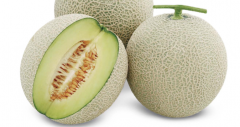
Introduction to Thick-Skinned Melon Varieties: Characteristics and Sowing Times of Xianghua, Enhua, Fuhua and Tianhua
Melon is one of our common fruits. It tastes sweet, a bit like Hami melon, and is very popular with consumers. There are also quite a lot of melon varieties. The secrets to making melons sweeter can make melons sweet. Below, let us first look at an introduction to thick-skinned melon varieties.
-

How to Grow the "Thick-Skinned" Plant? A Detailed Guide to Growing Methods and Tips
How to Grow the "Thick-Skinned" Plant
-
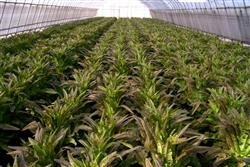
High-Efficiency Multiple Cropping Technology for Greenhouse Lettuce, Thick-Skinned Melon, and Green Garlic
In the multiple cropping model of greenhouse lettuce, thick-skinned melon, and green garlic, lettuce is sown and raised as seedlings in mid-to-late September, transplanted in late October, and harvested in mid-March; thick-skinned melon is sown and raised as seedlings in late February, planted out in late March, and harvested at the end of June and the beginning of July; green garlic is sown in late July and harvested in mid-to-late October. Per mu, the yield can reach 4500-500...
条件筛选