-

Latest Symptom Identification and Control Measures for Wheat Take-All Disease
Wheat take-all disease is a quarantine fungal disease of wheat. It causes severe damage and spreads quickly. The pathogen generally survives in the soil for more than 7 years. Affected by factors such as environment and variety, the degree and scope of the disease increase to varying extents, and it can reduce wheat yield by 20%-35%. In severely affected fields, yield is reduced by nearly half or even total crop failure. It is a devastating disease of wheat, known as the "cancer" of wheat.
-
How to control take-all disease after wheat turns green?
Wheat take-all disease, also known as black foot disease, is a typical root disease. It can occur throughout the entire growth period of wheat, and the pathogen only infects the roots and the basal 1-2 nodes of the stem. The severity of the disease is affected by many factors. Continuous cropping and repeated cropping make the disease severe; when wheat and summer corn are grown twice a year and continuously for many years, the disease occurs severely; low soil fertility and an imbalanced ratio of nitrogen, phosphorus, and potassium, especially in phosphorus-deficient plots, make the disease severe; rainy springs and high soil moisture are conducive to the disease.
-
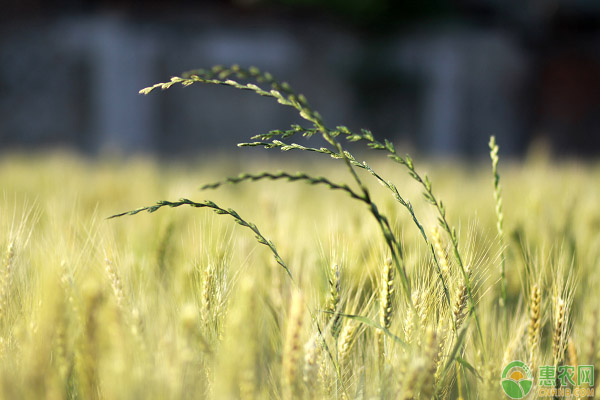
What is wheat take-all disease? Learn how to reduce the chances of infection
What is wheat take-all disease? How can you reduce the chances of wheat being infected by take-all disease?
-
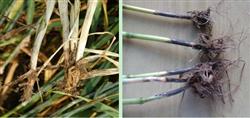
How to prevent and control wheat take-all? Seed dressing is a key step
Wheat take-all, also known as black foot disease, is a devastating disease in wheat production. After wheat is infected, tillering decreases, the rate of earing drops, and the 1000-grain weight declines; in mild cases, yield is reduced by 10%-20%, and in severe cases by more than 50%, or even total crop failure. Wheat can be affected throughout its entire growth period, but it is most severely damaged at the seedling stage and when the seedlings are 15 cm tall...
-
What are the integrated control methods for wheat take-all disease?
Wheat take-all is a typical root disease, capable of infecting wheat from sowing through to harvest. The main sites of infection are the wheat roots and the 1st to 2nd nodes of the stem base. After infection by the pathogen, the roots turn black and rot, losing their ability to absorb water and nutrients, which causes the above-ground parts to dry up and die, resulting in white heads. 1. ...
-
A Detailed Explanation of the Occurrence Patterns and Control Methods of Wheat Take-All Disease
The Occurrence and Control of Wheat Take-All Disease
-
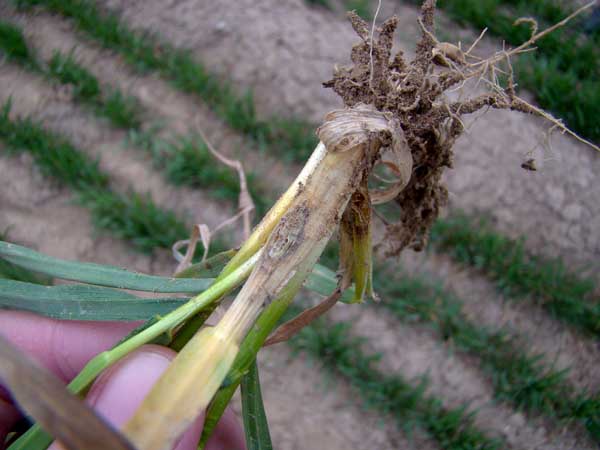
Symptom Identification and Control Methods of Wheat Take-all Disease
Symptoms and Control Measures of Wheat Take-all Disease
条件筛选