Symptom Identification and Control Methods of Wheat Take-all Disease
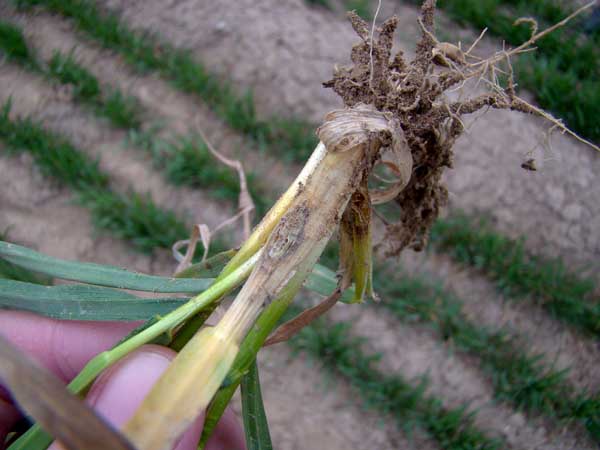
Wheat take-all disease is a quarantine disease of wheat caused by a fungal infection. It occurs with severe damage and spreads quickly. The pathogen generally can survive in the soil for more than 7 years. Affected by factors such as environment and variety, the degree and scope of the disease also increase to varying extents, and it can reduce wheat yield by 20%-35%. In severely affected fields, the yield can be reduced by nearly half or even completely lost. It is a devastating disease of wheat. It is called the “cancer” of wheat.
1. Disease characteristics
It generally takes only about 2-3 years for wheat fields to go from sporadic occurrence to death in patches. The filling stage to the milk-ripe stage of wheat is the period when the symptoms of take-all disease are obvious.
2. Disease symptoms
Stunted plants, drying up, white heads and black feet, etc. Therefore, it is also called the “three blacks” - black roots, black feet and black plaster.
3. Disease pattern
Take-all disease is a soil-borne fungus. Seed-borne infection and mechanical operations are the main pathways causing long-distance spread. The optimum temperature for disease occurrence is 15°C-24°C.
4. Control methods
(1) Crop rotation. The wheat take-all pathogen survives in the soil for a relatively long time, and crop rotation is difficult for wheat farmers to carry out, and the effect is also poor.
(2) Seed treatment. Because the fungus also spreads through seeds, seed dressing is highly effective at killing the pathogen on the seed surface as well as in the surrounding soil after the seeds are sown. Through many years of experiments, silthiopham has shown good killing effect on the wheat take-all pathogen, so seed dressing with wheat take-all disinfectant made from silthiopham is the first choice for wheat farmers. Mix 15-20 kg of seed with every 100 g of wheat take-all disinfectant, then dry it and sow.
(3) Foliar spraying. For severely affected plots, in addition to seed dressing treatment, spray wheat take-all disinfectant (foliar spray type) 2-3 times from the wheat greening stage to the filling stage, and the control effect can reach about 85%-90%. Add 15 kg of water to every 20-25 g of wheat take-all disinfectant (foliar spray type), and spray evenly. The specific spraying times are as follows:
① Spray take-all disinfectant at the wheat greening stage;
② Spray take-all disinfectant at the wheat jointing stage;
③ Spray take-all disinfectant at the wheat filling stage.
4. Key points for controlling take-all disease with take-all disinfectant
(1) The control rate with seed dressing alone is 60%-70%.
(2) The control rate with seed dressing + spraying is above 85%-90%.