-

Detailed Explanation of the Key Points of Soilless Cultivation Techniques for Yellow Garlic
Select some early- and mid-maturing, high-yield, high-quality improved garlic varieties. Generally, white-skinned garlic and red-skinned garlic with about 10 cloves per bulb can both be used as seed garlic. Then soak them in a gibberellin solution for three to four hours, take them out and arrange them neatly in a seedling box, and finally cover them with a layer of straw curtain, keeping the indoor
-
Why Mid-Season Sweet Potato Management Requires Heavy Potassium Fertilizer Application
This year, the sweet potato cutting period encountered drought, resulting in a low survival rate, so the planting density decreased somewhat, which will affect this year's sweet potato yield. Throughout its life, sweet potato has the greatest demand for potassium among all nutrients, especially when it enters the tuber bulking stage, when it needs a large amount of potassium. If potassium fertilizer is applied at this time
-
Occurrence and Control Methods of Rice Pests and Diseases at the Mid-Season
According to field surveys of pests and diseases by each forecasting station, the field moth population of the third generation of the rice leaf roller is currently large, and the egg mass is high. All towns are urged to actively carry out control work. I. Occurrence situation: (1) Third generation of the rice leaf roller: 1. Field moth population: According to observations at each forecasting station, the field moth population
-
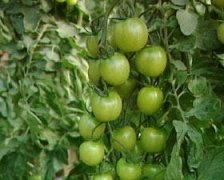
Are the mid-season tomato varieties Little Yellow Jade and Emerald No. 2 good, and how does Emerald taste?
Tomato, this vegetable has quite a lot of varieties, and it has many kinds, so its colors also come in many kinds. Have you ever seen a ripe green tomato? What variety of tomato is this? Let's take a look together! Little Yellow Jade: this kind of tomato
-
Shinkawakami Naka is an emerging variety among early-to-mid-season peaches
Shinkawakami Naka is a new variety bred by Mr. Masamoto Ikeda of Nagano Prefecture, Japan, from the Kawakami Naka white peach. In 1996, our orchard introduced it directly from the Zhengzhou Fruit Research Institute. Through multi-point trial plantings and observations across various locations in Xiangyun County, the variety has been found to have strong cultivation adaptability, early fruiting and high yield, large fruit size, full and brilliant red coloration, high firmness, excellent storage and transport tolerance, rich aroma, and superior quality, with a wide range of suitable planting areas. The fruit ripens in mid-to-late July, making it a large-fruited, fully red, high-quality premium peach variety between the early and mid-season varieties, with high economic value and broad development prospects.
-
Key technical points for mid-season management of cotton during the Major Heat solar term
Focus on promoting growth, combining promotion with control, achieve control of large seedlings, promotion of small seedlings, and supplementation of weak seedlings, promote the transformation of weak seedlings, achieve balanced growth of strong seedlings, and build a high-yield framework early. Scientific fertilizer and water management: First, apply bud fertilizer early and steadily. For weak seedlings, apply bud fertilizer early and steadily, generally applying 5-7 kg of urea per mu, and 25-50 kg each of cake fertilizer and phosphate fertilizer. Second, apply flower and boll fertilizer early and heavily. Generally in late early July, when 1~2 large bolls appear on the lower part of the cotton plant, carry out topdressing, applying 15~20 kg of urea per mu. Third, supplement with topping fertilizer.
-
How to carry out mid-season cultivation management of rice? Detailed technical measures for Eryuan County
From last autumn to June this year, Eryuan County experienced continuous drought and high-temperature weather, causing varying degrees of loss to small spring crops and preventing some large spring crops from being sown normally. The county agriculture bureau adopted various scientific and technological measures to actively respond to natural disasters such as the severe drought, striving to "compensate small spring losses with large spring gains" and achieve the annual production target. In rice production, it grasped key measures such as good seeds and good methods, dry seedling raising with sparse planting and shallow transplanting, soil testing and formula fertilization technology, precision quantitative cultivation technology, and high-yield creation. Scientific and technical personnel went deep into the front line of agricultural production, firmly grasped technical
-
Cultivation Techniques for the High-Quality Mid-Season Pear 'Huangjin'
Variety Characteristics The Huangjin pear was bred in South Korea by crossing '20th Century' and 'Niitaka', and is one of South Korea's main pear cultivars. It was introduced to China in 1997. The fruit is oblate, with a single fruit weight of over 350 grams and a maximum fruit weight of 500 grams; at maturity the skin is yellow-green, turning golden yellow after a short period of storage. The skin is extremely clean (bagged fruit is golden yellow at maturity and appears translucent), the lenticels are large and sparse, the flesh is slightly soft and juicy, white in color, with very few stone cells, an edible rate of 95%, and a sugar content of up to 14.70 degrees. The flavor is sweet with aroma
-
Prune early- and mid-season peaches promptly after harvest
Early- and mid-season peach trees are harvested right in the hot, rainy season, when new shoots grow heavily and readily form secondary shoots, which easily causes the upper canopy to become congested and the inner canopy to have poor ventilation and light penetration, affecting flower bud differentiation and pest and disease control, and working against improvements in next year's yield and quality. After harvest, combined with fertilizer and water management, reasonable pruning can promote shoot maturation and flower bud formation, laying the foundation for a bumper crop the following year, and can also inhibit the outward shift of the fruiting zone. The specific pruning methods are as follows: right after harvest, retract overlapping and crossing branches, thin out overly dense, fine and weak branches, and remove the upper canopy
-
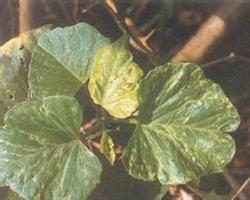
Key Technical Points and Recommendations for Mid-Season Field Management of Sweet Potato
In recent years, farmers have often reported that after the sweet potato seedlings they cultivated were transplanted into the field, the leaves turned yellow and wrinkled, and the plants grew very slowly, or in rural colloquial terms, "died without growing." Such potato vines basically produce no yield later on. According to investigation, the main cause is severe occurrence of sweet potato virus disease. Sweet potato virus disease is a common disease of sweet potato...
条件筛选