-

The Latest Complete-Stand Method for High-Yield Direct-Seeded Rapeseed Cultivation
Compared with seedling raising and transplanting, direct-seeded rapeseed cultivation omits such steps as raising seedlings, pulling seedlings, transplanting seedlings and watering for root establishment, reduces labor input, lowers labor intensity and production costs, and has no seedling revival period; under the conditions of adopting supporting cultivation measures, the yield of direct-seeded rapeseed can be
-
How to manage the fertilizer amount and timing for direct-seeded rice?
Direct-seeded rice is a new type of rice cultivation technique, and there are many points to note when using it, so what about the fertilizer amount and timing for direct-seeded rice? 1. What is direct-seeded rice Direct-seeded rice is sowing the seeds directly into
-
Correct use of benthiocarb (thiobencarb) in direct-seeded fields
Benthiocarb (thiobencarb) is a selective herbicide used fairly widely on crops such as rice, soybean and peanut, so how is benthiocarb used in direct-seeded fields? 1. Basic introduction to benthiocarb. Benthiocarb is a systemic, translaminar selective herbicide, poorly soluble in water and readily soluble in organic
-
What formula should be used for weed control in direct-seeded upland rice? Practical solutions shared
Upland rice refers to the selection of high-quality rice varieties with strong drought tolerance under dry field conditions, using dry direct seeding. The entire growth period relies mainly on natural rainfall. In addition, weed control throughout the process is also key. Below, the editor will share with you the weed control formula for direct-seeded upland rice.
-
Key Points of High-Yield Cultivation Techniques for Direct-Seeded Soybean after Wheat Harvest
The Longkou City Agricultural Technology Promotion Center conducted a two-year study on summer direct-seeded soybean after wheat harvest. The experiment used the Ludou 11 variety, and the yield per 667 sq m reached more than 300 kg. Through the experiment, the wheat-soybean direct seeding method replaced the wheat-corn relay intercropping model, with a significant increase in benefits, raising income by more than 400 yuan per 667 sq m. The key techniques are early seeding by rushing the stubble, single-seed sowing, density control, and timely harvest. 1. Variety selection and treatment. Select varieties with stiff stems that do not lodge
-
How to grow direct-seeded rice? Experience shared by Jingtoushan Farm
Our farm has nearly 700 hectares of paddy fields. We began direct seeding of rice in 1987 and fully promoted it starting in 1999, with a 100% success rate. The key points of this direct seeding technique are mastering the following three critical stages. 1. Land preparation stage. Plow the paddy field, break up the soil, and irrigate; either machine leveling or oxen leveling will do. Then use a leveling bar to smooth the field flat. Use a homemade ditching board to open the furrows. The ditching board is 2 m long, 45 cm wide, and 3 cm thick. On the wooden board, nail 2 handles on each side, each 30 cm long, with a width of 1.6 m between the handles, for attaching ox harness ropes
-
Water-seeded direct-seeded rice has many advantages; what exactly are they?
Depending on the soil moisture conditions at the time of land preparation and the method of land preparation and sowing, direct-seeded rice can be divided into dry direct seeding and water direct seeding. Dry direct seeding can further be divided into methods such as sowing on stubble first followed by shallow rotary tillage, and rotary tillage first followed by sowing. The land preparation and sowing procedure for water direct seeding is roughly as follows: after applying base fertilizer, add water and rotary tillage, open furrows, level the field with water, then sow and press the seeds into the soil. Compared with dry direct-seeded rice, water direct seeding has the following advantages. First, more seedlings emerge and emergence is uniform, which is conducive to cultivating strong seedlings. In water direct-seeded fields, the bed surface is level, and there is mud slurry on top; after pressing the seeds into the soil, no seeds are left exposed, emergence is fast and
-
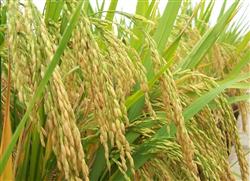
High-Yield Cultivation Techniques for Single-Season Direct-Seeded Rice
Single-season late rice under direct seeding has the advantages of easing seasonal conflicts, reducing labor intensity, and saving labor, cost, seed, and seedling beds, with yields generally above 500 kg, and is deeply welcomed by farmers. Based on several years of planting experience, the techniques are summarized as follows: 1. Select and breed excellent varieties, prepare the field leveling well, improve sowing quality, and strive...
-
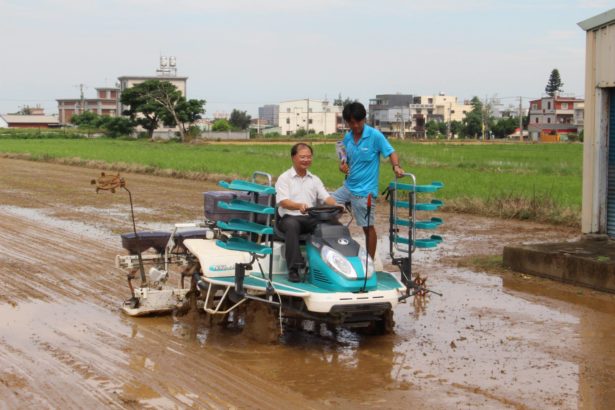
Direct-seeded rice skips the need for seedlings and transplanting, tastes better, and saves 15% water
No more bending over in the fields! Rice can also be direct-seeded, skipping seedlings and transplanting, tasting better and saving 15% water
-
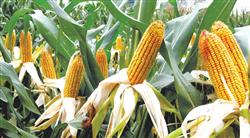
Late harvest of direct-seeded summer corn can achieve high yields
From the 1960s to the 1990s, wheat and corn yields were low, the turnaround time between crops was long, and heavy rain easily caused waterlogging and sprouting damage, so interplanting in wheat fields played a positive role in raising corn yields per unit area. Since entering the new century, with the improvement of production conditions, changes in the production system, and higher levels of mechanization, wheat and corn yields have increased substantially, ...
条件筛选