-

Detailed Explanation of Key High-Yield Cultivation Techniques for Atlantic Potatoes
I. Characteristics and Traits of Atlantic Potatoes (1) Vigorous plant type, plant height 40
-
Detailed Explanation of the Key Technical Steps for High-Yield Cultivation of Plastic-Film Mulched Potatoes
Plastic-film mulched potatoes have the characteristics of early sowing, high yield, early marketing, and high benefit. Developing plastic-film mulched potatoes is of great significance for enriching the vegetable supply of urban and rural people and increasing farmers' income. 1. Deep plowing and land preparation, storing enough subsoil moisture. The formation and expansion of potato tubers require a deep, loose, and moist plow layer. 1. Land selection: It is advisable to choose loam or sandy loam with deep soil layers and medium or above fertility, rotate with legumes and cereal crops, and avoid continuous cropping with solanaceous crops and root-tuber crops. 2. Deep plowing: After the previous crop is harvested, deep plow in time.
-
Detailed Explanation of High-Yield Winter Potato Cultivation Techniques
Developing winter potatoes makes full use of winter resources and has the characteristics of improving land utilization, saving time and fertilizer, a short growth cycle and quick results. Not only can planting be done earlier and maturity achieved earlier, seizing the main spring season to plant spring corn, realizing one early season leading to many early seasons and multiple seasons with multiple harvests, but because of the earlier market listing, it also alleviates the spring vegetable shortage, serving both as a vegetable and as a grain, achieving value addition and increased income. In recent years, the winter potato planting area has continued to expand, and cultivation techniques have gradually matured, developing from ordinary open-field cultivation to plastic film mulching cultivation,
-
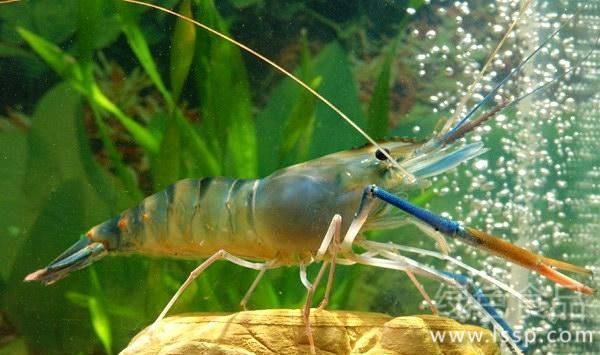
To achieve high yield and good profits from freshwater shrimp and river crabs, grasping six key points is very important
For high yield and good profits from freshwater shrimp and river crabs, grasping the "six key points" is very important
-
Early prevention and control of soybean diseases: seize the opportunity to reduce yield losses
To achieve high yields in soybean, the main challenge is to properly manage the four aspects of "seed, water, fertilizer, and light." The "deep-narrow-dense" cultivation technique is a comprehensive high-yield supporting cultivation model formed on the basis of this principle. It takes the selection of dwarf varieties as the breakthrough point, uses air-suction seeders and general-purpose machines as the carrier, and combines "deep" (i.e., deep loosening, deep fertilization, and layered fertilization), "narrow" (i.e., narrow rows), and "dense" (i.e., increased planting density) into a comprehensive high-yield supporting technique. It is a cultivation technique that uses large seeders as the carrier. "Seed" means variety,
-
Scientific use of chemical control technology in cotton can effectively increase yield
Scientific chemical control of cotton is an important scientific measure for increasing cotton yield. Chemical regulation technology has three benefits: first, it helps strong seedlings to develop early, controls height and stabilizes growth, making it easier to give play to the yield-increasing advantage; second, it simplifies cotton field management, saving labor and cost; third, it promotes the transformation of second- and third-grade cotton seedlings, achieving balanced development and increasing yield and efficiency. The principle of chemical control is "small amounts, many times; light control, frequent adjustment." One should master "spray every time, control every time" or "control once at every interval" (flexibly according to soil fertility, rainfall, and growth condition), and it is best to "divide the amount for one application into three applications," ensuring the plant grows steadily and robustly "strong but not excessive" from beginning to end. If chemical control is done poorly, it can cause excessive growth or stiff seedlings that do not develop, affecting the normal growth of cotton. Therefore, in the process of implementing chemical control, the dosage of the chemical control agent must be strictly controlled.
-
Cotton drip irrigation automation project boosts yields
The Shihezi "Cotton Drip Irrigation Automatic Control Science and Technology Demonstration Project", which has been included in the national plan, will add another 15,000 mu to its experimental demonstration area this year on top of last year's. In recent years, after the Shihezi reclamation area vigorously promoted and applied cotton under-mulch drip irrigation technology, total cotton output and per-unit yield have increased substantially. **Tianye Group Corporation, as the largest domestic producer of agricultural water-saving drip irrigation equipment, has promoted water-saving drip irrigation over more than ten million mu. In order to seize the scientific and technological high ground, the company independently innovated and developed the "Cotton Drip Irrigation Automation
-
Clever Fertilization in the Late Stage of Cotton: Disease Prevention and Yield Increase at the Same Time
In the late growth stage of cotton, the root system's ability to absorb nutrients declines noticeably, but if fertilizers such as nitrogen, phosphorus, potassium, zinc and boron are sprayed on the cotton leaves, they can prevent premature senescence, promote early maturity, prevent disease, prevent boll shedding and help set large bolls, with a significant yield-increasing effect. 1. Apply nitrogen fertilizer to prevent premature senescence: each time use 75-100 kg of 1% urea solution per mu, spray once every 5-7 days, for 2-3 consecutive sprays, which can enhance leaf photosynthesis and prevent premature senescence and increase yield. 2. Apply phosphorus fertilizer to promote early maturity: in the late stage of cotton, spraying phosphorus fertilizer on the leaves,
-
Spraying cotton with seven liquids can increase yield by 100 jin
According to many years of trials by our local agricultural science institute and cotton-grower science households, spraying the following nutrient liquids mixed with pesticide during pest control at different growth stages of cotton can effectively increase yield by 20%-30%. The methods are described below: 1. Chicken manure liquid: take 3 kg of fermented dry chicken manure, 2. add 7.5 kg of water, 3. soak for 30 hours, 4. then boil for 2-5, 3 hours, 6. filter out the residue, 7. then ferment again, 8. until white mold appears on the liquid surface, 9. filter out the white mold, 10. add 50 kg of water, 11. spray evenly on 1 mu of cotton field. 12. Rabbit manure liquid:
-
Spraying cotton with fertilizer boosts yield and reduces pests and diseases
Spraying nitrogen fertilizer: Urea has the effect of destroying insect chitin. When cotton aphids (especially summer aphids) occur, mix urea, laundry detergent and water in a ratio of 4:1:400 to prepare a "wash-urea mixture" and spray it, which has a clear killing effect. Spraying phosphorus fertilizer: During the adult occurrence period of cotton bollworm, using 1%-2% superphosphate leachate as a foliar spray fertilizer can convert oxalic acid into calcium oxalate and cause it to lose its attraction to cotton bollworm. The residual effect of each phosphorus spray is generally 2-3 days. Spraying potassium fertilizer: Use 10 kg of plant ash, add 50 kg of water, soak
条件筛选