-

Yangxincai Cultivation Technique Tutorial: Latest Planting Methods Explained
Yangxincai is a perennial herb of the Crassulaceae family and a fairly common ornamental plant, but in fact Yangxincai has high medicinal value. Yangxincai has certain effects on bruises, heart disease and so on. Yangxincai grows in all parts of our country
-
When to Plant Yangxin Cai? Detailed Planting Times for North and South China
Yangxin Cai is a perennial fleshy herbaceous plant with persistent roots, whose tender stems and leaves are edible; once sown and planted by humans, it can be harvested continuously for 20 years, and it is a health-promoting wild mountain vegetable. So what are the cultivation techniques for Yangxin Cai? When should it be planted? Is there a difference in timing between North and South China? 1. Yangxin
-
When to sow Yangxin vegetable? A detailed guide to the best sowing time
Yangxin vegetable, also known as Feicai, is a wild vegetable commonly found at mountain forest edges, in thickets, and in riverside grasslands. Because it is easy to grow and highly nutritious, it is widely cultivated. So when to sow Yangxin vegetable? 1. When to sow Yangxin vegetable? In the south, Yangxin vegetable is generally sown from mid-to-late March to early April, or mid-to-late May, or mid-to-late September. In the north, Yangxin vegetable is generally sown from April to early May, or from mid-to-late September to mid-October.
-
Is ya cai a "trigger food"? Read this and you'll understand
Ya cai is made by shredding the tender stems of mustard greens into strips and pickling them, and comes in two kinds: salty and sweet. Salty ya cai is produced in Nanxi and Luzhou in Sichuan and Yongchuan in Chongqing; sweet ya cai is produced in Yibin, Sichuan, formerly known as Xufu ya cai, and is now sold widely in Sichuan as well as in Beijing, Tianjin, Shanghai and other places. In Sichuan, the salty kind is more common
-
Is yanxu cai and cilantro the same vegetable?
Cilantro is an annual herbaceous plant, named so because its stems and leaves contain a special fragrance. But some people say there is a vegetable on the market called yanxu cai that looks exactly like cilantro, so is yanxu cai cilantro? If not, what
-
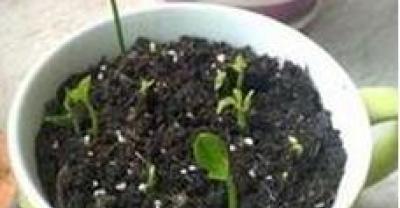
Detailed Guide to Growing Yangxincai (Sedum kamtschaticum) in Pots
Yangxincai, also known as Jiuxincai, is a special vegetable that can boost immunity, relieve fatigue, and help prevent heart disease. So do you know how Yangxincai should be planted...
-
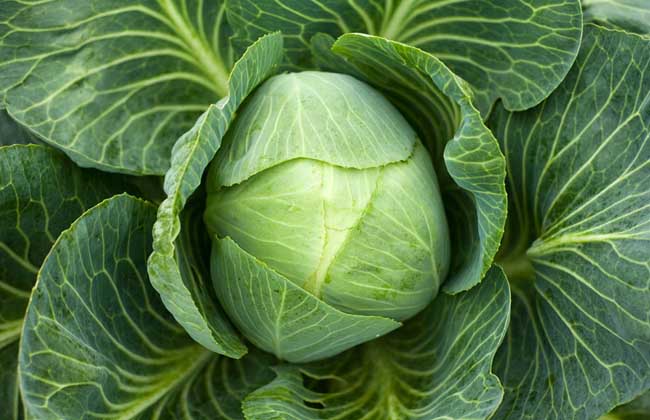
What is the difference between huangya cai, napa cabbage, cabbage and head cabbage?
The difference between huangya cai, napa cabbage, cabbage and head cabbage
-
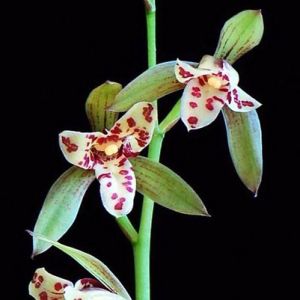
Introduction to the characteristics of the Zhongyan Caidie Cymbidium ensifolium variety
Four-season orchid three-star butterfly; this flower readily produces leaf butterflies. A Cymbidium ensifolium leaf-butterfly three-star butterfly from Sichuan; the foliage is not large, but the flowers are large and held above the leaves. The leaves twist and curl, and when the leaf butterfly is at its best the central leaves are covered with red colorful patches. The foliage is generally about 20--25 cm long. The flowers are held above the leaves on red stems, butterfly-type flowers, and each blooming does not produce many flowers. This variety has a small, compact plant type that does not take up...
-
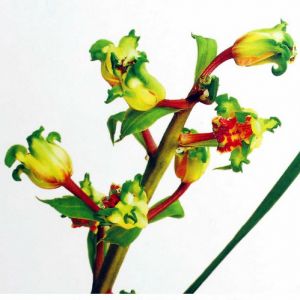
Introduction to Yanzhou Caiyun Chinese Cabbage and Cymbidium faberi Varieties
Classic Cymbidium faberi variety Cymbidium faberi new flower common name: Chinese Cabbage; first appeared at the first Nanjing Cymbidium faberi Exhibition in 2006, at the exhibition it was called "Xiaxian Piaoxian", and today orchid growers mostly call it "Yanzhou Caiyun". In Yanzhou Caiyun, the petals (peng), lip (she), and sepals (ban) are all transformed, belonging to the petal-form category; it is a multi-art variety of the Piaomen narcissus type combining compound rims and yellow flowers; this kind of...
-
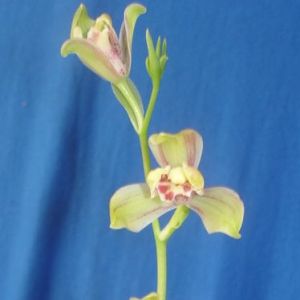
Characteristics of the Jianlan (Cymbidium ensifolium) cultivar Yandu Caimei
Produced in Zigong, Sichuan, locally known by orchid enthusiasts as Fangque Shemei, now renamed Yandu Caimei. The grass of this line is relatively soft, with thin leaves in a pendulous or semi-pendulous form; the outer petals of the flower often have red stripes, and the red is especially pronounced when strong seedlings bloom.
条件筛选