-

Will rice suffer from quinclorac phytotoxicity after reseeding
Question: 4 mu of direct-seeded rice is at the 3-leaf 1-heart stage. Very few seedlings emerged after sowing, there are no seedlings in the low-lying areas, and the emergence rate is less than 50%. The sowing rate was 7-7.5 kg per mu. Not long ago, quinclorac was used for the "second kill" weed control. May I ask, if rice is reseeded in the areas of this field where no seedlings emerged, will the reseeded rice suffer from quinclorac phytotoxicity? Answer: Quinclorac is a selective herbicide for controlling barnyardgrass in paddy fields. It is generally applied at the 2-leaf 1-heart stage of rice, and applying it too early easily causes phytotoxicity. Before the 1-leaf stage of the seedlings, especially at the needle standing stage, applying quinclorac at the conventional rate
-
What is the fresh-keeping principle for edible fungi? This article will help you understand it clearly
Fresh-keeping for edible fungi (theprincipleoffresh-keepingforediblefungi): Mushroom bodies separated from the culture substrate still have vitality, and living organisms have resistance to adverse external environments and microbial infection. However, the stronger the life activity, the faster the rate of freshness decline. Therefore, without destroying the normal physiological functions of the organism, by controlling various factors that affect the physiological and biochemical changes of fresh mushroom products, the life activity of the mushroom body can be kept as low as
-

Organic Farming Prospects and Current Status Analysis: Will It Reduce Global Food Production?
Organic farming yields less and requires more farmland, so what can be done? We can both increase crop yields and avoid the farmland problem. Let's take a look together. The latest research shows that organic farming may cause some crop yields to be lower than conventional farming methods.
-
-

Yunlin Takes the Lead in Banning Swill Feeding for Pigs, Demonstrating National-Security-Level Commitment to Disease Prevention
Demonstrating the highest level of commitment to disease prevention, Yunlin County Magistrate Chang Li-shan, immediately after taking office yesterday (the 25th), held a press conference on African swine fever prevention accompanied by Environmental Protection Bureau Director Chang Chiao-wei and Agriculture Department Director Chang Hung-yu, announcing that from that day onward the entire county would ban swill feeding for...
-
Why does the Venus flytrap move, and will a Venus flytrap die if it doesn't eat insects? The moving video is very satisfying
When it comes to the Venus flytrap, everyone knows it is a plant that can repel mosquitoes, but unlike mosquito-repellent geranium and night-blooming jasmine, which use fragrance to repel mosquitoes and insects, the Venus flytrap uses its large traps to snap insects to death. This raises a question: why does the Venus flytrap move? It is quite normal for a Venus flytrap to eat insects
-
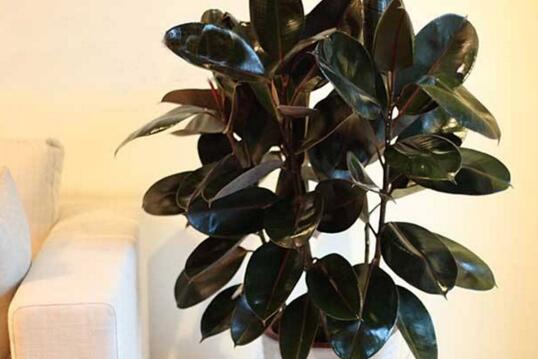
How to care for the rubber plant in winter? These four tips will help it overwinter safely
Because the rubber plant (Ficus elastica) has relatively weak cold tolerance, how to care for it in winter becomes a worry for many flower growers. Improper care may cause its leaves to drop frantically and may even make it difficult for the plant to resume growth the following spring. So how should it be cared for after winter begins? Let's take a look at winter care methods for the rubber plant.
-
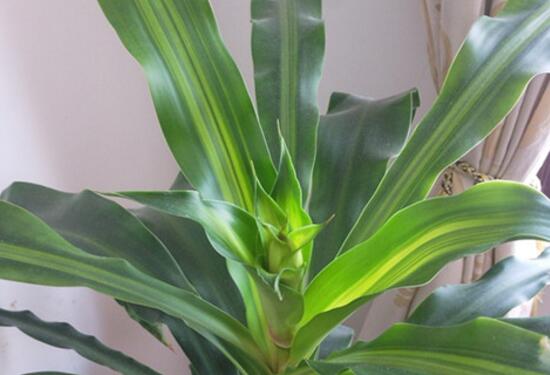
What to do when the Brazil wood plant's leaves turn yellow? Controlling water, adding light and changing the soil will solve it
The Brazil wood plant (Dracaena fragrans), a plant with a handsome, well-proportioned form, has emerald-green leaves that grow just like agave leaves, making it highly ornamental. In everyday life, many people grow Brazil wood plants, but during cultivation, many flower growers cause the leaves of the Brazil wood plant to turn yellow through improper care, seriously harming its ornamental value
-
-
Will there be insect eggs on mosquito-repellent plants? Read this and you will understand
Many people think that mosquito-repellent plants can repel all mosquitoes and insects, but in fact there are many kinds of mosquito-repellent plants, such as mint, night-blooming jasmine, wampee, fennel, and pyrethrum, all of which have some effect on mosquitoes and insects. But the most commonly used is scented geranium (Pelargonium graveolens), though it cannot repel all insects, generally only targeting mosquitoes and flies
条件筛选