-

Farmers' grain payments are in arrears: who should be held responsible?
On one side are the grain-selling farmers who have not received their money; on the other side is Sinograin, which has already paid the grain payments. Recently, the incident of farmers' grain-selling payments being in arrears in Dingyuan County, Chuzhou City, Anhui Province, has drawn attention from all sides. Where exactly did the more than 20 million yuan in grain-selling payments go? And how should the grain payments owed to farmers
-
Who Should Develop China's Turkey Market
Typically, when people mention turkey, they associate it with three holidays: Thanksgiving, Christmas, and Easter. Among them, Thanksgiving is also called "Turkey Day," and turkey has been given the label of Western culture. Eating turkey has a history of nearly 400 years, and now turkey is popular in many countries,
-
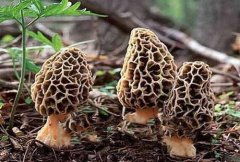
Who should not eat morel mushrooms? Raw-eating poisoning risks and main production areas
The morel mushroom gets its name because its shape closely resembles a sheep's stomach, so it is called morel. Wild morels are distributed in China's Shaanxi, Gansu, Qinghai, Tibet, Xinjiang, Sichuan, Shanxi, Jilin, Jiangsu, Hebei, Beijing, Hunan, Guizhou and other regions. Now
-
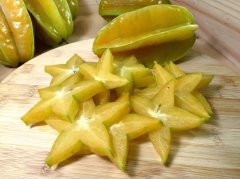
Nutritional Composition of Star Fruit and Common Varieties in Taiwan, and Who Should Not Eat It?
Do you like eating star fruit? Star fruit has fairly high nutritional value, but do you know what its nutritional value is? What are the common varieties? Star fruit is scientifically known as wu lian zi (Averrhoa carambola), and is commonly called feng guo in the Minnan region. Star fruit originated in the tropical and subtropical regions of Southeast Asia, and was introduced to China from Vietnam around the Han Dynasty.
-
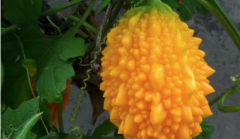
The Appearance and Characteristics of the New Bitter Melon Variety "Lai Grape" and Who Should Not Eat It
Did you know that the plant called lai grape is actually a variety of bitter melon? Its high-yield technique is the same as the high-yield cultivation technique for black bitter melon. Let's take a look at this bitter melon variety below! This fruit is called golden lai melon, also known as lai melon and lai grape. It
-
The loofah is a treasure from top to bottom. How should it be fertilized when planting?
The loofah is surely familiar to everyone. In rural courtyards, loofah is generally grown, as it is both attractive and practical. Once it gets old, the loofah can be made into a tool for scrubbing dishes. Of course, the taste of loofah is also good, and to this day many people like to add some when making soup or cooking dishes.
-
Yinchen: Benefits, Effects, Who Should Avoid It, and Precautions Explained
Yinchen, also called Yinchenhao, refers to the young stems and leaves of Qinghao (sweet wormwood). There is also a folk legend of "Hua Tuo testing Qinghao three times." So what are the benefits and effects of Yinchen? Who should not take it? What precautions are there? 1. Benefits and effects of Yinchen. 1. Liver protection
-
What Is Fennel? A Full Guide to Its Benefits, Effects and Who Should Avoid It
Fennel is a vegetable and also a component of traditional Chinese medicine with health-promoting and conditioning effects. So, what is fennel? What benefits and effects does fennel have? Who should not eat fennel? Let's find out together. I. What is fennel?
-
How to eat rambutan for nutrition? Who should avoid it and how much to eat at one time
Rambutan, also known as hairy lychee and red hair fruit, is a common tropical fruit in Yunnan, Guangdong, Taiwan, China and other places. Because of its high nutritional value and its effects of boosting immunity, nourishing hair and beautifying skin, it is deeply loved by people. It is currently sold in markets and is affordably priced
-
What are the benefits and effects of reishi mushroom spore powder? Can it be taken long-term? Who should not take it?
Reishi mushroom spore powder is a powder made from grinding the spores released in the later stages of the reishi mushroom's development. Under natural conditions, reishi mushroom spores are extremely difficult to collect; 1 tonne of reishi mushrooms yields only 50-100 kg of reishi spores, so it can truly be called the essence of the reishi mushroom. So reishi mushroom spore...
条件筛选