-
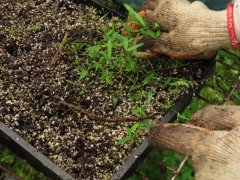
How to protect the rare native plant Taiwan trident maple? Dividing and planting Taiwan trident maple, weeding and care
Taiwan trident maple, do you know this plant? Currently, the number of this plant is not large. For this reason, to cultivate this rare native plant, there are dedicated people who plant it. Dividing and planting On this day everyone gathered in the large greenhouse, and at the start they opened two large bags
-

When is the best time to weed winter wheat? Save these 9 precautions
The planting area of winter wheat in our country is much wider than that of spring wheat, and its share of production is also very high. It is generally sown from mid-to-late September to early October, and matures from the end of May to late June of the following year. During the planting process, when is the best time to weed winter wheat
-
When Is the Best Time to Spray Herbicide on Wheat? Master the Timing and Temperature
Abstract: You can choose to weed during the wheat seedling stage, in mid-to-late November, or during the wheat greening stage, from late February to early March. Generally, spray when the average temperature is above 6°C, and select the corresponding herbicide for control according to the weed species.
-
What herbicide is used for pre-emergence closed weeding in soybean, and when should it be applied?
Summary Acetochlor: apply 3-5 days before emergence. Chlorimuron-ethyl: apply 3-5 days before emergence. Metribuzin: carry out soil treatment 3-5 days before emergence. Clomazone: carry out closed weeding after sowing and before emergence. Glyphosate: apply 2-3 days before emergence. 1. Acetochlor
-
Can wheat be weeded at low temperatures? The effect is good above 10°C
Abstract It is best not to use wheat herbicides when the temperature is low. Applying the herbicide at this time will not only affect the weeding effect, but also cause herbicide damage. The more suitable temperature is above 10°C. The higher the temperature, the better the weeding effect. Therefore, it is recommended to choose a sunny day, from 10 a.m. to
-
Tomato Planting Time and Techniques: Management Focused Mainly on Weeding and Fertilizing
Abstract Tomato planting time: spring from February to May, autumn and winter from July to September, winter and spring from November to February. Planting techniques: it is advisable to choose soil with deep tilth, good drainage and irrigation, and good ventilation for planting; first select high-quality seeds for soaking and sprouting, then transplant when the seedlings grow to 3 true leaves; plan the transplanting density reasonably, carry out timely intertillage and weeding later, fertilize scientifically, and set up trellises at the right time.
-
When planting mangoes, density must be well controlled, with timely weeding in the later stages and scientific fertilization.
Abstract Orchard site: requires a relatively thick soil layer, soil that does not easily become compacted and does not waterlog, and proximity to a water source so that irrigation is possible during spring drought. Density: varies according to climate, soil fertility and cultivar; the commonly used spacings are 4 by 4 m, 4 by 5 m, 5 by 6 m and so on, 3 kinds in total. Planting: best done from June to August.
-
How to carry out field management during Eucommia ulmoides planting
1. Intertillage and weeding: After Eucommia ulmoides is planted, the root system has not yet taken firm hold, so intertillage should be shallow rather than deep, and weeding should be thorough. If intercropped with crops, it can be carried out together with the intertillage and weeding of the crops. When the young Eucommia ulmoides stand closes its canopy, clearing the stand and one intertillage should be carried out each summer to promote the growth of the young trees.
-
Detailed Explanation of Key Management Techniques for Pomegranate During the Fruit Enlargement Stage
1. Intertillage and weeding. In summer, weeds in the orchard grow severely and compete with the fruit trees for water and nutrients. Intertillage can not only remove weeds (chemical weeding may be used when necessary), but also loosen the soil and prevent soil moisture evaporation. However, during this period the root activity of the fruit trees is vigorous, so to prevent
-
Detailed Explanation of Field Management Techniques for Okra
1. Intertillage, weeding and hilling: After the seedlings emerge or are transplanted, when the temperature is relatively low, intertillage should be carried out 2 times in succession to raise the soil temperature and promote seedling recovery. Before the first flower opens, intertillage should be intensified so as to appropriately restrain seedling growth and benefit root development. After flowering and fruiting, the plants grow faster, and after each
条件筛选