-

Great potential for wheat in shoring up weak links, boosting agricultural supply-side reform
The Central Rural Work Conference held on December 24-25, 2015 proposed the agricultural supply-side structural reform for the first time, charting the course for agricultural and rural work in 2016 and the 13th Five-Year Plan period. The conference pointed out that efforts should be focused on strengthening the agricultural supply-side structural reform, improving the quality and efficiency of the agricultural supply system, so that the quantity, variety and quality of agricultural product supply meet consumer demand, and truly form an effective supply of agricultural products with a reasonable structure and strong guarantees.
-
How to shore up the weak links in farmland water conservancy? Accelerating institutional and mechanism innovation is key
The National On-site Meeting on Farmland Water Conservancy Reform was held in Qujing, Yunnan, from January 4 to 5. Vice Premier Wang Yang attended the meeting and delivered a speech. He stressed the need to earnestly implement the spirit of the Fifth Plenary Session of the 18th CPC Central Committee, the Central Economic Work Conference, and the Central Rural Work Conference,
-
How can agriculture's weak links be shored up? The key lies in adjusting the supply structure
The Central Rural Work Conference held recently explicitly proposed that during the 13th Five-Year Plan period, we must effectively stretch the "short leg" of agriculture in the synchronous development of the four modernizations, and shore up the "weak link" of rural areas in building a moderately prosperous society in all respects. At present, agriculture faces many contradictions and difficulties, with different "symptoms," but the "root cause" lies in structure
-
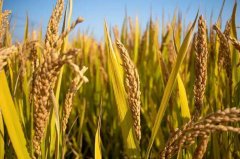
Rice Taikeng 17: Disadvantages, Weaknesses, and Variety Characteristics
Rice is one of our staple foods, and the cultivation of rice and the breeding of new varieties are very important. Do you know the rice variety Taikeng 17? Variety Characteristics I. General Agronomic Traits Taikeng 17 is a medium-late maturing variety. Its growth duration (from transplanting to maturity) is 127 days for the first crop and 112 days for the second crop, similar to the currently most widely cultivated Tainung 67; the tip of the glume is light yellow, the grain color is light yellow, awnless, and the grain shape is medium; the plant height is medium, averaging 104.2 cm for the first crop and 102.4 cm for the second crop; the average number of panicles per hill is 16.9 for the first crop and 14.0 for the second crop; the average number of grains per panicle is 91.6 for the first crop and 100.0 for the second crop; the 1000-grain weight is 23.7 g for the first crop and 24.3 g for the second crop; all of the above traits are also similar to those of Tainung 67. The fertility rate is 78.2% for the first crop and 77.2% for the second crop.
-
How should weak winter wheat seedlings be managed?
After winter wheat emerges, due to the influence of natural conditions and cultivation measures, various types of weak seedlings often form. Weak seedling conditions should be managed according to the specific cause, as described below one by one: 1. Weak seedlings caused by soil drought mostly occur in wheat fields with insufficient subsoil moisture or where moisture is lost through ventilation.
-
What to do when wheat seedlings are weak and sparse? Apply fertilizer in time to promote tillering
After wheat begins tillering, the number of tillers increases continuously with the growth and development of the plant, and the total number of stems and tillers reaches its maximum around jointing. After that, the later-emerging tillers die off one after another due to insufficient nutrients and other reasons, and the number of stems and tillers becomes basically stable only after heading. Generally, after tillers emerge
-
Three key points to note when applying winter manure to wheat
Weak seedlings: For wheat fields sown late, with poor soil fertility and insufficient base fertilizer, winter manure should be applied generously, mainly with quick-acting fertilizers, about 40 loads of decomposed pig and cattle pen manure per mu; or 20-25 kg of ammonium bicarbonate, or about 10 kg of urea applied as a top dressing when rain or snow falls, to promote stem growth
-
2019 Wheat Prices: Weakened Demand Boost Leaves Policy Adjustments to Sway the Market
Wheat is one of the three major grains widely cultivated around the world, and almost all of it is used as food, with only a small portion used as feed. So under normal conditions, how much wheat is produced per mu? What was the price per jin in 2019? How much was wheat per jin in 2019 1.
-
How to raise baby scorpions well during scorpion farming
Baby scorpions are small and weak, and their ability to move, defend themselves and find food is very poor, so they are easily eaten by other scorpions or die because they cannot get food. In artificial scorpion farming, the mortality rate at this stage is very high. Therefore, raising baby scorpions well so that they molt and grow smoothly is the key
-
How to pinch melon tips to increase yield
The main vine of the melon is relatively weak, while the side vines grow very vigorously, so melons generally bear fruit mainly on secondary vines and tertiary vines. Therefore, pinching, pruning and tip removal are very important. So how do you pinch melon tips? 1. How do you pinch melon tips? Generally, when the seedlings grow to
条件筛选