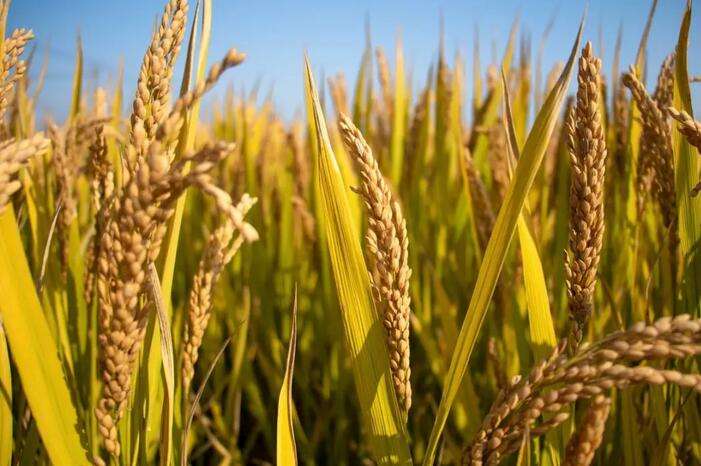
Rice Taikeng 17: Disadvantages, Weaknesses, and Variety Characteristics
Rice is one of our staple foods, and it is very important for rice cultivation and the breeding of new varieties. Do you know the rice variety Taikeng 17?
Variety Characteristics
I. General Agronomic Traits
Taikeng 17 is a medium-late maturing variety. Its growth duration (from transplanting to maturity) is 127 days for the first crop and 112 days for the second crop, similar to the currently most widely cultivated Tainung 67; the tip of the glume is light yellow, the grain color is light yellow, awnless, and the grain shape is medium; the plant height is medium, averaging 104.2 cm for the first crop and 102.4 cm for the second crop; the average number of panicles per hill is 16.9 for the first crop and 14.0 for the second crop; the average number of grains per panicle is 91.6 for the first crop and 100.0 for the second crop; the 1000-grain weight is 23.7 g for the first crop and 24.3 g for the second crop; all of the above traits are also similar to those of Tainung 67. The fertility rate is 78.2% for the first crop and 77.2% for the second crop.
II. Excellent Characteristics
1. Excellent grain quality and good eating quality:Taikeng Yu 17 has a good grain appearance, good transparency, very little white core and white belly, and excellent eating quality. According to test results from the Taichung District Agricultural Improvement Station, the transparency of its white rice is grade 3, and white core, white belly, and white back are all grade 0, and its performance across years is quite stable. The brown rice rate is 81.94% for the first crop and 82.17% for the second crop; the head rice rate is 62.04% for the first crop and 71.24% for the second crop. As for its eating quality, the results of four crop seasons in 85 and 86 were all the same as the control variety Taikeng 9 (grade B). The cooked rice is white and glossy, with moderate stickiness and rich elasticity.
2. Resistance to rice blast:According to the results of unified disease nursery tests in Chiayi and Guanshan over three years in ROC years 83, 85, and 86, Taikeng 17's resistance to leaf blast averages at the resistant level, and to panicle blast at the moderately resistant level, and its performance across years and regions is fairly stable. However, in view of the complexity of rice blast occurrence, field cultivation should always pay attention to the development of the disease so that timely control can be carried out and losses reduced.
3. Good response to fertilizer:According to the results of two years of measurements in 85 and 86 at this station, the response of this variety to nitrogen fertilizer is such that whether in the first crop or the second crop, its rice grain yield rises significantly with increasing nitrogen application, reaching the highest yield at the highest level of 200 kg N/ha. Although its plant height gradually increases with increasing nitrogen application, its lodging resistance remains good until 200 kg N/ha, when leaning occurs. However, with 160 kg of nitrogen per hectare, its rice grain yield can already reach a considerable level (8 tons per hectare for the first crop and 6 tons for the second crop). In consideration of cultivation safety and eating quality, this should be the recommended fertilizer rate for this variety.
4. Moderate threshability:The threshability of Taikeng 17 averages 17.5% for the first crop and 19.6% for the second crop, both medium, with 18.1% less shattering in the first crop and 7.1% less in the second crop than Tainung 67, which can reduce losses from grain shattering at harvest.
5. Considerable yield:According to the results of this station's observational trial and preliminary and advanced yield comparison trials, the rice grain yield of Taikeng 17 was 99.5% to 111.6% of the control variety Tainung 67 in the first crop and 93.5% to 100% in the second crop. Its high-yielding ability is slightly similar to Tainung 67 and is fairly stable. In the province-wide regional trial results from six locations over two years and four crop seasons, the first crop averaged 92.3% of the control variety Tainung 67 and the second crop 97.7%. The better-performing region was Changhua, where the first crop yield was 8,980 kg/ha and the second crop 7,947 kg/ha, increasing yield by 0.1% and 10.7% respectively compared with Tainung 67.
III. Disadvantages or Weaker Characteristics
1. Lodging resistance is not strong: This variety has medium plant height, and its lodging resistance according to test results ranges from leaning to lodging, that is, medium to strong. Under ordinary cultivation there is no concern about lodging, but with heavy fertilizer application or planting in poorly drained areas, lodging can still easily occur without good field management.
2. Pre-harvest sprouting rate on the panicle is still somewhat high: According to three years of test results, the pre-harvest sprouting rate on the panicle of this variety averages 53.2% for the first crop, which is moderate sprouting, and 79.6% for the second crop, which is prone to pre-harvest sprouting on the panicle; both crops are similar to Tainung 67. In field cultivation, pre-harvest sprouting on the panicle mainly occurs in the first crop. This variety's moderate sprouting tendency is still somewhat high, so timely and early harvesting is needed, or the transplanting period should be adjusted, to avoid damage from the plum rain that leads to pre-harvest sprouting on the panicle.
3. Medium cold tolerance: The cold tolerance of this variety in the first and second crops, according to three years of test results, is at the moderately resistant level. For the second crop, late planting is not suitable, so as to avoid the northeast monsoon affecting the fertility rate and causing reduced yield.
4. Resistance to pests and diseases is still less than ideal: As for this variety's resistance to the main pests and diseases of this province, apart from rice blast, which shows moderate resistance to resistance, the other pests and diseases such as sheath blight, bacterial leaf blight, bacterial leaf streak, and brown planthopper are all similar to those of current common cultivated varieties, lacking excellent resistance.