-

Minister of Agriculture: Farmland must never be converted to non-agricultural use; farmers may move into non-agricultural work
Qiushi, Issue 19 of 2014, published a signed article by Minister of Agriculture Han Changfu, stating that the national food security strategy under the new situation must be fully implemented. The article points out that we must resolutely hold the lifeline of farmland. This is where the lifeblood of national food security lies. Farmland
-
How can the grain price inversion be resolved? Encourage more entities to store grain
Currently, tight warehouse capacity in major grain-producing areas has caused problems for grain procurement. The main reason for the tight warehouse capacity is that grain has been harvested abundantly for many consecutive years, and grain depots everywhere are full to overflowing. A deeper reason is that, under the existing grain procurement and sales policy, grain prices have continued to rise for many years
-
Town-to-city conversion requires accelerated reform of supporting systems
Recently, 11 ministries and commissions including the National Development and Reform Commission, the Ministry of Finance, the Ministry of Land and Resources, and the Ministry of Housing and Urban-Rural Development jointly issued a notice on comprehensive pilot projects for new-type urbanization, requiring each province to select eligible cities and towns at different levels as pilot projects to report to the NDRC, especially for towns with a population of over 100,000
-

Rice policy promotes first-crop rotation and second-crop conversion to landscape crops to stabilize production and sales
At present, the area of first-crop and second-crop rice paddies in our country is about more than 270,000 hectares. Council of Agriculture Minister Chen Chi-chung said in an interview after a press conference on the 24th that, according to estimates by the Agriculture and Food Agency, the rice paddy area must fall to about 250,000 hectares to stabilize market supply and demand. Therefore, the Council of Agriculture is promoting measures such as the "Industrial Adjustment of First-Crop Rice in Water Resource Competitive-Use Areas" and the "Promotion of Converting Rice Paddies in the Second Crop to Landscape Crops," hoping to reduce the rice cultivation area and stabilize rice production and sales.
-
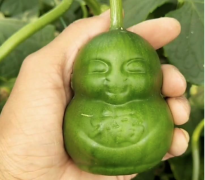
What Does a Cucumber Look Like, and How Do You Grow Ginseng-Fruit-Shaped Cucumbers?
We are all familiar with the cucumber as a fruit, and cucumber growing techniques are relatively simple. The fruit is oily green or emerald green, with soft small spines on its surface. The fruit shape is oblong, round or cylindrical. But have you ever seen a "ginseng fruit" cucumber? 201
-
Detailed Explanation of the Top-Grafting and Variety-Conversion Method for Chestnut Trees and Post-Grafting Management
Chestnut (scientific name: Castanea mollissima), also known as li, chestnut, chestnut seed, and fengla, is a plant of the genus Castanea in the family Fagaceae. It is native to China and distributed in Vietnam, Taiwan, China, and the mainland region of China. It grows in areas at an altitude of 370-2800 m, is mostly found in mountainous areas, and has been widely cultivated by humans.
-
Key Points of Post-Grafting Management Techniques for Top-Grafting and Variety Conversion of Citrus
1. Do well in cutting the rootstock stubs. After using side grafting with exposed buds, the rootstock stubs should be cut or sawed off. This should be done in two steps. First, leave about 15cm of rootstock stub above the graft union. After the new shoots have become lignified, cut the stub flush with the graft union and smooth the cut surface with a knife. 2. Do well in removing sprouts. After top-grafting, because the apical dominance has been removed,
-
Methods and Technical Key Points for Top Grafting and Variety Conversion of Walnut Trees
Among the walnuts currently cultivated on a large scale, seedling trees are in the majority. These seedling trees have mixed populations, severe varietal degeneration, low yields, and poor quality. By adopting the top grafting and variety conversion method, early-bearing walnut varieties bear fruit 1-2 years after top grafting, and late-bearing varieties bear fruit 2-3 years after top grafting, which can significantly improve
-
Detailed Explanation of the Key Techniques for Top-Grafting and Cultivar Conversion of Chinese Bayberry
1. Technical essentials (1) Timing: In Zhejiang, mid-March to early April is suitable. (2) Scion selection: National regulations stipulate that any variety that has passed appraisal and recognition may be used as a top-grafting variety, but the most widely used one in various regions is: Dongkui Chinese bayberry; because in addition to its exceptionally large fruit,
-
How Do You Convert Pesticide Dilution Ratios When Mixing with Water? A Detailed Guide to the Correct Way to Dilute Pesticides
When it comes to dilution during the use of pesticides, many farming friends say they find it confusing. Today, the editor has put together a super detailed pesticide dilution conversion method for you, hoping it will be helpful to farming friends. Be sure to save it! 1. Dilution methods: percentage concentration
条件筛选