-

Methods and Technical Key Points for Top Grafting and Variety Conversion of Walnut Trees
Among the walnuts currently cultivated on a large scale, seedling trees are in the majority. These seedling trees have mixed populations, severe varietal degeneration, low yields, and poor quality. By adopting the top grafting and variety conversion method, early-bearing walnut varieties bear fruit 1-2 years after top grafting, and late-bearing varieties bear fruit 2-3 years after top grafting, which can significantly improve
-
Key Points of Post-Grafting Management Techniques for Top-Grafting and Variety Conversion of Citrus
1. Do well in cutting the rootstock stubs. After using side grafting with exposed buds, the rootstock stubs should be cut or sawed off. This should be done in two steps. First, leave about 15cm of rootstock stub above the graft union. After the new shoots have become lignified, cut the stub flush with the graft union and smooth the cut surface with a knife. 2. Do well in removing sprouts. After top-grafting, because the apical dominance has been removed,
-
Detailed Explanation of the Top-Grafting and Variety-Conversion Method for Chestnut Trees and Post-Grafting Management
Chestnut (scientific name: Castanea mollissima), also known as li, chestnut, chestnut seed, and fengla, is a plant of the genus Castanea in the family Fagaceae. It is native to China and distributed in Vietnam, Taiwan, China, and the mainland region of China. It grows in areas at an altitude of 370-2800 m, is mostly found in mountainous areas, and has been widely cultivated by humans.
-
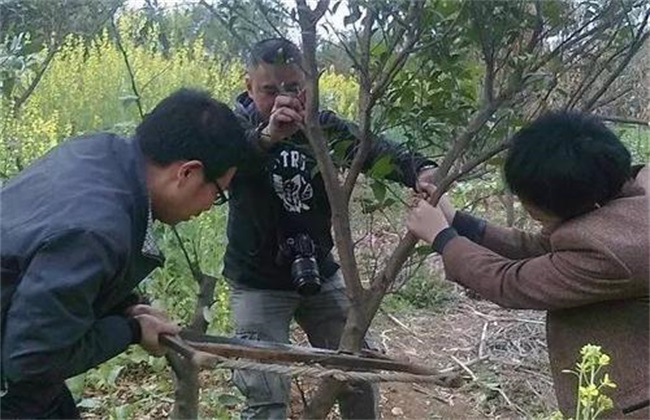
Detailed Explanation of the Key Points of Citrus Autumn Top-Grafting and Variety Conversion Technology
Citrus Autumn Top-Grafting and Variety Conversion Technology
-
Detailed Explanation of Top Grafting and Variety Conversion Techniques for Huangjin Pear (Golden Pear)
Most varieties of the White Pear and Sand Pear systems can be converted to Huangjin Pear (Golden Pear). For top grafting of large trees, the first step is to determine the desired tree shape, then select the scaffold branches and the branches to be grafted based on the tree shape requirements. Saw off the original top of the branch to be grafted, and select scions of appropriate thickness for grafting. Use one-year-old branches as scions. In winter or spring, cut branches with plump buds and store them in a cold storage or in a pit dug in a shady spot layered with sand. Perform multiple-scion grafting in late March. Generally, for trees under 5 years old, graft 5-10 buds per tree; for 5-10 year old trees, graft 10
条件筛选