-

Meiren Mei (Prunus mume 'Meiren') blooms profusely and has high ornamental value
Meiren Mei is a cultivar of the Yinglimei type in the Yinglimei series of Mei (Japanese apricot), bred in the 1980s by the French from a cross between the red-leaf plum (Prunus cerasifera 'Atropurpurea') and a Gongfen-type cultivar, and later introduced to China. Compared with other Mei cultivars, Meiren Mei differs in its morphological features: the small branches are grayish dark purple, the large branches grayish brown-purple, and the foliage tinged with dark purplish red. The flower buds are broadly elliptical, pale purple-pink. The normal flowering period is March in the Yangtze River basin, and somewhat later in the north. The petals number 25 to 28, arranged radially, with the flower center exposed. The flower diameter is 29 to 34 mm, and the flower form is nearly
-
The fine-scaled xenocypris is a small food fish with relatively high economic value.
The fine-scaled xenocypris is commonly known as shaguzi, huangpian, huangpi, huangweidiaozi, and so on. It is the largest individual in the subfamily Xenocyprinae, and is a small to medium-sized food fish widely distributed in the rivers and lakes of China. It has a high proportion of flesh, and the meat is delicious and tender. According to measurements, the viscera account for only 8%-12% of body weight, the protein content accounts for 22%, and the fat content accounts for about 2%. It is easy and simple to raise, with a wide range of food sources, mainly feeding on natural food organisms. From the perspective of human consumption, it is a green, high-quality fish species with relatively high economic value.
-
Silkworm droppings turn out to be an unexpected windfall, and their value should not be underestimated
Since July, in Lezhi County, Sichuan Province, a major cocoon-producing county, an unprecedented novelty has appeared: sericulture farmers who had just sold their silkworm cocoons lined up again to sell discarded silkworm droppings. Silkworm droppings, once worthless, have suddenly become sought after. It is reported that in the county's agricultural and sideline products processing park, a special "park within a park" has taken shape: with silkworm droppings as the main thread, it brings together a series of production enterprises engaged in chlorophyll extraction, feed, fertilizer and biopharmaceuticals, and the output value is expected to reach 1 billion yuan by 2010. Silkworm droppings can be sold for money "No
-
What are the medicinal values of Codonopsis pilosula? A detailed explanation of its effects and functions
The root of Codonopsis pilosula (poor man's ginseng) is used as medicine; it is sweet in taste and neutral in nature. It has the functions of tonifying the spleen and replenishing qi, quenching thirst and promoting fluid production, and is used to treat weakness of the spleen and stomach, insufficiency of lung qi, fatigue and weakness, shortness of breath with wheezing and coughing, weak voice, dizziness and palpitations due to blood deficiency, dry tongue due to depletion of fluids, thirst, and other conditions. The cultivation history of Codonopsis pilosula is relatively short, and no record of cultivated Codonopsis pilosula has been seen in the materia medica of past dynasties. Shanxi Province was the earliest to cultivate Codonopsis pilosula artificially. Changzhi County, Shanxi Province, is the "hometown of Codonopsis pilosula" in China.
-
Codonopsis stems and leaves are a high-quality feed with high nutritional value.
Codonopsis is a valuable traditional Chinese medicinal herb, with its dried roots used as medicine; it has the effects of tonifying qi and nourishing blood, harmonizing the spleen and stomach, promoting fluid production, and clearing the lungs. Its stems and leaves were often discarded in the past. However, in recent years, research has found that Codonopsis stems and leaves contain volatile oils, various amino acids, macro- and trace elements, alkaloids, starch, and more. Farmers at the Sifangpa medicinal herb farm in our county dry and crush the stems and leaves, then add them to feed at a ratio of 20-30% to feed pigs, producing a clear weight-gain effect. When used to feed poultry, not only are the egg-laying rate, egg production, and average egg weight increased, but tests also show that the cholesterol content is somewhat reduced.
-
The Dezhou donkey is a treasure from head to tail. Just how high is its breeding value?
The Dezhou donkey originated in the counties along the Bohai coast in Binzhou City and Dezhou City, Shandong Province, with Wudi as the central production area, so it is also called the "Wudi donkey." It is one of China's large donkey breeds and an excellent local breed, and it has now been included in the national list of protected local breeds. In appearance, it is divided into two major types: the "Sanfen donkey" and the "Wutou donkey." The Dezhou donkey has strong adaptability, tolerates coarse feed, and has strong disease resistance, making it deeply popular among farmers in various regions. The Dezhou donkey has now been introduced as breeding stock to 24 provinces and cities including **, Shaanxi, and Liaoning, and has also brought considerable economic benefits to breeders.
-
The Amur grayling is a cold-water economic fish with extremely high aquaculture value
The Amur grayling belongs to the order Salmoniformes, family Thymallidae, genus Thymallus, commonly known as spotted trout and red-scaled fish. In China it is found in the upper reaches of the Heilongjiang River, the upper reaches of the Nenjiang River, the Mudanjiang River, the Ussuri River, the Songhua River, the Suifen River and other places. Abroad it is distributed along the coast of the Sea of Okhotsk and the coast of the Sea of Japan in Russia. The grayling has two other subspecies in China: the Yalu River grayling from the Yalu River and the Arctic grayling from the **Irtysh River basin. The above three subspecies are quite similar in appearance and habits, differing only in geographical distribution. Amur grayling
-
Brewing wine from fish gives exceptionally high nutrition; the nutritional value of fish wine should not be underestimated
People who drink alcohol all know that fish is a delicious accompaniment to wine, yet few people know that fish itself can also be used to brew wine, and its nutritional value is several times higher than that of ordinary wine. In China's alcohol market, fish wine produced in Dalian has attracted people's attention. Dalian people not only love seafood, but are also good at finding new ways to enjoy seafood products. The fish wine, which can be called a unique wonder of China, was developed through the dedicated research of Dalian native Sun Keman. The alcohol industry's authorities evaluate fish wine as follows: it has changed China's traditional winemaking process of several thousand years and opened up a new world for the global alcohol industry
-
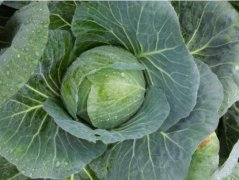
Does Cabbage Contain Sugar? A Detailed Look at Cabbage's Nutritional Value and Benefits
Is cabbage also an anti-cancer crop? Some say it is the best anti-cancer crop - is that true? Let's take a look. Cabbage, also known as "wrapped-heart cabbage" because its leaves roll into a head, is the stem and leaf of the cruciferous plant cabbage, also called "cabbage greens." It originated
-
Proper preservation and storage of garlic scapes brings high value-added benefits
Garlic scapes should be harvested at the curved-scape stage, generally in mid-May in Shandong. The best harvesting method is pulling the scape, as this causes a small wounded area; if cut, the wounded area is large and prone to mold infection. After purchasing garlic scapes, transport them promptly to the storage site and avoid mechanical damage. When sorting the garlic scapes, remove the scape sheath, cut off the fibrous base portion, and discard damaged, rotten, overly swollen scape bulbs and excessively thin scapes. Then tie the garlic scapes into bundles, align the scape bulbs, and bind them straight and tight. Before loading into the warehouse, the warehouse must be disinfected by burning 5-10 grams of sulfur per cubic meter
条件筛选