-

What are the values and uses of Dianthus plumarius?
Dianthus plumarius values and uses. Dianthus plumarius is evergreen, with elegant leaf shapes, brilliant flower colors, fragrant flowers, and a long blooming period. It is widely used to embellish large urban green spaces, plazas, parks, street-side green areas, courtyard green spaces, flower beds, and flower borders, and is deeply loved by people. It is also used by people as a potted plant, placed in the home, for home flower appreciation.
-
Cultivation and Management Key Points of Dianthus Chinensis and Analysis of Its Extension Value
Dianthus chinensis is a perennial herbaceous plant of the genus Dianthus in the family Caryophyllaceae. It originated in Austria and Siberia, and was introduced from Siberia in 1989 by the Changyi City Nursery in Shandong Province. Later, with the help of Shandong Agricultural University and other research institutes, related cultivars were also introduced from Canada, Japan, the United States and other places. After 7 years of crossbreeding, domestication and improvement, 3 series and 36 cultivars were successively bred: "Changhua" (1995), "Huadu" (1997) and "Xueyuan" (2000) (with strong resistance, large flowers and more beautiful flower colors).
-
Medicinal Value and Processing Methods of Snake Penis
Snake penis is the reproductive organ of the male snake. A complete set of snake penis includes two gonadal testes and two hemipenes, and it contains components such as male hormones and proteins. In traditional Chinese medicine, there is the theory of "tonifying an organ with a corresponding organ, seeking the same qi." According to determinations by relevant scientific research departments, the kidney-tonifying substances contained in snake penis are 10% higher than those in deer penis, and more than about 30% higher than those in sea dog kidney and dog kidney. Snake penis has the functions of tonifying the kidney and strengthening yang, warming the middle and calming the organs, and can treat impotence, kidney deficiency, tinnitus, chronic orchitis, and cold womb infertility in women. Snake penis
-
Sand storage method for lilies delivers good results in preserving freshness and increasing value
Lily is a medicinal and edible health product, with the effects of moistening the lungs and stopping coughs, and clearing the heart and calming the mind. In recent years, more and more people are eating lilies, and the fresh product sells very well. However, because the lily harvesting period is in early to mid-August, when temperatures are high, the newly harvested fresh product has a high moisture content and vigorous respiration, and if not stored well it very easily becomes moldy and rotten. Here is a method for storing lilies with fine sand, which can keep lilies fresh for more than half a year. During storage, not only can the fresh product maintain its original flavor, but it can also fetch a good price during festivals such as New Year's Day and Spring Festival. 1. Raw material before storage
-
Development and Utilization Value and Methods of Kernel Apricot Flesh
I. Dried Apricot Processing 1. Process flow: apricot flesh → washing → sulfur fumigation → drying → finished product 2. Technical points: (1) Washing. Select flesh that is uniform in appearance, fully ripe, with no fuzz on the fruit surface, small in fruit size and thick in flesh; wash clean with water and drain off the moisture. (2) Sulfur fumigation. Send the material baskets or bamboo trays holding the apricot slices onto the wooden racks in the fumigation room, pour the burning charcoal into the iron pan in the center of the fumigation room, quickly sprinkle sulfur (3-4 kg of sulfur per 1000 kg of apricot slices) onto the charcoal, then leave the fumigation room immediately
-
What are the pharmacological effects of lily? A comprehensive analysis of its medicinal value
[Source] The dried fleshy scales of Lilium lancifolium Thunb., Lilium brownii F.E.Brown ex Miellez, or Lilium brownii F.E.Brown ex Miellez var. viridulum Baker, plants of the genus Lilium in the family Liliaceae. The first is commonly called "Longya lily" and the latter two are commonly called "Su lily". [Original plant] 1. Lilium lancifolium is a perennial herb, with a bulb nearly broadly spherical, 4-8 cm in diameter; scales fleshy, broadly ovate, 2.5-5 cm long, 1.4-2.5 cm wide, white; stem 0.8-1.5 m tall, with purple stripes, covered with white cottony hairs. Leaves alternate, oblong-lanceolate or lanceolate, 5-20 cm long, 0.5-2 cm wide, gradually smaller upward and bract-like, often with bulbils in the leaf axils. Flowers in summer; usually 3-6 flowers arranged in a terminal raceme; pedicels 6.5-9 cm long, purple, with white cottony hairs; flowers nodding, trumpet-shaped, tepals 6, in 2 whorls, lanceolate, recurved, orange-red, with purple-black spots; outer tepals 6-10 cm long, 1-2 cm wide; inner tepals slightly wider, with papillose and fimbriate projections on both sides of the nectary; stamens 6, filaments 5-7 cm long, pale red, anthers oblong, purple, about 2 cm long; ovary cylindrical, 1.5-2 cm long, style slender, stigma 3-lobed. Capsule narrowly oblong-ovate, 3-4 cm long. Grows in moist environments. Distributed in our province and Hebei, Shaanxi, Gansu, Shandong, Zhejiang, Jiangxi, Henan, Hubei, Hunan, Sichuan, Guizhou, Yunnan, Xizang and other provinces and regions. Mostly cultivated. Also distributed in Japan and Korea. 2. Lilium brownii is a perennial herb, with a spherical bulb, 2-4.5 cm in diameter; scales lanceolate, 1.8-4 cm long, 0.8-1.4 cm wide, white; stem 0.7-2 m tall, with purple stripes or small papillose projections on the lower part. Leaves scattered, lanceolate to linear, 7-15 cm long, 1-2 cm wide, smaller upward and bract-like, with 5-7 veins, entire, glabrous. Flowers in May-June; flowers solitary or several arranged in a nearly umbellate inflorescence; pedicels 3-10 cm long, slightly curved; flowers trumpet-shaped, tepals 6, in 2 whorls, fragrant, milky white, slightly purple outside, spotless, spreading outward or with tips curved outward but not revolute, 13-18 cm long; outer tepals 2-4.3 cm wide, apex acute; inner tepals 3.4-5 cm wide, with small papillose projections on both sides of the nectary; stamens 6, filaments 10-13 cm long, curved upward; anthers oblong; ovary cylindrical, 3.2-3.6 cm long, stigma 3-lobed. Capsule oblong, 4.5-6 cm long, about 3.5 cm wide, ribbed, with many seeds. Grows on hillsides, under shrubs, roadsides or by streams. Distributed in our province and the southeastern, central, southwestern and southern regions of China. 3. Lilium brownii var. viridulum differs from Lilium brownii in its oblanceolate to obovate leaves. Grows on hillsides and in rock crevices. Distributed in our province and Gansu, Shaanxi, Henan, Hebei provinces and all provinces and regions from East China and South China to Southwest China. Wild or cultivated.
-
Edible Uses and Medicinal Value of Lilies
The lily is a flower that combines ornamental, edible, and medicinal uses. Below we focus on the edible and medicinal aspects of lilies. Edible lilies have relatively high nutritional value, containing 21.29% protein, 12.43% fat, 11.47% reducing sugars, and 1.61% starch, with 1.443 mg of vitamin B and 21.2 mg of vitamin C per 100 g. There are many ways to eat lilies: they can be used in dishes and meals, and can be stir-fried, pan-fried, braised, steamed, or boiled, making it possible to create more than 30 kinds of dishes ranging from mid-range to high-end, among which the most prized include lily with snow
-
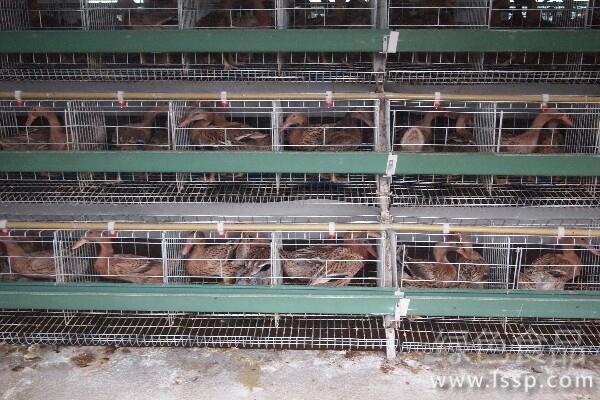
The value of laying ducks lies in egg production. How can the egg production of laying ducks be maintained?
The value of laying ducks lies in egg production. How can the egg production of laying ducks be maintained?
-
How to Add Value to Sweet Potato and Rice Through Processing
Sweet Potato Starch Production Technology Wash the sweet potatoes, drain the water, crush them into pieces about 2 cm in size with a crusher, feed them into a stone mill or electric pulp grinder, add 3 to 3.5 times their volume of water, and grind into a starch slurry. Pour the starch slurry into a sieve with a mesh size of 60 and sieve out the potato residue to obtain starch milk. Place the starch milk in a settling tank and let it stand overnight so that the starch settles to the bottom of the tank. Drain off the supernatant, take out the crude starch, repeatedly rinse and settle it with clean water to obtain pure starch, then sun-dry, crush and sieve the starch to obtain
-
What are the values and uses of garden balsam? A detailed guide
In the height of summer, when cicadas sing and fireflies dance, lotus flowers first bloom, and jasmine fills the air with fragrance, garden balsam (Impatiens balsamina) also blooms in season. Garden balsam is like a crane's crest, like a colorful phoenix, graceful in posture and charmingly lovely. The fragrant and gaudy red garden balsam and the delicate jade-green garden balsam both open in the morning, when cold butterflies and hungry bees are still lost in fragrant dreams - this is the best time to appreciate garden balsam. Because its flower colors and varieties are extremely rich, garden balsam is a commonly used material for beautifying flower beds and flower borders; it can be planted in clumps, in groups, and in pots, and can also be used as a cut flower for water culture. The entire garden balsam plant can be used as medicine, and the pure white garden balsam in particular has higher medicinal value.
条件筛选