-
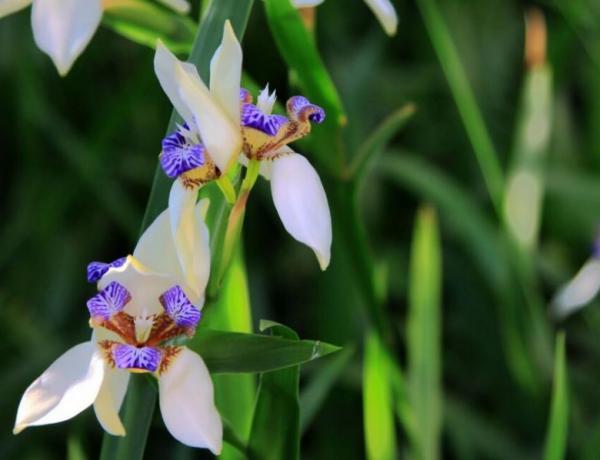
What are the uses and benefits of Cymbidium goeringii? Read this article to understand its value
What are the uses of Cymbidium goeringii?
-

What are the values and uses of cherry blossoms?
Cherry blossoms are famous among the world's flowers and are the national flower of Japan. During the blooming season, the Japanese people go in groups to admire the cherry blossoms, and the scene is very lively. Cherry blossoms are abundant, brightly colored and charmingly graceful; listening to the qin while enjoying cherry blossoms can truly be called an enjoyment. "In the third month the rain sounds fine, cherry blossoms are mistaken for apricot blossoms" and "A new red cherry tree is planted in the small garden, watering the branches at leisure serves as an outing" show that in courtyard landscaping, blooming cherry blossoms can make people stop and admire them, as if on an outing, unwilling to leave. Cherry blossoms can be planted in masses or as a single specimen. When planted singly, they can be paired with landscape stones and lawns, elegant and pleasant. Cherry blossom bonsai
-
Red-leaf cherry blossom is a colorful-leaf landscape tree species with high ornamental value.
Red-leaf cherry blossom: a variety of the magnificent cherry blossom (Prunus serrulata), a deciduous small tree with large pink double flowers. Its leaves are purple-red for three seasons: in early spring the emerging leaves are deep red, from May to July they are bright red, then the older leaves gradually turn deep purple, and in late autumn when frost comes the leaves turn orange-red. The cherry blossom is a famous flowering tree; the red-leaf cherry blossom offers both flowers and foliage to admire, making it a precious ornamental colorful-leaf tree species for landscape gardens and urban greening, and also the most promising tree species to recommend first.
-
Introduction to the Medicinal Value and Benefits of Geranium
[Historical Clinical Records]It was once used to treat cholera and bone injuries, and also had an exorcism effect. [Benefits]Stops bleeding, constricts blood vessels, asthma, liver detoxification, gallstones, kidney detoxification, kidney stones, diuretic, muscle aches, oily skin, revitalizing aging skin, herpes, pale skin, weight loss, promotes scarring, eczema, burns and sunburn, ringworm, irregular menstruation, breast congestion and inflammation, relieves depression and anxiety, drives away demons, tonic, deodorizing, antibacterial, antiseptic, helps quit smoking and drinking. [Precautions]For some
-
What are the medicinal values of China pink? An analysis of its effects and functions
China pink (Dianthus chinensis) has a low, compact growth habit, with stems resembling bamboo and lush green foliage. Its natural flowering period is from May to September, blooming from late spring all the way to mid-autumn, and when potted in a greenhouse it can flower in all four seasons. The flowers are borne at the tips of the branches, either singly or in pairs, and sometimes in paniculate cymes. The flower diameter is not large, only 2 to 3 cm, but the blooms are abundant, opening one after another, giving a long ornamental period. Flower colors include white, pink, red, rose pink, scarlet, purple, light purple, yellow, blue and more, colorful and endlessly varied. In gardens it can be used in flower beds, flower borders, raised flower platforms or as potted plants, and can also be used in rock gardens and at the edges of lawns
-
What are the values and uses of Dianthus plumarius?
Dianthus plumarius values and uses. Dianthus plumarius is evergreen, with elegant leaf shapes, brilliant flower colors, fragrant flowers, and a long blooming period. It is widely used to embellish large urban green spaces, plazas, parks, street-side green areas, courtyard green spaces, flower beds, and flower borders, and is deeply loved by people. It is also used by people as a potted plant, placed in the home, for home flower appreciation.
-
Cultivation and Management Key Points of Dianthus Chinensis and Analysis of Its Extension Value
Dianthus chinensis is a perennial herbaceous plant of the genus Dianthus in the family Caryophyllaceae. It originated in Austria and Siberia, and was introduced from Siberia in 1989 by the Changyi City Nursery in Shandong Province. Later, with the help of Shandong Agricultural University and other research institutes, related cultivars were also introduced from Canada, Japan, the United States and other places. After 7 years of crossbreeding, domestication and improvement, 3 series and 36 cultivars were successively bred: "Changhua" (1995), "Huadu" (1997) and "Xueyuan" (2000) (with strong resistance, large flowers and more beautiful flower colors).
-
Sand storage method for lilies delivers good results in preserving freshness and increasing value
Lily is a medicinal and edible health product, with the effects of moistening the lungs and stopping coughs, and clearing the heart and calming the mind. In recent years, more and more people are eating lilies, and the fresh product sells very well. However, because the lily harvesting period is in early to mid-August, when temperatures are high, the newly harvested fresh product has a high moisture content and vigorous respiration, and if not stored well it very easily becomes moldy and rotten. Here is a method for storing lilies with fine sand, which can keep lilies fresh for more than half a year. During storage, not only can the fresh product maintain its original flavor, but it can also fetch a good price during festivals such as New Year's Day and Spring Festival. 1. Raw material before storage
-
What are the pharmacological effects of lily? A comprehensive analysis of its medicinal value
[Source] The dried fleshy scales of Lilium lancifolium Thunb., Lilium brownii F.E.Brown ex Miellez, or Lilium brownii F.E.Brown ex Miellez var. viridulum Baker, plants of the genus Lilium in the family Liliaceae. The first is commonly called "Longya lily" and the latter two are commonly called "Su lily". [Original plant] 1. Lilium lancifolium is a perennial herb, with a bulb nearly broadly spherical, 4-8 cm in diameter; scales fleshy, broadly ovate, 2.5-5 cm long, 1.4-2.5 cm wide, white; stem 0.8-1.5 m tall, with purple stripes, covered with white cottony hairs. Leaves alternate, oblong-lanceolate or lanceolate, 5-20 cm long, 0.5-2 cm wide, gradually smaller upward and bract-like, often with bulbils in the leaf axils. Flowers in summer; usually 3-6 flowers arranged in a terminal raceme; pedicels 6.5-9 cm long, purple, with white cottony hairs; flowers nodding, trumpet-shaped, tepals 6, in 2 whorls, lanceolate, recurved, orange-red, with purple-black spots; outer tepals 6-10 cm long, 1-2 cm wide; inner tepals slightly wider, with papillose and fimbriate projections on both sides of the nectary; stamens 6, filaments 5-7 cm long, pale red, anthers oblong, purple, about 2 cm long; ovary cylindrical, 1.5-2 cm long, style slender, stigma 3-lobed. Capsule narrowly oblong-ovate, 3-4 cm long. Grows in moist environments. Distributed in our province and Hebei, Shaanxi, Gansu, Shandong, Zhejiang, Jiangxi, Henan, Hubei, Hunan, Sichuan, Guizhou, Yunnan, Xizang and other provinces and regions. Mostly cultivated. Also distributed in Japan and Korea. 2. Lilium brownii is a perennial herb, with a spherical bulb, 2-4.5 cm in diameter; scales lanceolate, 1.8-4 cm long, 0.8-1.4 cm wide, white; stem 0.7-2 m tall, with purple stripes or small papillose projections on the lower part. Leaves scattered, lanceolate to linear, 7-15 cm long, 1-2 cm wide, smaller upward and bract-like, with 5-7 veins, entire, glabrous. Flowers in May-June; flowers solitary or several arranged in a nearly umbellate inflorescence; pedicels 3-10 cm long, slightly curved; flowers trumpet-shaped, tepals 6, in 2 whorls, fragrant, milky white, slightly purple outside, spotless, spreading outward or with tips curved outward but not revolute, 13-18 cm long; outer tepals 2-4.3 cm wide, apex acute; inner tepals 3.4-5 cm wide, with small papillose projections on both sides of the nectary; stamens 6, filaments 10-13 cm long, curved upward; anthers oblong; ovary cylindrical, 3.2-3.6 cm long, stigma 3-lobed. Capsule oblong, 4.5-6 cm long, about 3.5 cm wide, ribbed, with many seeds. Grows on hillsides, under shrubs, roadsides or by streams. Distributed in our province and the southeastern, central, southwestern and southern regions of China. 3. Lilium brownii var. viridulum differs from Lilium brownii in its oblanceolate to obovate leaves. Grows on hillsides and in rock crevices. Distributed in our province and Gansu, Shaanxi, Henan, Hebei provinces and all provinces and regions from East China and South China to Southwest China. Wild or cultivated.
-
Edible Uses and Medicinal Value of Lilies
The lily is a flower that combines ornamental, edible, and medicinal uses. Below we focus on the edible and medicinal aspects of lilies. Edible lilies have relatively high nutritional value, containing 21.29% protein, 12.43% fat, 11.47% reducing sugars, and 1.61% starch, with 1.443 mg of vitamin B and 21.2 mg of vitamin C per 100 g. There are many ways to eat lilies: they can be used in dishes and meals, and can be stir-fried, pan-fried, braised, steamed, or boiled, making it possible to create more than 30 kinds of dishes ranging from mid-range to high-end, among which the most prized include lily with snow
条件筛选