-

Pinellia is a distinctive plant that combines ornamental and medicinal value
Pinellia (Pinellia ternata) is a perennial herb of the genus Pinellia in the Araceae family, native to the Guanzhong area of Shaanxi, and has now spread throughout the country. Pinellia can not only be used as a medicinal material, but its flowers, leaves, and plant form are unusual and beautiful, giving it great potential for development as an ornamental plant. The Pinellia plant reaches 15-30 cm tall, with a single leaf emerging from the top of the tuber, elliptical, with a relatively pointed tip, entire margins, smooth and hairless on both sides, 4-6 cm long and 1.5-3 cm wide. Leaf shapes vary greatly, and sometimes there are also
-
In what ways is the economic value of honeysuckle reflected?
Honeysuckle (Lonicera japonica Thunb.), also known as Japanese honeysuckle, is a perennial semi-evergreen vine in the genus Lonicera of the family Caprifoliaceae. Its vines can reach 8-9 m long, with hollow stems. The leaves are simple, opposite, entire, and ovate. The flowers grow in pairs in the leaf axils, with a common peduncle and leaf-like bracts; the corolla is two-lipped, with the upper lip 4-lobed and upright and the lower lip recurved; the flowers are white when they first open and gradually turn golden yellow. During the flowering period, flowers of different ages on the same vine show yellow and white set off against each other, which is how it got the name "honeysuckle" (jin yin hua, literally "gold and silver flower"). The flowering period is from May to July. The berries are spherical and
-
How to develop and utilize reishi mushroom? A comprehensive interpretation of its value and approaches
Reishi mushroom, also known as lingzhi cao, mujilingzhi, hongzhi, chizhi, wannianxun and lingzhi xiancao, etc. Reishi is a fungus used both as food and medicine. Folk legend says: eat lingzhi cao and you can live forever, which fully demonstrates that reishi indeed has high medicinal value. In the "Shennong Bencao Jing" (Divine Farmer's Materia Medica), reishi is listed as a top-grade herb. Traditional Chinese medicine holds that reishi has tonic, brain-strengthening, body-invigorating, anti-inflammatory, diuretic and stomach-benefiting effects; it can also treat neurasthenia, palpitations and dizziness, insomnia and forgetfulness, chronic hepatitis, pyelonephritis, bronchial asthma, bronchitis, stomach diseases, coronary
-
Detailed Explanation of the Value and Cultivation Techniques of Goji Berry
Goji berry is a deciduous shrub of the genus Lycium in the Solanaceae family. It is an excellent tree species for soil and water conservation, and also an important traditional Chinese medicinal herb. Every part of it is valuable - the leaves, fruits, and bark can all be used as medicine. The fruit is called goji berry (Lycium barbarum fruit); the root bark is called Digupi (Lycium root bark); its tender stems and leaves can be used as vegetables. "Compendium of Materia Medica" states that goji berry is "named so because its thorns are like those of the citron and its stems are like the branches of the willow." It is distributed throughout our country, mostly in the wild. Our country has 2 cultivated species: one is Ningxia goji (Lycium barbarum), which is grown for its fruit for food or medicinal use, mainly distributed in Gansu, Ningxia, the Hexi Corridor, as well as North China, Tianjin, Shandong, Henan and other places; the other species is goji (Lycium chinense), which is grown for its tender stems and leaves as a vegetable, also known as goji vegetable, goji head, goji tip, niujili, etc., mainly distributed in Guangxi and Guangdong.
-
What are the medicinal values of Codonopsis pilosula? A detailed explanation of its effects and functions
The root of Codonopsis pilosula (poor man's ginseng) is used as medicine; it is sweet in taste and neutral in nature. It has the functions of tonifying the spleen and replenishing qi, quenching thirst and promoting fluid production, and is used to treat weakness of the spleen and stomach, insufficiency of lung qi, fatigue and weakness, shortness of breath with wheezing and coughing, weak voice, dizziness and palpitations due to blood deficiency, dry tongue due to depletion of fluids, thirst, and other conditions. The cultivation history of Codonopsis pilosula is relatively short, and no record of cultivated Codonopsis pilosula has been seen in the materia medica of past dynasties. Shanxi Province was the earliest to cultivate Codonopsis pilosula artificially. Changzhi County, Shanxi Province, is the "hometown of Codonopsis pilosula" in China.
-
Codonopsis stems and leaves are a high-quality feed with high nutritional value.
Codonopsis is a valuable traditional Chinese medicinal herb, with its dried roots used as medicine; it has the effects of tonifying qi and nourishing blood, harmonizing the spleen and stomach, promoting fluid production, and clearing the lungs. Its stems and leaves were often discarded in the past. However, in recent years, research has found that Codonopsis stems and leaves contain volatile oils, various amino acids, macro- and trace elements, alkaloids, starch, and more. Farmers at the Sifangpa medicinal herb farm in our county dry and crush the stems and leaves, then add them to feed at a ratio of 20-30% to feed pigs, producing a clear weight-gain effect. When used to feed poultry, not only are the egg-laying rate, egg production, and average egg weight increased, but tests also show that the cholesterol content is somewhat reduced.
-
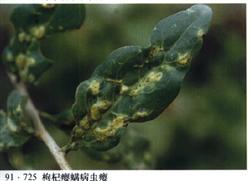
A Detailed Guide to Goji Berry Cultivation Techniques and Application Value
In mid-to-late August 2002, in the goji berry production area on the border between Julu and Longyao, a major outbreak of goji berry gall mite disease occurred, causing great losses to the many goji berry growers. Damage symptoms: most obvious on the leaves, with dense yellowish-green nearly circular raised dots on the affected parts, twisted leaves resembling a viral disease, severely stunted plant growth, and leaves...
-
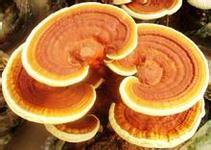
Understanding the Medicinal Value and Cultivation Techniques of Reishi Mushroom in One Article
Reishi mushroom, also known as divine grass, ten-thousand-year grass, red reishi, crimson reishi, wood reishi, etc. There are more than 40 species in China, with the more common and well-known ones being purple reishi, pine-fir reishi, black reishi, purple-glow reishi, etc. Reishi mushroom has a medicinal history of over two thousand years in China. In addition to containing minerals such as potassium, phosphorus, magnesium, calcium, iron, and manganese...
条件筛选