-
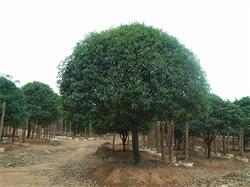
In what ways is the value of the osmanthus tree reflected?
Question: What is the planting value of the osmanthus tree? Answer: Landscape use. The osmanthus is evergreen all year round, with luxuriant branches and leaves, blooming in autumn and filling the air with fragrance, so it can be described as "dominating the three autumn months and outshining all other flowers." It is widely used in landscaping, often as a garden feature tree, planted singly, in pairs, or in clumps and groves. In Chinese classical gardens...
-

What are the effects and benefits of Nymphoides peltata? Understanding its main value in one article
What are the uses of Nymphoides peltata
-

What are the uses of bromeliads? Main purposes and value explained in detail
What are the uses of bromeliads?
-

What are the benefits of spider plants? A full analysis of their effects and value
What are the benefits of spider plants?
-

What are the uses of the Japanese pagoda tree? A comprehensive analysis of its value
Analysis of the uses of the Japanese pagoda tree
-

A Detailed Guide to the Ornamental Value and Cultivation Methods of Black-Eyed Susan
[Latin name]: Rudbeckia laciniata [Family and genus]: Asteraceae, Rudbeckia [Alias]: Cutleaf Coneflower [Place of origin]: Canada and the United States. Its morphological characteristics are those of a perennial herbaceous flowering plant. It is generally grown as a 1-2 year plant, with rough branches and leaves, and the ground plant can reach 1-2 m in height; in pot culture it is dwarfed to 20-30 cm, and it is much branched, with relatively wide and thick leaves; the basal leaves are pinnately divided into 5-7 lobes, and the stem leaves are 3-
-
Meiren Mei (Prunus mume 'Meiren') blooms profusely and has high ornamental value
Meiren Mei is a cultivar of the Yinglimei type in the Yinglimei series of Mei (Japanese apricot), bred in the 1980s by the French from a cross between the red-leaf plum (Prunus cerasifera 'Atropurpurea') and a Gongfen-type cultivar, and later introduced to China. Compared with other Mei cultivars, Meiren Mei differs in its morphological features: the small branches are grayish dark purple, the large branches grayish brown-purple, and the foliage tinged with dark purplish red. The flower buds are broadly elliptical, pale purple-pink. The normal flowering period is March in the Yangtze River basin, and somewhat later in the north. The petals number 25 to 28, arranged radially, with the flower center exposed. The flower diameter is 29 to 34 mm, and the flower form is nearly
-
What are the values and uses of the yew? A comprehensive guide
Diuresis and reduction of swelling, treating kidney disease, diabetes, nephritic edema, difficult urination, gonorrhea, and so on. Warming the kidney and promoting menstruation, treating irregular menstruation, postpartum blood stasis, dysmenorrhea, and other effective benefits. Landscaping value: suitable for planting in front of and behind houses, on barren slopes and vacant land, and along roadsides; plant once and benefit for many years, with remarkable returns. The yew has a beautiful tree form, and the color combination of red and green contrasting during the fruit ripening period is intoxicating; it can be widely used for soil and water conservation and for forestry and horticultural ornamental forests, and is an excellent tree species for improving the ecological environment and building beautiful mountains and rivers in the new century.
-
What are the values and uses of golden privet?
Widely used in landscaping. Throughout the entire growing season, the leaves of golden privet are golden yellow, beautiful and distinctive. Therefore, in landscape design it can be combined with plants such as golden boxwood, Japanese barberry, purple-leaf sand cherry, prostrate Chinese juniper, wintercreeper, and Sichuan juniper seedlings, planted in groups and in broad masses. In "street green displays" or around sculptures, planting broad masses of golden privet, with its striking color, plays a role of adding beauty to beauty, both enriching the colors of the landscape and enlivening the garden atmosphere.
-
Pyracantha bonsai is fiery red like fire, with high ornamental value
Pyracantha is also known as "torch fruit", "flame tree" and "soldier-saving grain". Growing wild throughout the Yunnan, Guizhou and Sichuan regions, it can be found all over the mountains, and people have long dug it up for potting and made it into bonsai for ornamental display. Its presence is also seen at the border area of northern Guangdong with Hunan and Jiangxi. After three to five years of large-scale seedling cultivation, there is a medium-to-upper-grade raw material with a circumference of twenty to thirty cm, and the resource is abundant, which is truly a good thing for closing mountains for afforestation and protecting the environment. Seedling stock can be made into all kinds of bonsai more freely and with ease. Although it is not as "wild in flavor" as wild stock, its elegance has a different
条件筛选