-

Coexistence of Bullish and Bearish Factors: Corn Market Unlikely to Perform Well
Currently, the domestic corn market can be described as having a coexistence of bullish and bearish factors. On the one hand, China's temporary storage corn procurement continues in full swing, but the market's interpretation of it is becoming increasingly rational. With temporary storage corn inventories about to break through the 200 million ton mark, the Dalian corn futures price has touched the policy ceiling level
-
Under policy dominance, spot corn prices are unlikely to see major gains
[Introduction]Looking at the domestic corn market in recent years, market prices have all been dominated by policy, with domestic corn prices closely fluctuating in line with changes in the state reserve purchase price and purchase volume. Since the start of the state reserve purchase policy in 2008, domestic corn market prices have consistently been affected by the state reserve
-
Tighter Temporary Corn Storage Purchases, Prices Unlikely to Keep Rising This Year
As one of the country's important grain crops, corn prices have fallen sharply and continuously since the start of this year, with corn futures dropping all the way from a high of 2400 yuan/ton at the beginning of the year to a low of 1788 yuan/ton, as short sellers kept adding positions and the open interest in corn futures contracts repeatedly hit new highs
-
Ample Edible Oil Supply and Weak Demand Make Sustained Price Rallies Unlikely
Last week (October 19-23), influenced by the futures price trends of CBOT soybean oil and Bursa Malaysia palm oil, the domestic vegetable oil market showed wide-ranging fluctuations. As the current domestic vegetable oil supply is ample, the spot market has also entered the traditional off-season for demand after the holiday, and basis has declined somewhat. Last week
-
Corn prices have already entered a long, drawn-out bear market, and the downward trend is unlikely to reverse in the short term
Since June, domestic corn futures prices have shown an accelerating downward momentum, and the monthly chart of the corn main 1601 contract even posted 6 consecutive declines, showing that corn prices already have bear market characteristics. Under the heavy pressures of adjustment to the stockpiling policy, massive inventory buildup, the new-season corn coming to market, and sluggish demand,
-
Corn prices unlikely to see deep correction, temporary storage auction runs low-key
The much-watched "trial" auction of temporary-storage corn in the south has ended. Given that the starting prices at this auction did not show the worrying "low prices," the state's intention to auction at a price that covers costs is obvious, and the bearish impact of the auction on the market is limited. Temporary storage auction proceeds "low-key." On April 9, the
-
Domestic grain prices are 50% more expensive than foreign prices and are unlikely to fall, while the grain self-sufficiency rate declines year by year
50% more expensive than foreign prices, domestic grain prices are unlikely to bow. Domestic prices of rice, wheat, corn and soybeans are 17.26%, 32.8%, 88.24% and 60.16% higher than international prices respectively. Author: Huang Lichang. Recently, the Ministry of Land and Resources and the Ministry of Agriculture jointly issued the "Notice on Further Improving the Delineation of Permanent Basic Farmland"
-
Peach prices fall, later market unlikely to rise
Peaches can be called the hottest fruit of July. This year, when peaches first hit the market, the retail price for good-quality ones was close to 20 yuan per jin. Recently, peach prices have seen a relatively large decline, with the average wholesale price dropping by nearly 2 yuan per jin, and cases of difficulty selling have appeared.
-
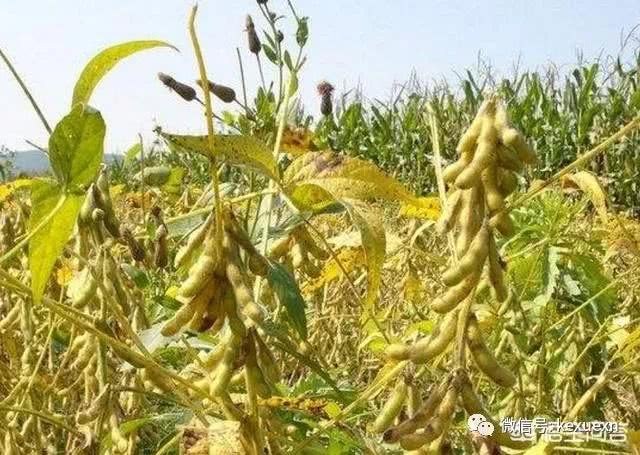
Inner Mongolia soybean prices have not risen in four months, and a rise looks unlikely this year
According to information learned by Science Farming, soybean prices in Inner Mongolia are basically 1.66-1.83 yuan per jin, with quality proportional to price. Friends who follow the soybean market should be fairly clear that soybean prices in the Inner Mongolia region were at...
-
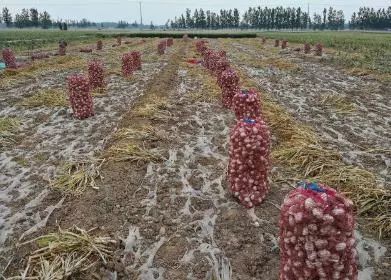
Garlic oversupply is unlikely to recover in the short term, so planting this autumn requires caution
Summary: Garlic is severely oversupplied, and it will be difficult to restore its former glory in the short term, so garlic planting this autumn requires caution! For farmers who planted garlic this year, the losses have been truly devastating. A few days ago, Science Xingnong calculated the situation for farmers who invested in garlic planting this year...
条件筛选