-

-

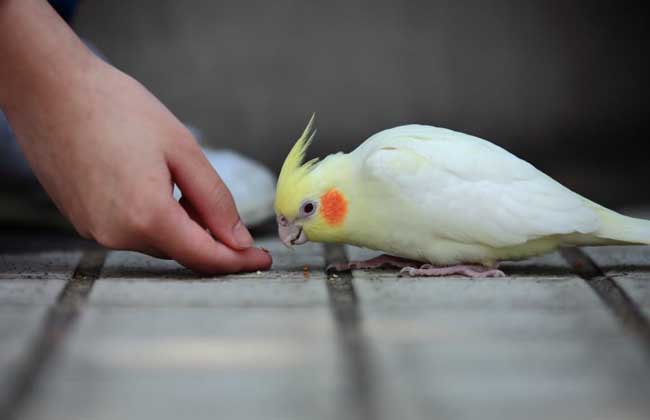
What is the typical market price of a red-fronted parakeet?
How much does a red-fronted parakeet cost?
-
-
-
-

How to tell if rice is deficient in zinc? Look for these typical symptoms
Zinc deficiency in rice generally occurs at the seedling stage. The symptoms are chlorosis and whitening at the base of new leaves, small and narrow leaf blades, sometimes whitening of the central leaf as well, chlorotic yellowing or whitening stripes on old leaves, and brown streaks on both sides of the midrib. Plants are stunted, the distance between leaf collars is shortened, tillering is reduced or delayed until no tillering occurs, the root system is weak with few white roots, the rate of floret sterility increases, heading is delayed or does not occur at all, and maturity is postponed.
-
What feed is best for lactating sows? Recommended typical formulas
Lactating sow formula: corn 66.5%, soybean cake 10%, peanut cake 10%, wheat bran 8%, fish meal 3%, bone meal 1.3%, shell powder 0.7%, salt 0.5%, plus added multivitamins. Suitable for lactating sows 1-20 days after farrowing: corn 67%, wheat bran 8%, peanut cake 10%, soybean cake 12%, bone meal 1.7%, shell powder 0.8%, salt 0.5%, plus added oxytetracycline and multivitamins. Suitable for lactating sows 20-30 days after farrowing: corn 38%, soybean cake 2
-
The Putian Black Duck is a typical egg-type duck breed.
(1) Origin and distribution: It is the only black-feathered breed among the egg-type breeds in China. It is named after its central production area in Putian, Fujian Province. It is mainly distributed in Pingtan, Fuqing, Changle, Lianjiang, the suburbs of Fuzhou, Hui'an, Jinjiang, Quanzhou and other counties and cities. This breed is an egg-type duck developed under beach grazing conditions; it adapts both to grazing on soft tidal flats and to grazing on hard beaches, and has relatively strong heat tolerance and salt tolerance, making it especially suitable for rearing on hard tidal flats in subtropical regions.
-
What is the typical per-mu yield of Pinellia ternata in jin?
Pinellia ternata is usually propagated by tubers and can be planted three times and harvested three times a year, that is, the first planting in April, harvested around June 20; the second from August 10-20, and the third from September 10-15. These three times of sprout withering, that is, three times of bulbils maturing and three times of earthing up or taking bulbils for separate planting, are also a stage of growth, development and maturation of the underground corms. However, when cultivated at home, it is generally harvested once after autumn, the reason being to let the dry Pinellia ternata grow continuously in the ground and expand the underground corms. During field management, plastic film not only maintains soil moisture, but can also raise the ground temperature by about 4°C, enabling Pinellia ternata to
-
How to identify peanut root rot? Recognizing the typical symptoms is key
Peanut root rot is most severe during the peak flowering and podding stage. It mainly damages the roots of peanuts. After a peanut is infected, yellowish-brown water-soaked lesions form on the root crown, and the diseased area gradually turns dark brown. In the underground part of the diseased plant, the main root becomes wet and rotted, the root cortex turns brown and rots, is easily peeled off and shed, and there are no lateral roots, or the lateral roots are few and short, with the main root looking like a rat's tail...
条件筛选