What is the typical per-mu yield of garlic in jin?
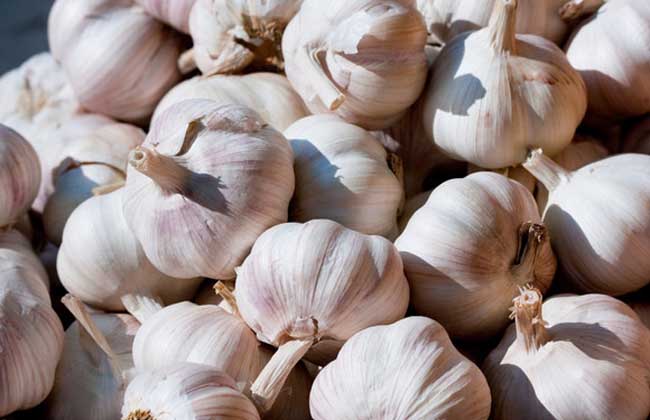
Garlic is used very widely in our daily lives and has high medicinal value, food value and economic value. Moreover, garlic is planted in great quantities and over large areas in every region of our country, making it a vegetable crop with relatively stable returns. Therefore, many people want to grow garlic, but they do not really understand how much garlic yields per mu and cannot calculate the returns. Let us take a look together below!
How much does garlic yield per mu?
The yield of new garlic land is about 2500 jin per mu, and about 2000 jin per mu in fields that are often continuously cropped. In Jinxiang, the main garlic-producing area, apart from Huayu, Maji and Gaohe, where yields are slightly higher and some plots reach 2000 jin, the other townships generally average between 1600 and 1700, and many villages in Mamiao and Yushan are around 1500 jin.
Excellent garlic varieties
1. Cangshan Puke garlic: the main variety grown in the Cangshan garlic-producing area, with a growing period of about 240 days. It is a mid-to-late maturing variety with strong adaptability, relatively good cold tolerance and strong growth vigor, and good quality. It yields about 1500 kg of garlic bulbs per mu and about 400 kg of garlic scapes.
2. Cangshan Cao garlic: Cangshan Cao garlic is one of the varieties within Cangshan garlic. It is an early maturing variety with a growing period of 230-235 days. Its cold resistance is poorer than that of Puke garlic, its growth is vigorous, and its yields of bulbs and scapes are comparable to those of Puke garlic.
3. Cangshan Gaojiao garlic: this variety is also one of the varieties within Cangshan garlic. It is a late maturing variety with a growing period of more than 240 days, strong growth vigor and relatively good cold tolerance, and its bulb yield is higher than that of Cangshan Puke garlic and Cangshan Cao garlic.
4. Jiaxiang garlic: a local variety of Jiaxiang County. The plants have strong growth vigor and weak tillering ability, with a growing period of about 260 days. It generally yields about 250 kg of garlic scapes and about 1500 kg of bulbs per mu.
5. Soviet garlic: Soviet garlic was introduced from the former Soviet Union in the 1950s and is now widely cultivated in various places. The plants have strong growth vigor and medium tillering, with a growing period of about 230 days. It has strong disease resistance and high yield, producing 1500-2000 kg of bulbs per mu, but its dormancy period is short, it sprouts early in autumn, its pungent flavor is slightly weak and its quality is average, so it is suitable for cultivating green garlic sprouts.
Measures to increase garlic yield
1. Garlic seed soaking: activated water plus carbendazim can be used for soaking the seeds. To make activated water: use an aluminum pot to boil the required amount of water, let it boil for about 5 minutes, then put it in a cool, ventilated place to cool and set aside. Then pour 50% carbendazim wettable powder into the activated water at a concentration of 500 times, soak the sun-dried garlic cloves in it for 24 hours, then take them out, let them dry and sow immediately.
2. Supplementary application of micro-fertilizers: trace elements have a good effect on increasing garlic yield. Per mu, 1 kg of boron fertilizer, 2 kg of zinc fertilizer, 1 kg of molybdenum fertilizer and 200 g of rare earth fertilizer can be applied as a base application. They can also be supplemented by foliar feeding in the middle and late stages.
3. Sowing method: directional sowing of garlic can reduce leaf crossing, improve photosynthesis and significantly increase yield, and it also facilitates field management such as scape extraction. It is best to have the line connecting the back and belly of the garlic parallel to the sowing row, with the back facing 15° south by southwest.
4. Fewer ridges: experiments have shown that the two rows of garlic on both sides of a garlic ridge have smaller bulbs because of low ground temperature and too deep planting, and cotton intercropped on the ridge is prone to damping-off and other diseases. At the same time, ridges reduce the actual planting area, so in production the land should be leveled well and few ridges should be made.
5. Remove the film from garlic at the right time: the suitable temperature for garlic growth is 15°C-20°C. Sustained high temperatures cause garlic growth to enter a dormant state. To lower the ground temperature, the garlic plastic film should be cut open around the beginning of summer to extend the growing period and increase yield.