-
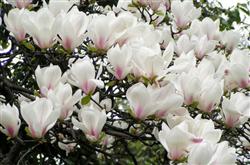
What are the common types of pests on magnolia?
What pests affect magnolia? How should these pests be controlled? An introduction is given below. Magnolia pests include: 1. Cicada. The nymphs of the cicada suck the sap from the roots of the plant in the soil, the adults pierce and suck the sap from the main leaves, and the female inserts its ovipositor into the branches to lay eggs, causing the branches to wither and die. Control methods: (1) Kill the mature nymphs that have just emerged from the soil in a timely manner...
-
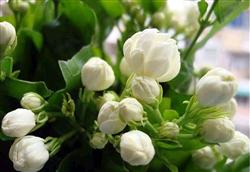
What types of pests and diseases affect jasmine?
What pests and diseases affect jasmine? Here is an introduction. Jasmine has the following pests and diseases: 1. Diseases ① Brown spot disease: promptly prune off diseased leaves and diseased branches, and spray the leaf surface with 80% zineb wettable powder at 500-700 times dilution, or 80% mancozeb wettable powder at 400-600 times dilution, spraying once every 10-15 days for 3-5 consecutive sprays....
-
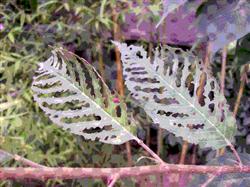
What are the common types of pests and diseases affecting cherry blossom trees?
What pests and diseases affect cherry blossoms? How should they be prevented and controlled? There are many types of pests and diseases affecting cherry blossoms. The common ones are described below: 1. Shot-hole brown spot disease occurs in May and June, with small purplish-brown spots appearing on the leaves, which then gradually expand into circular shapes; after the diseased spots dry and shrink, they become small holes. The pathogen mostly overwinters on diseased branches...
-
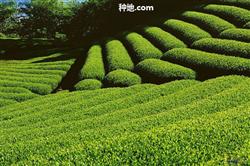
What are the tea plant pests and diseases? Detailed explanation of common types
What should be noted during tea cultivation? Please refer to the following tea cultivation methods for your reference: 1. Field management of nurseries and young tea plantations: promptly clear away stones and other debris from nursery plots and young tea plantations, drain standing water, straighten tea seedlings, and use pruning shears to cut off the injured parts of damaged young tea seedlings; count as soon as possible...
-
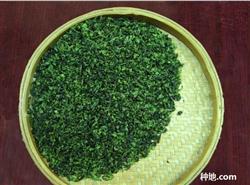
What Types of Tea Are There? A Complete Guide to Common Tea Classification
What types of tea are there? Please advise. There are many varieties of tea, with China having the most. At present, there is no unified method for classifying tea; different standards yield different classification methods. Among them, one method based on processing method and quality, using the degree of tea polyphenol oxidation as the order, divides primarily processed tea into green tea, yellow tea, dark tea, oolong tea, ...
-
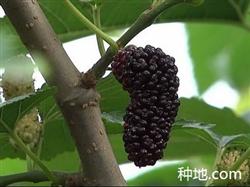
What are the precautions for growing fruit-type mulberries?
Preparing to plant fruit mulberries, what should be noted when planting fruit mulberries? Generally, the row spacing for fruit mulberry orchards is 1.0m×2.0m, and for rapid dense planting orchards or greenhouse cultivation it is 0.4-0.6m×1.3-1.5m. For Shanguo 408, Xin Hongbao or Shansang No. 404, which have upright branches and compact tree shapes, the planting density should be slightly higher; for varieties with slanting branches and spreading tree shapes...
-
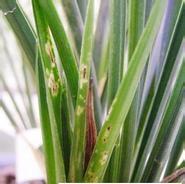
Common Types of Orchid Viruses and Analysis of Their Transmission Routes
I. Common Orchid Viruses 1. Cymbidium Mosaic Virus (CyMV) (1) Symptoms Orchid plants infected with Cymbidium Mosaic Virus often tend to develop necrotic symptoms, such as black necrotic spots, necrotic streaks, etc. In addition to necrosis on the leaves and stems, infected plants also develop necrosis on the flowers, which is a symptom unique to Cymbidium Mosaic Virus. Orchid varieties susceptible to infection include Cymbidium sinense, Cattleya, Oncidium, Cymbidium hookerianum, Vanda, and Phalaenopsis. Necrotic spots sometimes appear only on the lower surface of leaves and not on the upper surface; this phenomenon occurs in Oncidium, Dendrobium, Vanda, and Phalaenopsis, and is therefore often mistaken by growers as being caused by fungal infection. Some Cymbidium plants infected with Cymbidium Mosaic Virus, such as Cymbidium hookerianum, Cymbidium sinense, Oncidium, and Phalaenopsis, also produce yellow-green mottled mosaic or yellow chlorotic streak symptoms. In addition, some orchid species show no recognizable symptoms after infection.
-

What cultivar classifications does honeysuckle have? Introduction to common cultivar types
What cultivar classifications does honeysuckle have
-

What are the common varieties of hydrangea? A guide to the main types
What are the common varieties of hydrangea?
-

What types of crabapple flowers are there? Common varieties explained clearly at once
What types of crabapple flowers are there?
条件筛选