What are the common types of pests and diseases affecting cherry blossom trees?
What pests and diseases affect cherry blossoms? How should they be prevented and controlled? There are many types of pests and diseases affecting cherry blossoms. The common ones are described below: 1. Shot-hole brown spot disease occurs in May and June, with small purplish-brown spots appearing on the leaves, which then gradually expand into circular shapes; after the diseased spots dry and shrink, they become small holes. The pathogen mostly overwinters on diseased branches...
What pests and diseases affect cherry blossoms? How should they be prevented and controlled?
There are many types of pests and diseases affecting cherry blossoms. The common ones are described below:
1. Shot-hole brown spot disease
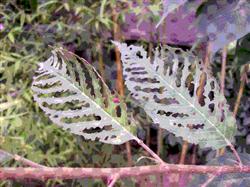
It occurs in May and June. Small purplish-brown spots appear on the leaves and gradually expand into circular shapes; after the diseased spots dry and shrink, they become small holes. The pathogen mostly overwinters on diseased branches and leaves. The optimum temperature for its development is 25°C to 28°C. It spreads by wind, and rainy seasons favor infection and disease development. When the tree is weakened, drainage is poor, and ventilation and light penetration are insufficient, the disease occurs severely.
Prevention and control methods:
(1) Strengthen cultivation management, carry out reasonable pruning and trimming, take care to cut off diseased shoots, and promptly clear away and burn diseased leaves to create clean growing conditions for the plants.
(2) Before new shoots sprout, spray 3 to 5 degrees Baumé lime-sulfur mixture. During the disease period, spray 160 times Bordeaux mixture, or 50% benomyl wettable powder at 1000 to 2000 times dilution, or 15% zineb at 600 to 800 times dilution.
2. Leaf blight
In summer, yellow-green circular spots appear on the leaves, then turn brown, with scattered small black grains. The diseased leaves wither and die but do not fall off.
Prevention and control methods:
(1) Remove and burn diseased leaves, and spray Bordeaux mixture before budding.
(2) In May and June, spray 65% zineb wettable powder at 500 times dilution, once every 7 to 10 days, for 2 to 3 consecutive sprays.
3. Crown gall disease
It mainly occurs at the base of the main trunk, and sometimes also on the root crown or lateral roots. Tumors form on the diseased parts, initially milky white or flesh-colored, gradually turning brown or dark brown, spherical, with a rough surface, uneven and cracked. After infection, the root system develops poorly, with very few fine roots, aboveground growth is slow, and the tree vigor declines. In severe cases, the leaves turn yellow, fall early, and even the entire plant dies.
Prevention and control methods:
(1) Seedlings infected with crown gall disease must be centrally destroyed. Before planting, seedlings are best soaked in 1% copper sulfate for 5 to 10 minutes, then washed clean with water before planting.
(2) When diseased plants are found, the galls and surrounding tissue can be thoroughly removed with a knife or saw.
(3) For the soil around diseased plants, sulfur powder can also be applied at 50 grams to 100 grams per sq m for disinfection. At the same time, pay attention to soil improvement.
Click to get more cherry blossom cultivation techniques
Click to get more flower cultivation techniques