-

Is the turning time for edible fungi determined by temperature or by the time of piling?
Does the turning time for edible fungi depend on temperature or on the time of piling?
-
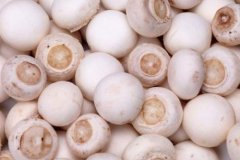
Is the underside of the Tricholoma mushroom cap and its interior turning black toxic, and can it still be eaten normally?
Tricholoma mushroom is also called white mushroom because it is white all over, and it is also a rare edible fungus with high nutritional value. But why do some Tricholoma mushrooms bought and left for a while turn black? Is the underside of the Tricholoma cap turning black toxic? Is the inside of the Tricholoma
-
New organic ecological cultivation technique for returning mushrooms to nature
The traditional technique for mushroom production uses rice and wheat straw as the main raw material, but in our area, with the expansion of mechanized harvesting and straw return to the field, the supply of rice and wheat straw is becoming less and less, which has limited mushroom production. In order to solve the problem of raw material shortage in the mushroom production process, over the past few years, through continuous exploration, we have successfully developed a new organic ecological nature-returning cultivation technique for mushrooms. This technique resolves the contradiction between the supply and demand of rice and wheat straw, simplifies the operating procedures, and changes mushroom cultivation from autumn cropping to year-round production in both spring and autumn. The cultivation cost is reduced by 30%-50%. If
-
Detailed Explanation of the Key Technical Points for Color-Turning Management of Shiitake Mushroom Logs
The color-turning management of mushroom logs can be divided into two methods: color turning after bag removal and color turning within the bag. Current production is mostly aimed at obtaining flower shiitake or high-quality thick shiitake, so the within-bag color-turning method is mostly adopted. Its basic management is as follows: 1. Perforation for oxygen enrichment: after the mycelium has fully colonized, the substrate is filled with mycelium, and its metabolic rate increases greatly. Perforation serves the purpose of increasing internal oxygen, expelling waste gas, boosting metabolism and dissipating part of the moisture, and is the first step of color-turning management. 2. Promoting separation of the film from the walls: through perforation, moving, and so on, prompt the plastic film to separate from the substrate. For early-maturing strains with a short colonization time
-
Management Techniques for the Color-Turning Stage of Block-Cultivated Shiitake Mushrooms
Semi-cooked shiitake block cultivation; whether the color turning of the mushroom blocks is good or poor directly affects yield and quality. The color-turned layer of shiitake plays a role similar to tree bark. After color turning, it can be divided into 4 types, namely brownish-red, dark brown, light brown and grayish-white. Brownish-red is the most ideal; it represents mushroom blocks with appropriately sparse and dense fruiting, uniformity and consistency, high yield and good quality. Dark brown indicates that the mushroom skin is relatively thick, fruiting is late, individual mushrooms are larger, and yield is low. Light brown indicates that the mushroom skin is relatively thin, fruiting is earlier and concentrated, deformed mushrooms are numerous, mushrooms are small, caps open easily, and yield is low. Grayish-white mushroom blocks can produce
-
Key Management Techniques for Shiitake Mushroom Bags During the Color-Turning Period
As early November arrives, temperatures drop noticeably and the day-night temperature difference widens. As a result, the shiitake mushroom bags produced in mid-September this year had just finished colonizing when the temperature fell, prolonging the maturation period of the bags and making it difficult for the mycelium to turn color. This is especially true for short-aging shiitake varieties, which may show the abnormal phenomenon of fruiting before color turning. The following two points should be noted in management: 1. For long-aging shiitake bags whose mycelium has fully colonized but has not yet turned color, management can be divided into two approaches. First, after punching holes, be sure to keep the cultivation room temperature above 22°C, and ventilate appropriately for 1-2 hours at noon each day;
-
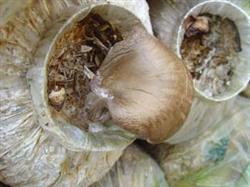
Spent oyster mushroom substrate can be reused, turning waste into treasure through secondary use
Experts point out that oyster mushroom soft rot is mainly manifested by the white mycelium of the oyster mushroom growing in a spider-web pattern on the surface of the bed, spreading rapidly, covering the bed surface, and surrounding the fruiting bodies. Once the base of the fruiting body is surrounded by mycelium, it becomes infected; the pathogen spreads upward along the stipe, ultimately resulting in the fruiting body stopping growth, with its color turning dark, and rapidly...
条件筛选