-

How to Process Feed for Mink and Foxes? A Detailed Explanation of the Technical Points
Fur animals such as mink and foxes have well-developed canine teeth, a short digestive tract, a small stomach volume, no cecum, and fast food passage through the digestive tract; moreover, their digestive glands secrete little amylase and more lipase. Therefore, their feed should be based mainly on animal-based feed, and especially animal protein feed should account for a very large proportion of the diet. Thus, the feed processing and preparation methods for mink and foxes have distinct characteristics, which are introduced below: 1. Material selection. Large pieces of fat should be removed from meat feed, the gallbladder and thyroid should be removed from livestock and poultry offal, and lumps, impurities or foreign matter should be picked out of dried animal powder and grain powder.
-
A Detailed Guide to the Production and Processing Methods of Candied Carambola
Sour-type carambola is not suitable for fresh eating and is a low-priced raw material. After being candied in sugar, it has a unique sweet-and-sour carambola flavor. With proper handling, it is still an excellent sugar-preserved product. (1) Process flow: raw material selection -> cleaning -> cutting -> color protection and hardening -> rinsing -> sugar processing -> drying -> packaging. (2) Key operating points: 1) Raw material handling: carambola at about 80% maturity. After washing, cut lengthwise along the individual ribs into long rib-shaped thick slices, or cut crosswise into 1.5 cm thick slices, then immediately put them into a 3% alum solution, add a trace amount of turmeric powder to make a suitable yellow soaking liquid, so that the carambola slices take on a bright light yellow color. Soak for 4-6 h, remove, drain off the water, and prepare for spiced sugar processing.
-
A Detailed Guide to the Processing Technology and Methods of Multi-flavor Jujubes
Multi-flavor jujube is a new type of jujube product between candied jujubes and red jujubes, with a variety of flavors, which makes up for the shortcomings of candied jujubes being too sweet with a single flavor and red jujubes having thick skins that are inconvenient to eat. I. Production process flow: raw material selection - washing and grading - scoring and sulfur dipping - sulfur fumigation and rinsing - soaking and draining sugar - baking and packaging. II. Processing key points: 1. Raw material selection: choose fresh jujubes with large fruit, small pit, loose flesh, relatively little juice, thin skin, nine-tenths ripe, white with a touch of red in color, free of pests and diseases, and not sprayed with pesticides within half a month as raw materials.
-
A Detailed Guide to Sichuan Pepper Harvesting Techniques and Processing and Utilization Methods
Sichuan pepper has a fragrant aroma and is a spice unique to China, also known as dajiao, shujiao, and dianjiao. When ripe, the pericarp of Sichuan pepper turns red to purplish-red, densely covered with warty protruding oil glands. The flowering period is from March to May, and the fruiting period is from July to October. It is mainly produced in Sichuan, Shaanxi, Henan, Hebei, Shanxi, Yunnan and other provinces, among which the quality produced in Sichuan is better, and the yield produced in Hebei and Shanxi is higher. 1. The effects of Sichuan pepper. According to measurements, every 100g of dried Sichuan pepper contains 6.7g of protein, 8.9g of fat, 66 of carbohydrates
-
A Detailed Guide to the Harvesting and Processing Methods of Camellia Oil
I. Harvesting: There are many varieties of camellia oleifera, and the fruit ripening period is generally from October to early November. Ripe fruit has the following characteristics: the camellia fruit is bright in color, red or yellow, with a glossy sheen; the fuzz on the fruit skin has fallen off completely; the hairs at the base of the fruit are hard and coarse; the fruit shell is slightly split; the seed shell turns black and shiny; and the kernel shows oil. Camellia fruit should be harvested promptly once ripe. For different varieties, harvest early-ripening fruit first and late-ripening fruit later, picking as they ripen; for ripe fruit of the same variety, harvesting should also be completed within about 7 days. The harvested camellia fruit should be piled indoors for 6 to 7 days to let
-
A Detailed Guide to Post-Harvest Handling and Processing Methods for Wine Cap Mushroom
Wine cap mushroom, also known as King Stropharia, is a domesticated wild mushroom species, and in recent years there has been a trend of gradual expansion. Its mushrooms have a delicate fragrance, crisp and tender flesh, good palatability, high yield, high selling price, and very considerable economic benefits. However, its fresh products have a short storage time and are not easy to preserve. If not sold fresh in time, huge losses will be caused. In order to ensure that economic benefits are not lost, the salting processing and dried product processing techniques for wine cap mushroom are now introduced. 1. Salting processing of wine cap mushroom. 1. Harvesting. The mushroom bodies of wine cap mushroom used for salted export should be at 6-7
-
Organic Bacillus thuringiensis subsp. kurstaki found with diphenylamine pesticide contamination, traced to lubricating oil accidentally mixed into the manufacturing process
Investigation into the detection of diphenylamine pesticide contamination in the organic Bacillus thuringiensis subsp. kurstaki product Sulibao finds that lubricating oil accidentally entered the manufacturing process. What is going on here? How could lubricating oil appear in manufacturing? Let's take a look together. The Fushou Bacillus thuringiensis subsp. kurstaki product "Sulibao" was detected with the chemical agent "diphenylamine"
-
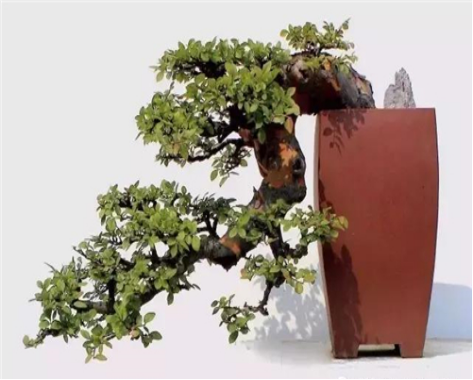
A detailed guide to the entire process of making an elm bonsai
Step 1: Pruning the roots and branches. Before planting, we first need to prune the branches and root system. The purpose is to make it easier to plant and also to help it grow better. Step 2: Treating the cut surfaces. Sticky sap often flows from the cuts on an elm. If the elm exudes too much liquid
-
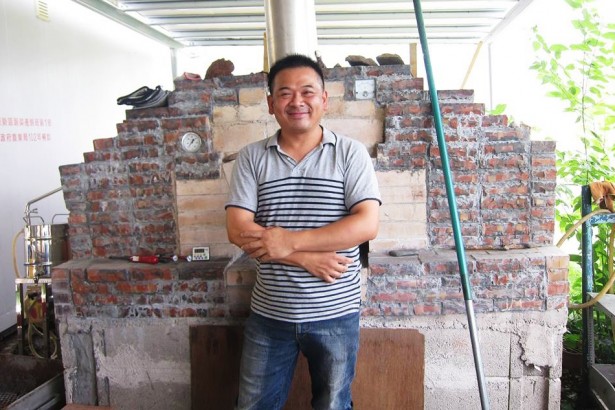
Zhang Shanfeng of Xinshe, Taichung, China offers one-stop agricultural processing services
One-stop agricultural processing by Zhang Shanfeng of Xinshe, Taichung, China
-

A Detailed Guide to the Harvesting Time and Processing Methods of Perilla
The Harvesting Time and Processing Methods of Perilla
条件筛选