-

What to do when cotton develops red leaf blight during the boll-setting stage
Control measures for cotton red leaf blight: 1. Apply fertilizer reasonably, and skillfully apply the cotton topping fertilizer; nitrogen, phosphorus and potassium should be applied together or foliar fertilizer should be applied. 2. Strengthen field management, cultivate frequently, improve root respiration conditions, promote root development, prune and remove side branches in time, remove old leaves and control pests and diseases. 3. Spray for protection, using 70% mancozeb or 75% chlorothalonil 600-800 times solution or 70% thiophanate-methyl 800-1000 times solution plus foliar fertilizer (potassium dihydrogen phosphate, Lvzhiyuan, etc.) for spraying, once every 5-
-
New cotton variety Suza 3 successfully developed in Jiangsu
The new cotton variety "Suza 3", jointly bred by the Institute of Industrial Crops of the Jiangsu Academy of Agricultural Sciences and other institutions, has been successfully developed and recently passed national new variety approval in Jiangsu Province. It is reported that this is Jiangsu Province's first two-gene transgenic insect-resistant hybrid cotton. Tests show that it has strong resistance to common pests such as the cotton bollworm and the pink bollworm. According to experts, at present the insect-resistant cotton in the cotton region of China's Yangtze River basin generally has only a single insect-resistant gene - the "BT insect-resistant gene", while Suza 3, in addition to containing the above gene, also has the "C
-
What are the causes of cotton abortive development and the remedial measures
Cotton abortive development occurs every year. So-called abortive development means that cotton has lost its normal reproductive function, that is, it only flowers but does not set bolls, or it flowers heavily but sets few bolls. The causes are first of all climatic factors, secondly the blind and indiscriminate introduction of cotton varieties, and thirdly cultivation methods that are incompatible with climate change. According to records, when the temperature exceeds 35°C, pollen development becomes deformed and normal pollination cannot occur; sustained drought then intensifies the shedding of squares and bolls. In addition, in mid-August some cotton areas experience a continuous week of rainy weather, which also makes it difficult for cotton to flower and pollinate normally.
-
What to Do When Cattle and Sheep Develop Acute Bloat? A Detailed Guide to Emergency Measures
When cattle and sheep consume large amounts of peanut vines, pea vines, alfalfa, or other legume stems and leaves, or dew-covered grass, they are prone to developing acute gastrointestinal bloat. For severely affected animals, the first step should be to release gas and reduce pressure. After venting, inject vegetable oil or paraffin oil through the trocar opening: 20-40 ml for cattle and 10-15 ml for sheep; Lysol may also be injected: 15-20 ml for cattle and 5-10 ml for sheep. To stop fermentation of rumen contents, administer orally the clear supernatant of 10% quicklime water: 500-1500 ml for cattle and 100-50 for sheep
-
How to develop and utilize reishi mushroom? A comprehensive interpretation of its value and approaches
Reishi mushroom, also known as lingzhi cao, mujilingzhi, hongzhi, chizhi, wannianxun and lingzhi xiancao, etc. Reishi is a fungus used both as food and medicine. Folk legend says: eat lingzhi cao and you can live forever, which fully demonstrates that reishi indeed has high medicinal value. In the "Shennong Bencao Jing" (Divine Farmer's Materia Medica), reishi is listed as a top-grade herb. Traditional Chinese medicine holds that reishi has tonic, brain-strengthening, body-invigorating, anti-inflammatory, diuretic and stomach-benefiting effects; it can also treat neurasthenia, palpitations and dizziness, insomnia and forgetfulness, chronic hepatitis, pyelonephritis, bronchial asthma, bronchitis, stomach diseases, coronary
-
What are the prospects for snake farming? An introduction to the development prospects of snake farming
Because snakes have significant economic value, many people, directly driven by profit, have taken up professional snake catching as a trade to gain substantial economic benefits. Therefore, it is recommended that the relevant departments strictly crack down on and ban this destructive and predatory illegal behavior, and resolutely stop it. In this way, the sharp decline in the natural population of wild snakes can be reduced, in order to prevent severe damage to the ecological environment and cause even greater losses that harm future generations. Therefore, active and effective protection measures should be taken to promote the recovery and expansion of snake populations as quickly as possible in a short period of time, and restore the ecological balance necessary for humanity.
-

How to establish a goal-oriented systematic review framework for agricultural development and transformation
Establishing a goal-oriented systematic review framework for agricultural development and transformation
-
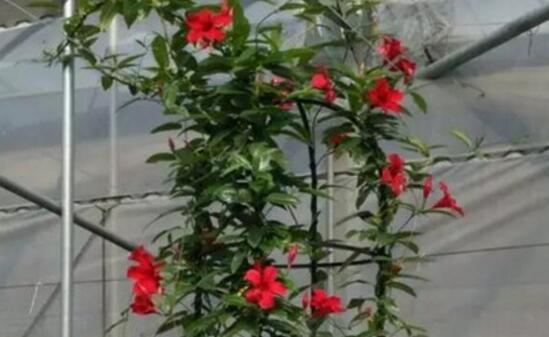
Necessity of pinching and topping Dipladenia, and why it only climbs without blooming, develops brown spots, and has yellow leaves
It is well known that Dipladenia has a relatively long blooming period among plants, but some people find that even in summer Dipladenia does not bloom, while its vine growth is unaffected. So why does Dipladenia only climb without blooming? What are the reasons Dipladenia does not bloom? Here the editor will answer them one by one for everyone.
-
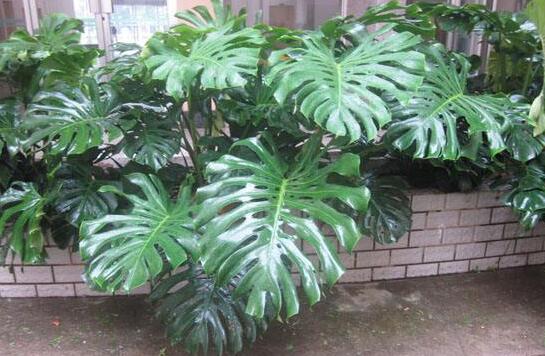
How do you get a Monstera deliciosa to develop leaf splits? Simply water it regularly, fertilize more, and increase light, and the problem is solved.
The leaves of the Monstera deliciosa are its most distinctive feature and one of the main reasons people love it. What makes the leaves so unusual is that they naturally develop splits once the plant reaches a certain stage of growth. However, some growers find that their Monstera deliciosa shows no sign of splitting for a long time.
-
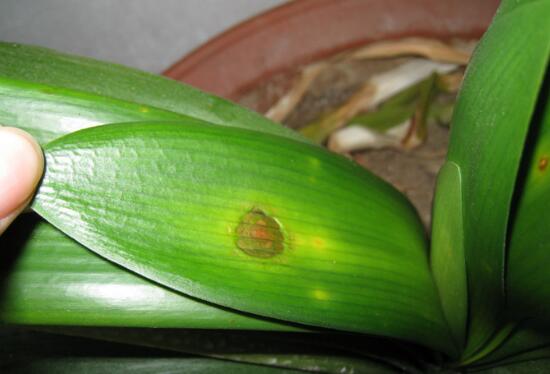
What to Do When Clivia Leaves Develop Spots? Spraying Fungicide, Changing Soil, and Reasonable Fertilization Are Key
The benefits of growing Clivia are something anyone who has kept one will deeply appreciate. Its leaves are thick, fleshy, and emerald green, making it highly ornamental, and it also has good feng shui significance, making it very suitable for indoor growing. However, during cultivation, for various reasons, the plant's leaves can develop spots. So what should you do when Clivia leaves develop spots? In response,
条件筛选