-
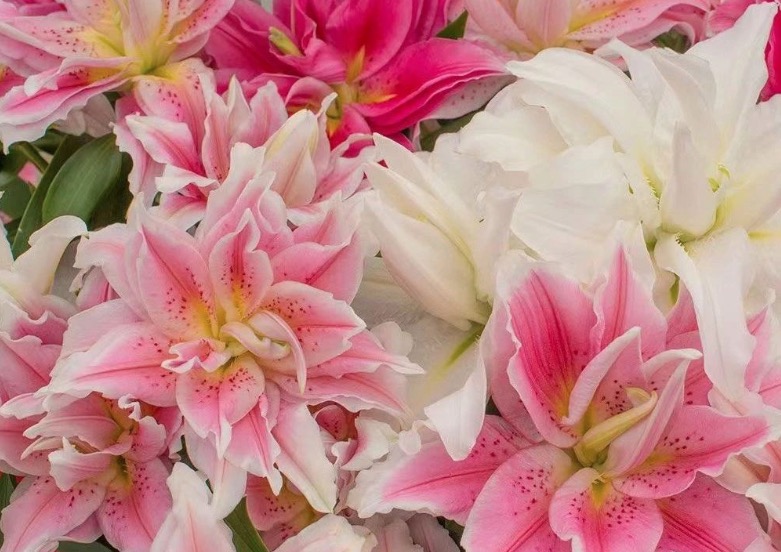
Whether the lily and tulip bulb flowers need to be collected and stored after blooming? How to maintain them?
With the rise in temperature, the bulb flowers that have been brilliant throughout the spring also gradually come to an end. How to deal with the bulb after
-

The first-ever "plant collecting" comic is born! "The Collector's Field Notes" depicts the daily lives of collectors during the Japanese colonial period, recreating the great era of botanical naming in Taiwan, China
The first-ever "plant collecting" comic is born! "The Collector's Field Notes" depicts the daily lives of collectors during the Japanese colonial period, recreating the great era of botanical naming in Taiwan, China
-
A Detailed Guide to Seed Collection and Seedling Cultivation Methods for the Choerospondias axillaris
Choerospondias axillaris, also known as "four-eyed fruit" and "Hualang fruit," is a relatively good fast-growing afforestation tree species. Its bark and leaves can be used to extract tannin, the fruit can be eaten raw or used to make wine, the fruit stone can serve as a raw material for activated carbon, and the stem bark fiber can be made into rope. The bark and fruit are used in medicine and have anti-inflammatory, detoxifying, hemostatic and pain-relieving effects.
-
A Detailed Guide to Collecting and Raising Davidia involucrata Seeds
Davidia involucrata has become the "living fossil" of the plant kingdom today, hailed as "China's dove tree", also known as "dove flower tree" and "water pear", with wild species growing only in southwestern Sichuan Province, central Hubei Province and surrounding areas of China. It has been listed as a national first-class key
-
How Young Complete Bee Colonies Collect Honey and Key Management Points During the Honey Collection Period
I believe everyone knows about honey and has tasted it. But do you know how young complete bee colonies collect honey? For beekeepers, what are the key points of bee colony management during the honey collection period? 1. How do young complete bee colonies collect honey? 1. Collection tools Bees collect honey through their mouthparts. Mouthparts are the mouths of insects, and the honeybee's mouthparts belong to the chewing type. Its mouthparts retain a pair of symmetrical axe-shaped mandibles, capable of chewing solid pollen and building honeycombs, while the lower lip is elongated, forming a slender tube together with the lower jaw and tongue, with a long groove in the middle that aids in sucking. If this tube is inserted deep into a flower, it can continuously draw nectar. With such mouthparts, bees can both collect pollen and suck nectar.
-

Caring for Farmers and Enhancing Production Technology: Yunlin County to Stop Collecting Agricultural Machinery License Plate Fees Starting December 1
Yunlin County is a major agricultural county with a large farming population. In order to care for farmers and enhance Yunlin County's agricultural production technology, Yunlin County will stop collecting agricultural machinery license plate fees starting December 1, 2020 (the 109th year of the Republic of China calendar), to reduce the burden on farmers. County Magistrate Chang Li-shan stated that the recently...
-
How to Collect Pine Pollen? Latest Technical Method Tutorial
Pine pollen is the male reproductive cell (i.e. sperm cell) of plants in the genus Pinus of the family Pinaceae, such as masson pine and Chinese pine. It is commonly called pollen. Mature pollen is dispersed by wind and air currents to complete pollination and fertilization. It not only contains the genetic information of life, but also contains
-
A Detailed Guide to the Latest Method for Collecting Lingzhi (Reishi) Spore Powder by Bagging
Lingzhi spore powder is the extremely tiny oval-shaped reproductive cell, namely the seed of lingzhi, ejected from the gills of lingzhi during its growth and maturation period. Each lingzhi spore is only 4 to 6 microns, is a living organism, condenses the essence of lingzhi, and possesses all of
-
A Detailed Guide to the Latest Methods for Making Pine Bonsai
Step 1: Collecting the stump. The best time to collect the stump is at the Start of Spring each year, before all things revive. To avoid damaging its roots, try to dig it out with as much soil as possible around the roots, as this can improve its survival rate. After digging it out, all of its wounds
-
What is the wild sweet potato? Get to know this wild fruit
The wild sweet potato is a multi-purpose plant that combines edible, medicinal, landscaping, and ornamental uses. Also known as di guo, di gua pao, and other names, it is a creeping woody vine in the mulberry family, genus Ficus, with milky sap throughout the plant, reaching over 10 m in length, growing along the ground, easily producing fibrous adventitious roots where it touches the ground, resembling a giant centipede
条件筛选