-

Home-style Grilled Pacific Saury: Method and Tips
Ingredients: 3 Pacific saury (or as much as you need). Seasonings: 1 tablespoon liquor, 1 tablespoon salt, a pinch of pepper. Method: 1. Wash the Pacific saury and rub with the seasonings, then marinate briefly (about 10 minutes). 2. Place on a grill rack and cook until done. 3. When eating, squeeze on a little lemon juice. Tips: 1. The fish does not need to be split open; when removing the gills, insert chopsticks to pull out and clean the innards. 2. Brush a little oil on the grill rack before placing the fish, so the skin will not stick when you take it off. 3. During grilling
-
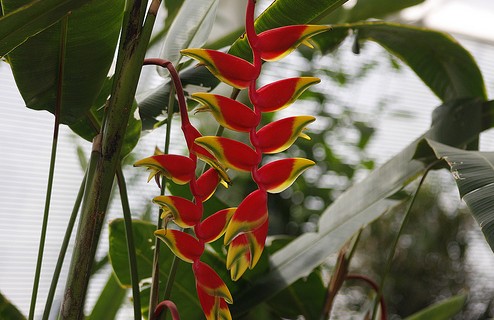
How to Grow Heliconia rostrata? A Complete Guide to Cultivation Methods and Tips
Heliconia rostrata, also known as hanging lobster claw. The plant is tall with an elegant form, and the inflorescence comes in two colors, red and yellow. The leaves resemble banana leaves and are leathery. The spike inflorescence hangs downward in a zigzag shape, the inflorescence axis is red, and the bracts are also red with golden yellow tips, l5~20 of them, arranged in two rows, closely resembling pairs of beautiful little birds
-
How to increase the yield of spring-planted shiitake mushrooms? Master these tips for high yields
Raise the temperature of the mushroom bed to create conditions for mushroom growth. Since the mushroom yard is still cold in early spring, natural air temperature can be used together with artificial regulation. The method is: cover the film tightly to increase the ground temperature, and at the same time choose sunny days to spread the shading materials on the shed surface thinly, letting sunlight penetrate into the mushroom yard, increasing the heat source and raising the mushroom bed temperature; at night, cover the film tightly to protect against the cold. The large day-night temperature difference in early spring can promote the occurrence of mushroom buds. Pat the mushroom logs to promote the recovery of mycelial growth. Because the climate is cold in early spring, the mycelium is mostly in a dormant state, producing no mushrooms or very few mushrooms. Generally, patting can be used
-
How to choose materials for stump bonsai? Master these selection tips
Generally, plants with graceful forms, peculiar roots and trunks, brilliant flowers and fruits, strong sprouting ability, long lifespans, easy shaping, and strong resistance to adverse conditions are preferred. Plants suitable for stump bonsai are usually divided into three categories: conifers and cypresses, miscellaneous broadleaf trees, and flowering and fruiting trees. 1. Conifers and cypresses: Common excellent choices include five-needle pine, black pine, Buddhist pine, true pine, Japanese red pine, Huangshan pine, Chinese juniper, and creeping juniper. 2. Miscellaneous broadleaf trees: Materials vary from place to place. Common ones include Japanese bush cherry, Xiangfei bamboo, green-white bamboo, Buddha belly bamboo, serissa, boxwood, Chinese elm, trident maple, red maple, and banyan. These trees
-
How to care for water-and-land bonsai? A full analysis of practical tips
Watering: Water-and-land bonsai are planted in very shallow pots, so special attention must be paid to replenishing water in time. To prevent the potting soil from being washed away when watering, it is best to use a fine-nozzle watering can. When the climate is dry, a sprayer can be used to mist the pot surface, the trees and the rocks to keep the moss growing well. Fertilizing: The soil in water-and-land bonsai is relatively little and nutrients are limited, so attention should be paid to fertilizing to keep the trees growing vigorously. Fertilizing is mostly done by spraying diluted organic fertilizer water onto the soil surface. Granular organic compound fertilizer can also be buried in the potting soil. Repotting: The trees in water-and-land bonsai are generally repotted once every 3 to 5 years, mostly
-
How to make azalea bonsai more exquisite? Sharing of practical tips
Azalea, also known as yingshanhong or zhaoshanhong, is a deciduous shrub of the genus Rhododendron in the family Ericaceae. It has many branches, which are slender and straight, with simple papery leaves; the flowers grow in clusters of 2-6 at the tips of the branches and are rose-colored, bright red or deep red, with purple spots, and in horticulture there are many other varieties with even richer colors. Its flowering period is from April to June, and the fruit ripens in October. Azalea likes a warm, humid environment, is not cold-tolerant, and is relatively heat-tolerant; it likes acidic soil and grows poorly in alkaline soil and in sticky soil with poor drainage. Its bonsai production and cultivation methods are as follows: (1) Seedling sources
-
How to Make a Japanese Holly Bonsai and Care Tips
Japanese holly (Ilex crenata) gets its name because the raised surface of its leaves resembles a turtle shell. It is an evergreen small shrub of the genus Ilex in the family Aquifoliaceae. The old trunk is grayish-white or grayish-brown, and the leaves are elliptical, alternate, and entire. New leaves are tender green, while old leaves are dark green, relatively thick, leathery, and glossy. Its branches and trunk are vigorous and aged-looking, and its leaves are dense and deep green, making it very suitable for making bonsai. Japanese holly used for making bonsai is usually propagated by cuttings, generally carried out during the growing season from May to July. For cuttings, vigorous and well-developed branches from the previous year or the current year can be selected, with the lower leaves removed. After insertion, place them in a bright area
-
How to choose a Japanese Chin? These tips you need to know
(1) When choosing a Japanese Chin, do not mistake a Pekingese for a Japanese Chin. These two breeds share many similarities. For example, both have relatively flat faces, neither has a pointed nose, and both have very full fur on the tail. But compared with the Pekingese, the Japanese Chin has a longer back, thinner and longer legs, a shorter muzzle, more protruding eyes, ears shaped like a "V", and a lighter, more delicate build. (2) Check each part of the dog you plan to buy to see whether it matches the morphological characteristics a Japanese Chin should have; it is best to require that all aspects basically conform.
-
Planting Methods and Care Tips for Dwarf Lilyturf
Dwarf lilyturf (Ophiopogon japonicus) is a new and superior groundcover plant recently promoted for cultivation by Chinese landscaping departments. It is a perennial evergreen herb in the Liliaceae family, grown for its foliage in spring, autumn and winter, and enjoyed for its flowers in summer. Because the plant is short, it can also be grown in pots for ornamental display. Its tuberous roots are used in medicine and have the effects of moistening the lungs to stop coughing and benefiting the stomach to promote fluid production. Dwarf lilyturf grows in clumps with rhizomes, and spindle-shaped tuberous roots form at the ends of its fibrous roots. The leaves are linear, 10 to 15 cm long; the flower stalks emerge from the leaf clusters, and the raceme is loose and spike-like, with bisexual flowers and 6 tepals. The flowers are pale
-
Seven Tips for Improving the Effectiveness of Oral Fish Medication
1. Prevention is the key. For fish living in water, disease is hidden and hard to detect. Once dead fish are found, the losses are great, and treating fish diseases is relatively difficult. Therefore, the guiding principle of "prevent disease before it occurs, treat it early when it does, and prioritize prevention over treatment" should be actively implemented, and the concept of focusing on preventive medication should be established. 2. Cleverly combine Chinese and Western medicines. Chinese herbal medicines have a long duration of efficacy in treating fish diseases, few side effects, and low prevention and treatment costs; Western medicines are characterized by rapid efficacy and high cost. Practice has proven that mixing certain Western medicines into effective Chinese herbal medicines can both rapidly improve efficacy and reduce costs.
条件筛选