-

How to plant tulip seeds? Teach you three steps to grow healthy plants
Tulips are herbaceous plants of the genus Tulipa in the lily family (Liliaceae), native to Central Asia and the Mediterranean coast. There are many varieties of tulips with brightly colored flowers, making them very popular ornamental plants, yet few people know how they are grown.
-
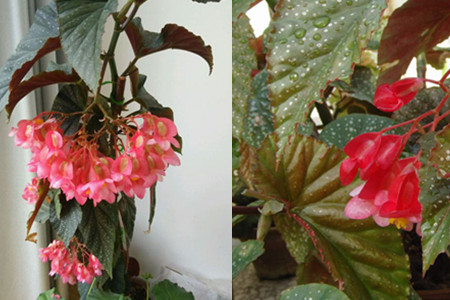
How to Propagate Cane Begonia from Cuttings: Three Steps to Grow New Plants
Cane begonia (Begonia maculata) is a perennial herbaceous plant in the family Begoniaceae and genus Begonia, growing upright or as a loosely branching subshrub. It blooms in summer and autumn, and its foliage is soft and lovely. Potted begonias are often used to accent living rooms, shop windows, or to decorate home windowsills, balconies, coffee tables and other spots.
-
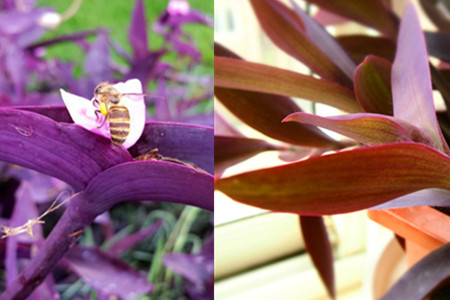
How do you propagate purple spiderwort (purple inch plant) by cuttings? Three steps to grow vibrant plants
Purple spiderwort, also known as variegated spiderwort, is a plant in the Liliaceae family. Purple spiderwort is a perennial herbaceous plant, suitable as a hanging potted foliage flower, ideal for hanging basket display, and it helps keep indoor air fresh. In recent years it has also been used for flowerbed borders.
-

Can lotus bamboo be grown in water? One stem, one vase, one insertion - three steps and you're done
Lotus bamboo, just like its name suggests, has leaves like a lotus and stems like bamboo, with an overall graceful plant shape that makes it highly ornamental in the home. However, when growing it indoors, many plant lovers prefer water culture over soil culture. So can lotus bamboo be grown in water? If so, how do you grow lotus bamboo in water?
-

What to Do When a Butterfly Flower Has Root Rot? Three Steps - Pruning, Disinfection and Repotting - to Bring It Back from the Dead
When we grow butterfly flowers, improper watering or pathogen-containing soil can cause the roots of the butterfly flower to rot. This phenomenon is called root rot in botany, and it has a fatal effect on the plant's growth.
-

Snake breeding and selection is carried out in three steps, with the specific methods explained in detail
Strengthening the artificial breeding and selection of snakes is of great significance for improving the reproductive survival rate, growth and development speed, product quality and economic benefits of snakes. It is a task that cannot be neglected in a snake farm and must be carried out year-round with persistent effort. In breeding and selection, the following three points should be done well: 1. Selection of breeding eggs. The breeding eggs placed in incubation must be fresh and of high quality. Eggs stored for a long time have a low hatching rate and a high mortality rate, and the hatchling snakes are weak and grow slowly. Therefore, the female snake should be checked frequently before laying eggs, and when the eggs are found to be approaching the cloaca,
-
Three key steps must be done well during the dehydration of shiitake mushrooms
Timely harvesting is the foundation for the bright color of the finished mushrooms. One of the main reasons shiitake mushrooms change color during drying is that the mushroom bodies are injured before drying. To overcome this shortcoming and enhance the resistance of the mushroom bodies to external pressure, timely harvesting is very important. When the veil has fully split and the cap has curled upward like a copper gong, they should be harvested. Do not spray water within 2 hours before harvesting. Use the "twist-harvest method" to pick them. After harvesting, handle them gently, remove debris and stems, and immediately send them to the nearest dehydration room for dehydration. Generally, from harvest to entering the drying stove, the distance should preferably not exceed 5
-
Three key steps for storing Gastrodia elata properly
Recently, I have received letters from many farmer friends asking how to store Gastrodia elata seed tubers. During the production of Gastrodia elata, seed rot often occurs, causing losses. In my opinion, three key steps should be taken when storing Gastrodia elata. First, the harvest step. Gastrodia elata is dug in spring and winter. When digging Gastrodia elata in winter, select fresh, pest-free, undamaged small tubers, air-dry them for 1-2 days to remove part of the moisture, and then store them together for use as seed the following year. Second, the temperature step. Place the partially air-dried Gastrodia elata seed tubers in layers in a brick pond, a large earthen basin or a wooden box
-

Why are so many rural subsidies not received by many people? Understand rural subsidies in three steps
There are so many rural subsidies, so why have many people not received them? Understand rural subsidies in three steps!
-
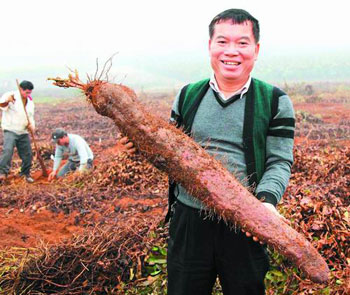
Wei-style powder-ridge yield-increasing technology safeguards food security in three steps
Wei-style yield-increasing powder-ridge technique: food security in three steps
条件筛选