How to plant tulip seeds? Teach you three steps to grow healthy plants
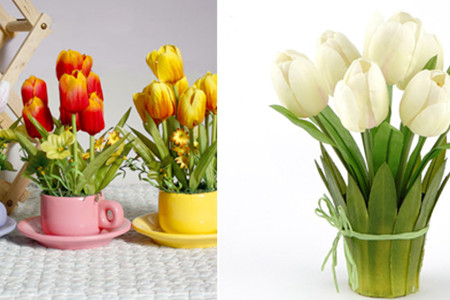
People have always loved to decorate courtyards, streets or homes with all kinds of plants, especially those with flowers, and one of the more common ones is the tulip. This is a very special flower; its blooms are shaped like upside-down lampshades, and they come in many colors, some even with multiple colors on a single flower, so this flower has always been very much loved and welcomed by people.
In addition, the "seed" of this flower is quite special. Though called a seed, it is actually its root, which looks very much like the garlic we often eat. However, few people really understand how this plant's seed is grown. Next, let's introduce how to plant it.
1. Selecting the seeds
If you want to grow sturdy plants, you need to select seeds that can sprout. When choosing, you should pick ones that are slightly harder and a bit more glossy, otherwise they will be difficult to keep alive.
2. Inserting the seeds into the soil
Unlike most seeds, this kind of seed does not need to be buried in the soil, as it would then have difficulty sprouting. You should insert them into the soil with their tips exposed, keeping the exposed part at about one half.
3. Placement
Many people think the pot with the planted seeds should be placed in a sunny spot, but this is actually incorrect, because it will damage the seeds and make it very hard for them to sprout. You should place the pot in a slightly shaded spot so it won't be affected.
The steps described above are all very easy to carry out. Once done, you only need to wait one to two weeks to see green sprouts emerge. Of course, during this period you must not forget to keep up the water supply.
How to plant daisy flower seeds_How to care for daisies?
The daisy is a flowering plant that people love very much; it looks very cute and is especially endearing. It has very high ornamental and medicinal value, and is often grown by people on garden plots and windowsills to enrich their spare time and broaden their horizons, making it a very popular flowering plant. But liking them doesn't mean you know how to plant daisy flower seeds, or how to care for daisies. If you want to learn, follow along with the editor to see how to plant daisy flower seeds and how to care for daisies.
[Daisies: How to care for daisies]
The daisy is a perennial herbaceous plant of the genus Bellis in the aster family (Asteraceae). It is relatively cold-hardy and is often cultivated by people as a biennial plant. It is generally planted carefully in August-September, so that 12-14 weeks after sowing you can enjoy the pretty and lovely flowers; when sowing, use loose, fertile soil with good aeration, and cover the surface with vermiculite, so that a thin layer just hiding the seeds is best. When sowing daisies, the broadcast sowing method is generally used, because the seeds are quite small and not particularly suited to sowing in individual holes. When the seedlings have 2-3 true leaves, they can be transplanted; the temperature should be kept at 18-20°C and the humidity at 80-90%, so that they will sprout five days after sowing.
[How to plant daisy flower seeds]
When planting daisy flower seeds, the sowing method is generally used, and division can also be used for propagation. Sowing is generally done in August-September, using open-field seedbeds and seedling trays. The soil needs to be fairly fine and level, and there must be sufficient light when germinating. Generally, germination occurs within one week to half a month after sowing, and germination is fairly uniform at this time. The time from sowing to flowering is after 12-14 weeks, and the seeds can remain viable for more than 3 years. If the division method is used, divide the plants after the flowering period once the plants have aged.
1. Planting daisy flower seeds - Potting: Choose daisies with well-developed root systems, as these are more tolerant of transplanting. Seedlings should be transplanted when they have grown 2-3 true leaves, and should have 4-5 true leaves before final planting. The best spacing between plants is 20-25cm.
2. Planting daisy flower seeds - Soil: Choose soil rich in organic matter, loose and fertile, with good drainage. You can also use a mix of leaf mold, garden soil, rice husk ash and perlite for cultivation.
3. Planting daisy flower seeds - Temperature: Daisies like to grow in a cool environment, and the temperature should be kept at 7-15°C. During the seedling stage, they need vernalization at 5-10°C to promote flower bud differentiation and give the flowers uniformity, so they have good ornamental value.
4. Planting daisy flower seeds - Light: Daisies like to grow in an environment with plenty of sunlight, especially during the growing period, when they should be given sufficient sunlight. If there is not enough sunlight, the plants will grow leggy and the flowering period will be extended. In summer, shading and cooling measures should be carried out so they can safely get through the summer.
5. Planting daisy flower seeds - Watering: Daisies are not tolerant of wet conditions. After emergence, water with some fertilizer solution to promote the growth of stems, branches and leaves. As the temperature drops, reduce the amount of watering. When cold air is expected to strike, give sufficient water to keep the potting soil moist and prevent damage from dry freezing. After spring, increase the water amount to promote leaf growth and abundant flowering. If too much water is given, it can cause scorching or yellowing of the leaves, or even plant wilting.
6. Planting daisy flower seeds - Fertilizing: Daisies are relatively tolerant of fertilizer. After germination, fertilizer and water management should be carried out to promote seedling growth. In the cold winter, reduce fertilizing to improve their cold resistance. In spring, fertilize more, applying a nitrogen-phosphorus-potassium mixed fertilizer once every half month to promote more abundant flowering.
7. Planting daisy flower seeds - Pruning: If daisies bloom too early, remove the flowers promptly, and during the flowering period remove spent flowers to reduce nutrient consumption by the plant, so the flowers bloom more beautifully.
8. Planting daisy flower seeds - Preventing pests and diseases: Daisies can suffer from the following: bacterial black disease, black spot disease, short-horned grasshoppers, and small green grasshoppers. Pale yellow and purplish-brown spots will appear on the leaves, and in severe cases they will develop into blackish-brown ones. When these situations occur, stop them promptly to prevent the pests and diseases from spreading.
Summary: The above is the editor's introduction to how to plant daisy flower seeds and how to care for daisies. The editor's introduction is fairly detailed, and I hope it will be of greater help to you when growing daisies. Thank you for reading.
More related information: How to grow flowers How to care for jade plants What do tulips represent Camellia flower meaning How to care for bromeliads
How long is the tulip flowering period? How to care for tulips so they bloom
Tulips are perennial herbaceous plants and one of the flowers many people love. When tulips are in full bloom, many people rush to garden areas to admire them. As the weather gradually warms, many people want to go to garden areas to admire the beauty of the flowers. Tulips are a very famous flower, with many varieties and bright colors, and a very good ornamental and decorative effect. Many people buy them and like to grow them at home to beautify their homes. So, how long is the tulip flowering period?
1. About tulips
The symbolic meaning of the tulip has a certain origin in its ability to become the national flower of the Netherlands. Between 1634 and 1637 came the period known in Dutch history as "tulip mania." During this crazed period of tulip investment, the number of tulips on the financial market exceeded the number actually planted. Therefore, at the beginning of the 19th century, only 130 acres of tulips were planted nationwide in the Netherlands, but by the mid-20th century this had grown to more than 20,000 acres, accounting for more than 80% of the world's total tulip exports and sold in 125 countries, earning it the title "Queen of Flowers."
Because of the Mediterranean climate, tulips developed the trait of adapting to wet, cold winters and dry, hot summers, and purple tulips are the same. Their characteristics are summer dormancy, rooting and sprouting new buds in autumn and winter but not emerging from the soil, and after going through winter low temperatures, around early February of the following year (at temperatures above 5°C) they begin to extend and grow to form stems and leaves, flowering in March-April. The suitable temperature for growth and flowering is 15-20°C. Flower bud differentiation takes place during the storage period when the stems and leaves turn yellow, the bulbs are dug out of the pots, and placed in a cool, shaded outdoor spot to spend the summer. The suitable temperature for differentiation is 20-25°C, and it must not exceed 28°C.
The three students who first cultivated purple tulips used knowledge of chemistry and biological sciences as their theoretical basis to carry out this experiment. The students prepared a special nutrient solution for the tulips, and after several months of cultivation, they finally produced indigo tulip flowers, a color that is the closest to purple in nature. Achieving this result in the experiment was extremely rare.
2. Tulip flowering period
Tulips belong to the lily family (Liliaceae), genus Tulipa. Perennial herb, with a flattened conical bulb and brownish skin covering. There are extremely many cultivated varieties, reaching more than 8,000. Flower shapes include cup-shaped, bowl-shaped, egg-shaped and spherical. The suitable temperature for growth and flowering is 15-20°C, flowering every year in March-April. The tulip flowering period takes more than 60 days from sowing to flowering, and some take only about 45 days. The flowering time is March-May. The tulip flowering period depends entirely on temperature. If the temperature is high, the flowering period is very short, at most about a week; if the temperature is low, the tulip flowering period is longer, generally about two months.
Tulips are a world-famous bulbous flower, and also an excellent cut flower variety, with sturdy, upright flower stems. The leaves are elegant and beautiful, and the lotus-like flowers are dignified and charming, endearing them to people. The tulip flowering period is when tulips bloom in mid-to-late July. From sowing to flowering takes more than 60 days, and some take only about 45 days. The flowering time is March-May. The tulip flowering period depends entirely on temperature. If the temperature is high, the flowering period is very short, at most about a week; if the temperature is low, the tulip flowering period is longer, generally about two months.
The suitable temperature for tulip growth and flowering is 15-20°C. Flower bud differentiation takes place during the storage period when the stems and leaves turn yellow, the bulbs are dug out of the pots, and placed in a cool, shaded outdoor spot to spend the summer. The suitable temperature for differentiation is 20-25°C, and it must not exceed 28°C. Tulips flower at uneven times, with some flowering as early as early March and some as late as the end of April. In short, the tulip flowering period is generally from late March to early May. In addition, at 7 in the morning is the most beautiful time to view tulips, especially elegant and refined, fresh and meaningful, never tiring to look at.
3. How to care for tulips so they bloom
1. Propagation methods. Bulb division and seed sowing are commonly used. ① Bulb division propagation. After a season of growth, the mother bulb planted that year can simultaneously produce 1-2 large bulbs and 3-5 small bulbs around it. They can be planted separately according to bulb size. Large bulbs can flower in the same year after planting, and small daughter bulbs can also flower after 1-2 years of cultivation.
② Seed sowing propagation. Tulip seed propagation is mostly used to breed new varieties. The seeds are harvested before the capsule matures and splits, stored in sand until October, then sown in pots indoors. Keep them moist; they will only germinate the following spring, and flower in about 3-4 years.
2. Cultivation management. ① Strictly regulate temperature. The suitable temperature for the tulip growing period is 5-20°C, with the best temperature being 15-18°C, and the plant's growth temperature should be kept at 0-25°C. The root system of tulips grows best at above 5°C and below 14°C, with around 10°C being especially best. When the suitable temperature for flower bud differentiation exceeds 35°C, flower bud differentiation will be inhibited. In addition, tulips are extremely cold-hardy, able to withstand low temperatures of 35°C in winter, and begin to grow when the temperature stays above 8°C.
② Water management. During cultivation, never overwater, but within one week after planting the water requirement is greater and they should be watered sufficiently. After germination the water requirement decreases, especially at flowering time when water must not be excessive; watering should be done by "small amounts, many times." If too dry, growth will be significantly delayed. During the tulip growing period, the air humidity should preferably be kept at around 80%.
③ Light conditions. When the bulbs germinate, the elongation of the flower buds is inhibited by sunlight. Therefore, they must be planted deep and given moderate shading to prevent direct sunlight from adversely affecting bulb growth.
④ Soil and fertilizing. Sandy loam is best, and the soil pH should preferably be neutral to slightly alkaline. Tulips are relatively fond of fertilizer, and sufficient base fertilizer should be applied before planting. Generally, dried chicken manure or decomposed compost is used as base fertilizer along with thorough watering. 2-3 days before planting, carefully plow and harrow to ensure the soil is loose.
⑤ Pest and disease control. The main diseases of tulips are bulb rot, gray mold and flower-breaking virus disease. The control method is first to select virus-free bulbs as much as possible, and to disinfect the soil and bulbs, promptly burn diseased bulbs and diseased plants, and then spray with a 5% benlate wettable emulsion at 2500 times dilution every half month.
Finally, the above is the introduction to relevant knowledge about tulips brought to you. After reading how long the tulip flowering period is, I hope it can be helpful to friends who need this information. Friends who want to see tulips, do not miss the best time to admire tulips!