How to Propagate Cane Begonia from Cuttings: Three Steps to Grow New Plants
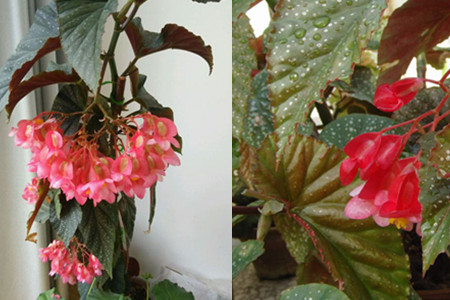
When it comes to plants that can be placed indoors and still produce gorgeous blooms, many people probably think of the cane begonia. This is a very common plant that can be seen in many homes and offices, because its plant form is not large, it can be grown in smaller pots, and it does not take up much space on a table. In addition, when this plant blooms, the flowers are very beautiful; not only do they have delicate colors, but they are also numerous.
As for the ways this plant can be propagated, we will not go into that in such detail here. Below we will focus on introducing a relatively common method, namely cuttings. So, what are the specific steps for taking cuttings of this plant?
1. Choose the mother plant
First, choose a relatively robust cane begonia, and make sure it shows no signs of any disease. In addition, do not choose old branches, because such branches do not have very strong vitality; instead, choose relatively tender and fresh stems.
2. Cut the branch
Put the scissors in a pot and boil them for about two quarter-hours (30 minutes), then let them dry before cutting the branch. Try to cut about 15 cm from the top of the stem, as this gives the best chance of survival.
3. Insert the cutting
Insert the cut stem into the prepared soil, being careful not to push it in too far; about 5 cm is enough. When mixing the soil, also be careful to add more vermiculite so that root rot is less likely, then add some peat. After about two weeks, fine roots will begin to grow.
Overall, propagating this plant from cuttings is still fairly complicated, and I hope everyone can learn it quickly.
See You in May: A Good Season for Cane Begonia Cuttings
Since ancient times, there have been countless poems praising begonias, and this plant, appreciated by both refined and popular tastes, has become a favorite of countless people. An ancient poem says, "The willow waist secretly fears the weak flower wind, red reflects the swing courtyard," showing that, in both ancient and modern times, begonia flowers are an excellent choice for most people to adorn a courtyard and enhance the atmosphere. As for the widely loved cane begonia, when it welcomes the height of summer in May, that means the good time for taking its cuttings has arrived. What knowledge is involved here? Today, let the editor give you a perfect answer!
Growth Habits
Warm in winter and cool in summer:It grows rapidly in a warm environment, with lush stems and leaves and brightly colored flowers. The suitable growth temperature is 19-24°C, and the winter temperature should not be lower than 10°C, otherwise the leaves are easily damaged by cold, though the rhizome is relatively cold-tolerant.
Partial shade and partial sun:Begonias are sensitive to light. They are generally suited to growing under morning light and diffused light, and strong light can easily cause leaf scorch. The suitable light intensity for rhizomatous types is 200-300 lx. In addition, the response to photoperiod is also very obvious. Under short-day conditions and a nighttime temperature of 21°C, the flowering period is noticeably delayed.
Loose and fertile soil:Wild species grow under forest canopies or in rock crevices with good drainage and a layer of leaf mold, which is extremely favorable for root growth and development. Common potting soils for begonias are compost soil, leaf mold and charcoal soil. Alkaline, heavy, or easily compacted soil used for potting is not conducive to new root growth, leads to short stems and leaves, dull color, and easily causes chlorosis. It is suitable for growing in neutral soil with a pH of 6.5-7.5.
Pest and Disease Control
Leaf Spot Disease
Symptoms of bacterial leaf spot disease caused by spot bacteria:Begonias are very easily infected by this bacterium, but many growers do not pay enough attention to it and do not consider it a disease, because necrosis at the leaf margins and leaf spots are the most common signs, and almost all types of begonias have shown this condition.
Control methods:The best way to control this disease is to try to avoid infection from the very beginning of cutting propagation, and to promptly destroy diseased plants in a centralized way once found; in addition, reduce overhead irrigation as much as possible, which can also suppress the occurrence and spread of the disease; slightly lowering the fertilizer concentration can also reduce the occurrence of the disease.
Symptoms of begonia leaf spot disease caused by Myrothecium:The symptoms generally appear on the leaf margins, leaf tips, and veins of damaged leaves. The necrotic areas are dark brown, then become water-soaked. The diagnostic method is that the lower leaves often have irregularly shaped spore masses, black in the center but white at the edges.
Control methods:Spraying fungicides, reducing plant injury, and keeping fertilizer as low as is reasonable can all reduce the occurrence of this disease.
Gray Mold
Fungal disease, symptoms of gray mold caused by Botrytis: Gray mold on begonia leaves often occurs on the lower part of the plant, especially where the rhizome contacts the substrate, which is more susceptible to infection. Water-soaked lesions quickly spread to the entire leaf and the entire plant, and the affected areas show necrotic spots that gradually change from brown to black. When nighttime temperatures are lower, daytime temperatures are higher, and humidity is high, the pathogen spores grow faster, and gray-green mold appears on the damaged leaves.
Control methods:Controlling the spread of Botrytis fungus during the colder winter months is an important part of cultivation management, and an important way to reduce the occurrence and spread of gray mold is to promote faster leaf drying and reduce the air humidity in the greenhouse.
Root Rot
Symptoms of begonia root rot caused by Pythium: After infection by this pathogen, the root system of cuttings is weak and the leaves turn yellow. The diagnostic method is black, mushy material appearing on the stems and roots, which can spread from the base of the cutting all the way to the stems and leaves. Rot of the roots and stem sections often occurs in patches, and through the planting bed, the pathogen can easily be transmitted to healthy cuttings.
Control methods:First, control it at the source, that is, use sterile materials from the very beginning of propagation, disinfect the potting substrate and planting bed, and treat with fungicides before and after planting, which can effectively prevent root rot caused by Pythium. In addition, reduce the amount of watering as much as possible to reduce the occurrence of root rot and promote root growth.
Damping-Off
Symptoms of damping-off caused by Rhizoctonia solani: After onset, brown mold attaches to the diseased parts. The mold can extend from the potting soil to the plant. On close observation, it can be seen that this is mold growing from the root crown of the plant. Rhizoctonia solani is often reddish-brown in color and resembles a spider web in shape.
Control methods:Damping-off caused by Rhizoctonia solani can be controlled by spraying different fungicides, most of which are applied by soil irrigation.
Wilt Disease
Symptoms of southern wilt caused by the southern blight pathogen: The southern blight pathogen can infect part of the plant, but it is easiest to observe on the leaves and stems. Initially, there are water-soaked lesions where the stem section contacts the medium; another symptom is fan-shaped, round mold growing on the leaf surface or substrate, initially white, later turning dark brown as it develops. Especially in warm conditions, if the plant is infected, it can easily lead to rot of the cuttings.
Control methods:All infected plants and containers should be moved out of the growing area as soon as possible, and the plants should be destroyed. There is currently no particularly effective chemical agent for southern blight.
I. The Past and Present of the Cane Begonia
Cane begonia, also known as French begonia or red-flowered cane begonia, is a plant suitable for potted ornamental use, named for its stems, which resemble bamboo. The whole plant is hairless and the stems are upright, with thick nodes like bamboo joints. It is often placed on windowsills and in courtyards. With careful management it can reach 1 m in height, and when it blooms it stands gracefully, its shadow swaying in the wind, very beautiful. Because its flowers are elegant and bloom like brocade, since ancient times it has been planted together with famous flowers such as magnolia and peony, thus forming the auspicious meaning of "jade hall wealth and honor."
II. Cane Begonia Cutting Methods
The most common propagation method for cane begonia is cuttings, with spring and autumn being the most suitable periods. Looking at the present May, when plum rains are prevalent and sunlight is abundant, it is exactly a good time to take cane begonia cuttings. The specific operation is to select a tender green, robust terminal bud about 4-7 stem nodes long, remove the lower leaves, leave 2-4 leaves at the top and cut them in half, then insert the cutting into vermiculite or perlite, keeping the soil at about 1/3 soil moisture, the surrounding air humid, and the light intensity moderate. Roots can form in nearly one month. After the root mass is well developed, robust, and growing vigorously, transplant it into a new pot. From then on, simply provide timely shading, ensure ventilation during hot and stuffy weather, and care for it carefully while waiting for it to bloom.
III. Manage It This Way and Let Cane Begonia Bloom for Ten Months
Slightly acidic, humus-rich sandy loam is best
Cane begonia is more adaptable than other varieties, and it develops best in slightly acidic, humus-rich, loose soil. Repot at a moderate frequency, controlled to once every 1-2 years in spring.
A cool environment improves care
Cane begonia is a cold-fearing "beauty," and it also avoids intense heat in summer. After midsummer, move the cane begonia under tree shade. This not only ensures ventilation but also lets this "begonia beauty" receive natural care from morning diffused light, thereby avoiding the unexpected situation of it going dormant and shutting down.
Pruning in early spring is underway
Early spring is not only the best time to change the soil for cane begonia, but also a good time for pruning. When pruning, be sure to observe the whole plant and consider the plant form of the cane begonia, ensuring that the surrounding framework spreads out, which is beneficial for light exposure, ventilation, moisture absorption, and so on. The structure pruned this way is compact and the lines are very graceful. After that, on this basis, continuously pinch the growing tips to stimulate new branches to produce flower buds and prevent the plant form from becoming loose and misshapen.
How to Grow Cane Begonia: Cultivation Methods for Cane Begonia
Cane begonia is a perennial shrub plant, suitable for growing and enjoying at home. The flowers of cane begonia are relatively bright and attractive, and it blooms more in summer and autumn. Below, let us look at the cultivation methods for cane begonia.
Cultivation Methods for Cane BegoniaPropagation method: Cane begonia is mainly propagated by cuttings, and can also be propagated by water cuttings and division. When taking cuttings, select a robust growing terminal tender branch and cut a 3-4 node section about 10 cm to 15 cm long, with the lower cut preferably 0.5 cm below the lowest node, then insert it into a river sand seedbed. All leaves on the part inserted into the soil should be removed, leaving only 2-3 leaves above.
Watering management: Cane begonia is a shallow-rooted plant that likes partial shade and a mild, humid environment. Its optimal growth temperature is between 15 and 25 degrees, and it is highly drought-resistant but afraid of waterlogging. Therefore, watering cane begonia should follow the principle of watering when dry and stopping when wet, with the best condition being keeping the potting soil moist. In the height of summer, spray the leaves and the ground to raise air humidity, which will help its growth.
Fertilization management: Fertilizing cane begonia should be done when the potting soil is dry; watering after fertilizing ensures that it is all absorbed by the plant. Cane begonia should avoid heavy fertilizer both after repotting and when stems and leaves are not vigorous. During the peak growth period, apply a dilute liquid fertilizer once every 10 to 15 days.
Light management: Cane begonia likes ample diffused light, but too strong light will cause dry leaf tips and scorched edges, causing leaves to turn yellow or even fall off. In hot summer, it is best to place it under a cool, ventilated trellis or on a north-facing balcony to receive diffused light. If it is placed in a dark place for a long time, insufficient light will also cause yellow leaves and, in severe cases, can even lead to plant death.
Pruning the plant: Because cane begonia is tall, perennial plants may grow too tall, causing the flowers and leaves on the lower part of the stems to fall off, making the plant shape unattractive and affecting the ornamental effect. Therefore, some pruning is needed to maintain a good shape. Pruning the plant can be done together with spring repotting, which helps the plant sprout new branches and bloom more.
Pest and disease control: Excessive summer heat and humid weather can cause pest and disease problems in cane begonia. For pest and disease control, on the one hand, ventilation and light transmission should be strengthened, and a large amount of standing water should not be allowed in the pot; at the same time, ensure that a fungicide is sprayed once every 15 days, such as thiophanate-methyl or carbendazim, to prevent disease. If red spider mite damage is found, spray dicofol 1500x solution; if a small number of scale insects are found, they can be removed manually with a brush.