-
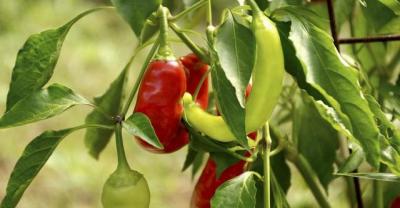
How can peanut growers increase their planting profits? These three points are key
Peanut is one of the main oil crops, with broad economic value, and peanuts can also be further processed to make a variety of peanut side products...
-
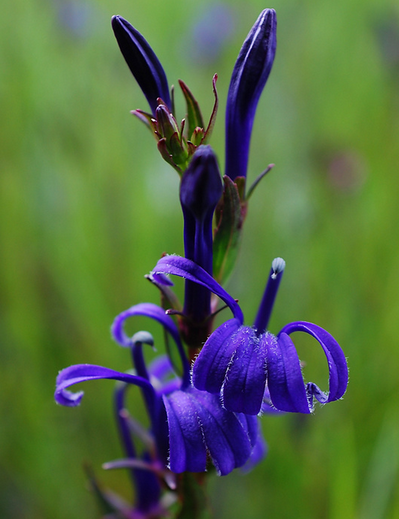
Three key points to note when growing gentian
Gentian is a perennial herb, 1-2 chi tall. The leaves are opposite; the 2-3 pairs of lower leaves are very small and scale-like, while the middle and upper leaves are lanceolate, dark green on the surface and light green on the underside, with three obvious veins and no petiole. The flowers grow at the branch tips or in the leaf axils near the tips, blooming as blue tubular bell-shaped flowers
-

How to apply the three fertilizers well for rice? Detailed explanation of the key points of fertilization methods
Excessive vegetative growth of seedlings causes ineffective tillers to proliferate rapidly, leading to delayed maturity with excessive greenness; some seedlings grow so densely shaded that they trigger diseases such as sheath blight or rice blast. In paddy fields where fertilizer damage occurs, it causes yield reduction in mild cases and forces the seedlings to be plowed up and replanted in severe cases. To give full play to the fertilization effect on rice, in addition to applying sufficient base fertilizer, the "three fertilizers" must be applied well as topdressing, namely tillering fertilizer, panicle fertilizer and grain fertilizer. Rice fertilization should be considered comprehensively and applied flexibly according to variety characteristics, soil fertility, climate factors and cultivation conditions. The fertilizer demand of rice is expressed in the nutritional stage, the critical nutritional period and the period of maximum nutritional efficiency.
-
What are the three key checkpoints for high-temperature mushroom cultivation?
Summer mushroom cultivation offers relatively high economic returns. To grow mushrooms well in summer, you must master the "three checkpoints": variety, fermentation, and pest and disease control. 1 Choose suitable high-temperature strains. Currently, the more heat-tolerant mushroom strains include Xincheng 96, Sumo No. 1, and others. Xincheng 96 has a suitable spawn-running temperature of 18-36°C, a suitable greenhouse temperature of 25-33°C, and a fruiting temperature of 20-36°C (optimum temperature 24-33°C). It is currently the most heat-tolerant strain, suitable for spawning in May-June and fruiting in June-September. Its greatest advantage is that the mushrooms do not discolor
-
Three Key Points for Winter Cultivation of Oyster Mushrooms
1. Mushroom Yard Selection: The ideal site for winter cultivation is a mushroom yard with heating and insulation conditions, such as an indoor mushroom house equipped with heating, a relatively warm underground mushroom yard, or a raised-bed mushroom yard using plastic greenhouse cultivation. The temperature of such mushroom yards can be kept above normal temperature, which is beneficial for mycelial growth and can also advance mushroom formation. Generally, for early winter cultivation, an outdoor mushroom yard can be chosen; for late winter cultivation, an indoor mushroom house is preferable. 2. Strain Selection: According to the arrangement of the fruiting period, winter-cultivated oyster mushrooms can be divided into two types: winter cultivation with winter fruiting and winter cultivation with spring fruiting. For the former, low-temperature-type varieties or medium-low
-
What are the three key points for storing Gastrodia elata seeds in winter?
1. Harvesting. From late October to the end of November, while harvesting commercial Gastrodia elata, also harvest the tuberous root seeds. Select fresh, pest- and disease-free, undamaged small white Gastrodia tubers, air-dry them for 1-2 days to remove some moisture, then gather and store them for use as seeds the following year. 2. Temperature. Place the Gastrodia tubers, after some moisture has been air-dried off, in layers inside a wooden box, brick pit, or large earthen basin. Cover each layer with moist sandy soil. First spread a base layer of yellow sand, then place a layer of Gastrodia seeds on top, and repeat this for 4-5 layers. The storage temperature should be kept at 2-5°C. Do not let the temperature
-
Three key points to master for high-yield Gastrodia elata cultivation
I. Armillaria must be "three new" 1. New technology: new methods to obtain new strains. The new method uses the latest biotechnology to detoxify the strains, which is by far the most advanced method of obtaining strains. Among traditional Armillaria strains, the best results come from those obtained by tissue isolation or spore isolation; most units or individuals use purchased mother cultures for subculturing and expansion, so the cultivation results are poor. 2. New strains: pure isolated strains within three generations are required. The pure isolated strains referred to in this article mean
-
Three key points for high-yield cultivation of Gastrodia elata
In recent years, as the area devoted to Gastrodia elata production has shrunk sharply while market demand keeps rising, the price of Gastrodia elata has shown a continuously upward trend. Recently many growers have called to inquire about cultivation techniques for Gastrodia elata. A reporter interviewed Gastrodia elata expert Professor Cao Debin of the Shandong Academy of Agricultural Sciences on this topic. The key points of high-yield cultivation techniques for Gastrodia elata are introduced here, in the hope of being helpful to the many Gastrodia elata growers. 1. Armillaria must be "three new" 1. New technology: new methods to obtain new strains. The new method uses the latest biotechnology to detoxify the strains, and this is by far the most advanced method of obtaining strains. Among traditional Armillaria strains, those obtained by tissue isolation or spore isolation have the best effect; ordinary units or individuals mostly use purchased mother cultures for subculturing and expansion, so the cultivation effect is poor.
-
The key "three waterings and three fertilizations" technical points for garlic cultivation
Water and fertilizer management after garlic turns green is the key to a bumper garlic harvest. As the weather warms up, water and fertilizer uptake gradually increases after greening, especially during the bolt-bearing stage and the bulb swelling stage, which are the peak periods of water and fertilizer demand for garlic. Therefore, throughout the entire growth period of garlic, timely watering and topdressing should be carried out according to soil moisture conditions and soil fertility and seedling conditions, with special emphasis on doing well the "three waterings" and "three fertilizations." 1. Water the greening water well and apply the greening fertilizer well. By the Spring Equinox, the garlic seedlings begin to turn green and grow. Because the early spring soil temperature is low, it is best to water the greening water at noon
-
Three key points for raising fish fry in autumn
Adjust the density and grade the rearing. After the beginning of autumn, choose suitable weather when the temperature is relatively cool, pull a net through the pond to sort the uneven-sized fry, and classify them as large (about 20 cm), medium (about 15 cm), and small (below 15 cm). Large-sized fry can be transferred to larger adult fish ponds with better conditions for mixed culture, while medium and small-sized fry are raised intensively in separate ponds. For stocking density, generally a pond with a water depth of about 15 m is stocked with 3000-5000 fish per mu. Fertilize according to the water condition and feed reasonably. For nursery ponds mainly raising silver carp and bighead carp fry, in addition to
条件筛选