-

How to manage edible mushrooms in winter? Nail these three points
Winter management of edible mushrooms: nail three points
-
Three-Stage Management of Edible Mushrooms Cultivated in Summer and Points to Note When Introducing Strains
Three Stages of Edible Mushroom Management in Summer Cultivation
-
Three key points for winter mushroom production and preservation methods
Three key points to grasp in winter mushroom production
-
What are the three key checkpoints for high-temperature mushroom cultivation?
Summer mushroom cultivation offers relatively high economic returns. To grow mushrooms well in summer, you must master the "three checkpoints": variety, fermentation, and pest and disease control. 1 Choose suitable high-temperature strains. Currently, the more heat-tolerant mushroom strains include Xincheng 96, Sumo No. 1, and others. Xincheng 96 has a suitable spawn-running temperature of 18-36°C, a suitable greenhouse temperature of 25-33°C, and a fruiting temperature of 20-36°C (optimum temperature 24-33°C). It is currently the most heat-tolerant strain, suitable for spawning in May-June and fruiting in June-September. Its greatest advantage is that the mushrooms do not discolor
-
Three Key Points for Winter Cultivation of Oyster Mushrooms
1. Mushroom Yard Selection: The ideal site for winter cultivation is a mushroom yard with heating and insulation conditions, such as an indoor mushroom house equipped with heating, a relatively warm underground mushroom yard, or a raised-bed mushroom yard using plastic greenhouse cultivation. The temperature of such mushroom yards can be kept above normal temperature, which is beneficial for mycelial growth and can also advance mushroom formation. Generally, for early winter cultivation, an outdoor mushroom yard can be chosen; for late winter cultivation, an indoor mushroom house is preferable. 2. Strain Selection: According to the arrangement of the fruiting period, winter-cultivated oyster mushrooms can be divided into two types: winter cultivation with winter fruiting and winter cultivation with spring fruiting. For the former, low-temperature-type varieties or medium-low
-
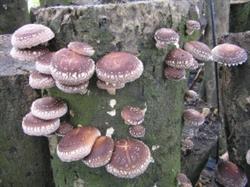
Three key points for shiitake mushroom management that mushroom growers must master
1. Selection of cultivation season. Shiitake mushrooms belong to the low-temperature type of fungi, and the mycelium can grow at temperatures between 5-32°C. As long as artificial cultivation can be properly regulated with suitable temperature and humidity, they can be cultivated all year round. However, inoculation and cultivation usually start from August to October, mushrooms begin to grow from November to October, production peaks around the Spring Festival, and by summer...
-
Three key points for managing the color-change period of shiitake mushrooms
Edible fungi or fungal strains have their minimum, optimum, and maximum growth temperatures at each developmental stage, which are the so-called "three cardinal points" of temperature regulation. The "three cardinal points" temperatures for shiitake mushrooms are: the minimum temperature for mycelial growth is 6°C, the optimum temperature is 24°C, and the maximum temperature is 33°C; the minimum temperature for fruiting body growth is 8...
条件筛选